
Ohio Wire Buyers buys reusable surplus electrical wire and cable from businesses across Cleveland, Akron, Canton and the surrounding region, with pickup arranged at the seller's location. If you are looking for Northeast Ohio wire buyers, send photos and a footage list for review and a written offer before pickup. We buy full reels, partial reels, boxed coils and usable cut lengths as product for resale and reuse—not scrap metal by the pound.
Where do Northeast Ohio wire buyers arrange pickup?
We arrange pickup throughout Northeast Ohio, including Cuyahoga, Summit, Stark, Lorain, Lake, Medina and Wayne counties. This is service-area coverage, not a network of local yards: Ohio Wire Buyers has no Ohio street address, office, yard or drop-off. The material stays at your location until written terms and pickup arrangements are confirmed.
For a contractor working across Greater Cleveland, the relevant location is where the surplus actually sits. A project in Cleveland might have its remaining wire transferred to a company warehouse in Parma or Strongsville. Use the storage location on the offer request, and preserve the project reference in your inventory records.
The same applies to lots in Solon and Twinsburg. Do not move reels solely to make them appear closer to a buyer. Our statewide Ohio service area extends beyond these cities, so explain where the material is and how it can be accessed.
Lake Erie industry: keep the cable's identity intact
The Port of Cleveland handles steel, manufacturing equipment and heavy machinery. Ford's Ohio Assembly Plant is in Avon Lake, and the NRC identifies Perry Nuclear Power Plant in Perry, Ohio. These are regional industrial reference points, not claims that those organizations sell to us or endorse our business.
For sellers in Lorain, Elyria and Avon Lake, an industrial lot should be described by its actual cable construction, not simply as “plant wire.” Keep manufacturer tags, jacket legends and any purchasing specifications together. A feeder reel and a control-cable reel need separate inventory entries even when both came from the same shutdown.
Businesses in Euclid and Mentor can use the same approach. If cable came from a controlled facility, state whether it is unused inventory or removed material and whether any release restrictions apply. A facility name alone does not establish condition, ownership or suitability for reuse.
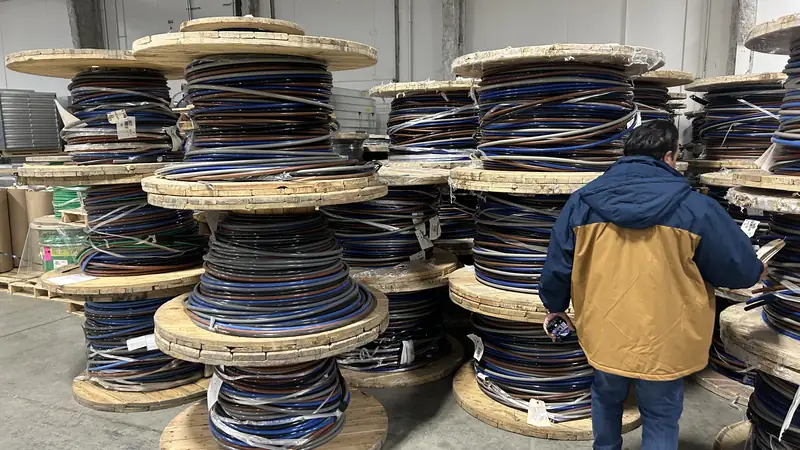
What comes out of Akron and Canton project closeouts?
Team NEO documents Northeast Ohio's polymer, chemical and plastics industry and its roots in Akron's rubber industry. For a plant contractor in Akron or Cuyahoga Falls, useful offer details include the machine or project reference, manufacturer part number and whether the reel was bought for a specific equipment package. A generic description can hide a specialized product.
If your Canton or Massillon lot contains motor feeders, control cable and building wire, keep those groups distinct. A hospital or other facility construction closeout needs the same discipline: preserve any special cable designation instead of grouping every armored coil together.
For material stored in Medina or Wooster, separate retained maintenance stock from inventory the business has authorized for sale. Tagging those decisions before photographing the lot prevents a spare needed for the next repair from appearing in the offer request.
Which lots should remain product rather than become scrap?
A reusable lot has a recognizable product identity, useful continuous lengths and condition that can be evaluated. Copper content alone does not answer those questions. Do not strip insulation or chop cable into short pieces before asking whether it can be sold intact.
| Material in the lot | Useful identifying detail | Keep separate or disclose |
|---|---|---|
| Building-wire reels | Type marking, conductor metal, size, color and remaining footage | Different sizes, colors and uncertain footage |
| Tray or control cable | Manufacturer, conductor count, size and complete jacket legend | Shielded versus unshielded constructions |
| Armored cable coils | Exact cable designation, conductor arrangement and packaging label | Damaged armor and special project specifications |
| Removed industrial cable | Markings, each continuous length, cut ends and removal history | Crushed areas, splices and unknown exposure |
Southwire's SPEC 45051, for example, describes a copper TC-ER control-cable family rated 600 volts and lists UL 1277 among its standards. That illustrates why the full print matters: “black cable” is not a product description. Do not apply that specification to another reel without matching its identity.
Our tray cable selling guide explains that family further. When a lot cannot support reuse, the surplus-versus-scrap comparison helps explain the different selling routes.
What should you send from a regional warehouse or jobsite?
Start with a whole-lot photo that shows the packaging and reel condition. Then photograph each reel tag, a readable section of jacket print and accessible cut ends. Do not unwind or reposition heavy reels just to improve a photo; tell us what cannot be safely reached.
For a business collecting leftovers from several projects, give each reel or coil a seller-assigned ID. Use that ID in both the photo filename and footage list. Include the project reference, storage location, type, conductor metal, size, color or conductor count, estimated remaining length and whether the material is unused or removed.
Keep separate lists for separate pickup locations. Mark estimates plainly, and note any material that still belongs to a customer or supplier rather than your business. Invoice, purchase-order or closeout references help connect the inventory to seller ownership paperwork without relying on handwritten tags alone.
How should partial reels and removed lengths be handled?
A factory tag describes the original shipment; it does not prove how much is left after pulls. Photograph available footage marks and explain whether your estimate comes from pull records or another method. Our guide to measuring wire left on a reel addresses that distinction.
List removed cable by individual continuous length rather than one combined total. Disclose lugs, splices, damaged sections and any unknown service history. Used cable is considered only if still reusable; a visible jacket does not establish that its insulation is sound. Electrical disconnection and removal must be handled by qualified personnel, not undertaken merely to obtain an offer photo.
What access details matter for pickup?
The Port of Cleveland identifies access to I-90 and connections to I-77 and I-71. Those corridors help describe the region, but they do not replace instructions for the final approach to your warehouse or plant. Send the correct entrance, receiving contact, gate procedures and any truck restrictions.
Explain whether the lot is at a loading dock, inside a building or on an outdoor surface. Identify available loading equipment and any known reel weights; do not guess whether a forklift can handle the load. Keep aisles and access clear without stacking or rolling reels unsafely.
If your inventory crosses our regional page boundaries, North Central Ohio pickup coverage and Eastern Ohio pickup coverage are relevant too. Tell us about separate sites rather than assuming one pickup arrangement covers them all.
How is the sale documented before pickup?
After reviewing photos and footage, we reply with questions or a written offer. Payment method and timing are confirmed in writing before pickup. We verify the seller and proof of ownership, keep a written purchase record, and check the count against the written terms when pickup occurs.
Identify discrepancies before loading: an extra reel, missing coil or changed footage estimate should not be silently substituted. The selling process explains the sequence, but your lot list is what connects those terms to the actual material.
To sell surplus wire from Northeast Ohio, request an offer with your photos, footage and storage location, or call 951-403-5738. Keep the wire intact and its identification attached while we review it for reuse.
Frequently asked questions
Can I sell wire stored at more than one Northeast Ohio location?
Send a separate inventory list and photo group for each location. Identify the company that owns each lot and the person authorized to release it. Ohio Wire Buyers reviews the material and confirms written terms before arranging pickup; access and loading details should be supplied for each site rather than assumed to be identical.
Do I need to know the exact remaining footage before contacting you?
An estimate is enough to start a review if you label it as an estimate. Photograph the reel tag and any accessible footage marks, and explain how you arrived at the figure. Do not describe the original factory footage as the remaining amount on a partial reel. We may ask for more information before making an offer.
Can I bring surplus to an Ohio Wire Buyers site in Cleveland or Akron?
No. Ohio Wire Buyers has no Ohio street address, office, yard or drop-off. We arrange pickup where the seller's material is stored, including jobsites, warehouses, plants and yards throughout Ohio. Send the lot details first so we can review its reuse potential and establish written terms before arranging pickup.
Can plant cable removed during decommissioning still be sold?
Used cable is considered only if it remains reusable. Send its jacket markings, individual lengths, cut-end photos, condition details and available removal records. Cable must be safely de-energized and removed by qualified personnel. If the material is not reusable, we say so; a scrap metal recycler may be the appropriate buyer instead.
Sources and further reading
- Team NEO: Northeast Ohio county directory
- Team NEO: Polymers and materials industry
- Port of Cleveland: Facilities, commodities and highway connections
- U.S. EPA: Ford Ohio Assembly Plant permitting information
- U.S. NRC: Perry Nuclear Power Plant facility record
- Southwire SPEC 45051: Type TC-ER copper control cable