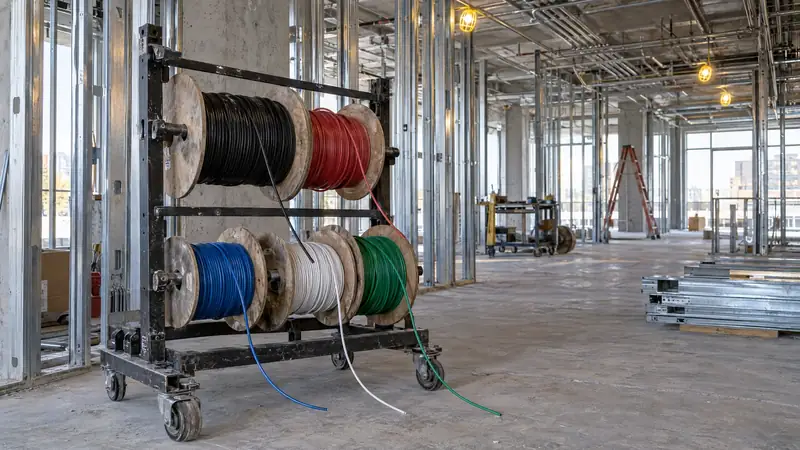
Ohio Wire Buyers buys reusable leftover electrical wire from businesses anywhere in Ohio, including full and partial reels, boxed coils and usable cut lengths. We buy it as electrical product for resale and reuse, not as scrap metal by the pound, and arrange pickup at the seller's jobsite, warehouse, plant or yard. Send photos and a footage list or estimate for review and a written offer before pickup.
What counts as leftover electrical wire after a job?
Project leftovers include material over-ordered for a feeder pull, unopened cable coils, wire displaced by a change order and the unused balance on a reel. A cut length can also be surplus if it remains identifiable and reusable. Material removed from service needs a separate condition review; do not describe it as new merely because it looks clean.
Start by separating true excess from material still needed for punch-list work, approved changes or agreed project spares. Then identify what is available using our wire and cable categories. Keep THHN/THWN-2 building wire, boxed NM-B cable and MC cable coils distinct rather than recording everything as “copper wire.” Product identity matters more than the container it occupies.
Should you return, keep, sell or scrap it?
Check with the supply house before disposing of unopened stock. As an example, Graybar's website terms require returned goods to be unused, undamaged, saleable and in original packaging, and allow deductions for handling or restocking. Your distributor's policy and business account agreement govern your order; ask specifically about partial reels, custom cuts and special orders.
| Amount and condition | Option to investigate | What to establish first |
|---|---|---|
| Unopened full reel or boxed coil with invoice | Return to the original distributor | Return approval, packaging requirements and net credit |
| Identified stock assigned to an upcoming job | Keep for that job | Required type, usable length and a named project reserve |
| Full or partial reels no longer needed | Offer as reusable surplus | Jacket print, reel tags, remaining footage and condition |
| Separate intact cut lengths | Submit for reuse review | Each continuous length, not just combined footage |
| Mixed leftovers from several jobs | Assemble an itemized surplus lot | Ownership and identification for each item |
| Burned wire, damaged insulation or unusable offcuts | Consult a scrap metal recycler | Recycler's acceptance and grading requirements |
Compare the distributor's net credit, the benefit of a specific future use and the written surplus offer. Our surplus value versus scrap guide explains why an intact electrical product should be evaluated differently from recoverable metal. No route fits every leftover lot.
What does keeping it actually cost?
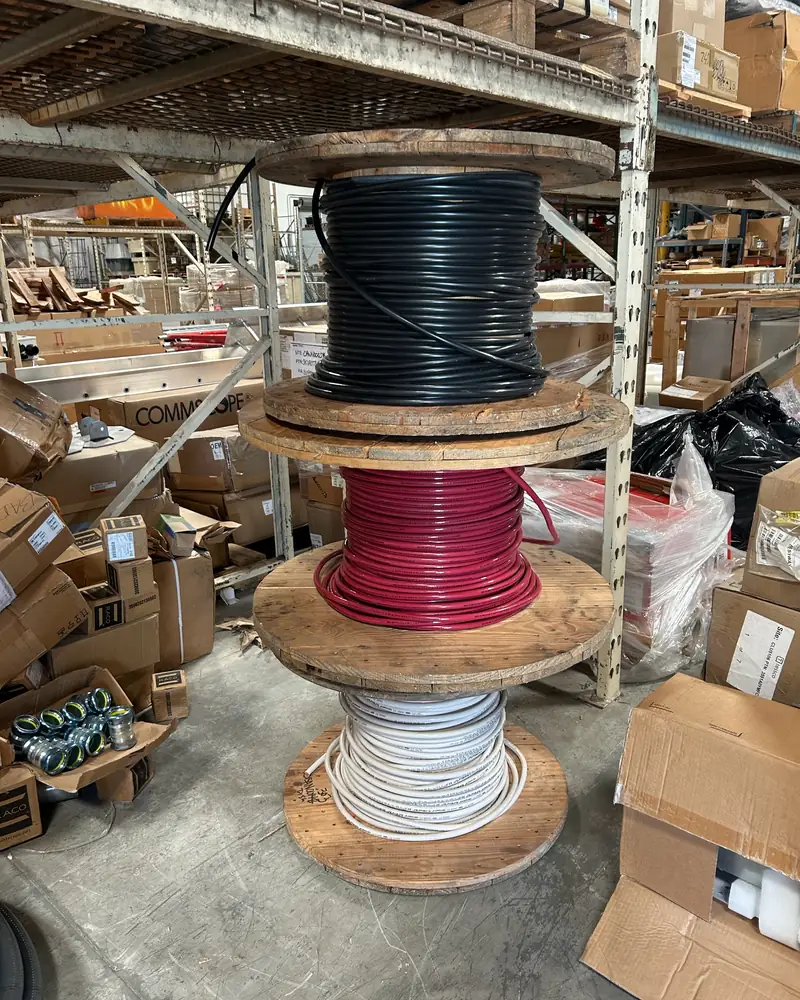
A reel saved “for the next job” needs rack or yard space, inventory attention and handling whenever the storage area changes. Ask whether the material has a named use or is simply being moved between warehouses. Include staff time spent searching for it, reconciling footage and moving it around newer deliveries when making the keep-or-sell decision.
Security belongs in that decision too: keep surplus in controlled storage rather than leaving unidentified coils where removal may go unnoticed. NOAA's Ohio climate summary documents winter cold and precipitation, so exposed storage also requires attention to weather protection. A wet or damaged reel can make handling and assessment harder even when the wire was never installed.
Southwire's Power Cable Manual recommends a hard storage surface so reel flanges do not sink and place the load on the cable. It also calls for protection from physical and environmental hazards and sealed cable ends against moisture entry. Follow the product manufacturer's instructions, and use our Ohio winter reel-storage guide when deciding how to protect stock awaiting review.
How short can a reusable cut length be?
There is no universal footage threshold that makes every wire type reusable or worthless. A buyer needs a continuous length suited to a possible application, with identifiable construction and acceptable condition. Several short pieces do not become a longer usable run merely because their total footage looks substantial.
List every separate piece and disclose splices, lugs, abrasion or uncertain installation history. Keep long pieces intact; cutting them to fit a bin can remove their usefulness. Do not strip insulation or cut off identification just to make the pile look neater before it has been reviewed.
Footage marks can help, but their meaning depends on the product and original reel. Cerrowire's True Sequential Footage system starts at zero at the reel's inner end, allowing the outer marking to indicate the remaining length on the original reel. Do not apply that assumption to every brand or re-reeled item; our remaining-footage guide explains what to record when length is uncertain.
How do you combine leftovers from several jobs?
Combine the inventory list, not the physical wire. Group compatible products for inspection while retaining a separate line for each reel, coil or continuous cut length. Preserve manufacturer labels and attach a simple inventory identifier that also appears in the photos and footage list.
Record the job reference beside each item so accounting can trace the purchase and ownership. If similar reels have different insulation markings or conductor materials, keep those differences visible. Matching colors alone do not establish that products are interchangeable.
Mark reserved stock clearly and exclude it from the offer list. If someone later removes wire for punch-list work, update the remaining footage before pickup arrangements are finalized. A project closeout wire checklist helps keep available surplus separate from unfinished project obligations.
What should contractors send for an offer?
Send an overview showing the complete lot, then close-ups that connect each inventory identifier to its reel tag, jacket print and accessible cut end. Include packaging condition and any visible damage. Do not unspool a heavy reel or disturb connected equipment merely to obtain a photograph.
For each item, provide the wire type, marked size, copper or aluminum conductor, color or conductor count, and remaining footage. Distinguish measured footage from an estimate and retain the original tagged length as a separate field. For loose pieces, list continuous lengths individually; for pull boxes, show the label and explain whether they were opened.
Also state whether the material was installed, where it was stored and whether cut ends were protected. Add the pickup location, access restrictions and available loading equipment. These details let Ohio Wire Buyers ask focused questions rather than treating an unidentified pile as a finished inventory.
Keep ownership and closeout paperwork attached
Confirm that your business owns the surplus before offering it. Material on your jobsite may belong to the owner, another contractor or a supplier under the relevant agreement. Resolve that question through purchase and project records rather than assuming possession gives authority to sell.
Ohio Wire Buyers verifies the seller and proof of ownership, such as an invoice, purchase order, closeout paperwork or company letter, and keeps a written purchase record. Keep those documents tied to the itemized lot; our seller paperwork guide explains the supporting information to prepare.
How does pickup work anywhere in Ohio?
After reviewing photos and footage, Ohio Wire Buyers replies with questions or a written offer before pickup. Payment method and timing are confirmed in writing before pickup, and the count is checked against the written terms when pickup occurs. Read how the sale works for the process details.
We arrange pickup where the material sits; Ohio Wire Buyers has no Ohio street address, office, yard or drop-off. If the wire is not reusable, we say so, and a scrap metal recycler may be the right buyer.
Before the next warehouse move or project closeout, request an offer for your remaining wire with photos and footage, or call 951-403-5738. Keep the reels, tags and usable lengths intact while the lot is reviewed.
Frequently asked questions
Can I sell leftover wire if the original reel tag is missing?
Send clear jacket-print photos, a cut-end photo and your footage estimate. A missing tag makes identification harder, but the print and purchase records may still establish the product. Tell Ohio Wire Buyers which information is unknown rather than substituting a similar reel's tag. We review the available details before deciding whether the material is reusable and making an offer.
Will a supply house take back wire that was cut for my order?
Ask the distributor that sold it to you. Return eligibility depends on your purchase agreement, the product's condition and any restrictions on custom cuts or special orders. Keep the invoice and original packaging while checking. A published website policy may differ from your business account terms, so get the answer for your actual order before arranging a return.
Does unused wire automatically qualify for resale?
No. Unused describes installation history, not present condition or suitability. Crushed cable, damaged insulation, missing identification or moisture exposure can complicate reuse even if the material never left its reel. Ohio Wire Buyers reviews the product details and condition. If it is not reusable, we say so; a scrap metal recycler may be the appropriate buyer.
Can Ohio Wire Buyers purchase material left by a subcontractor?
Only offer material your business owns or has documented authority to sell. Being left at your site does not settle ownership. Check the subcontract, purchase records and project closeout agreement first. Ohio Wire Buyers verifies the seller and proof of ownership and keeps a written purchase record, so explain any subcontractor or owner involvement before submitting the lot.
Should I strip insulation before asking for a wire offer?
Do not strip potentially reusable insulated wire merely to prepare it for an offer. The insulation and jacket markings are part of its identity as electrical product, and stripping changes what you are selling. Send photos of the intact material first. If review shows it is not reusable, ask a scrap recycler about that recycler's preparation and grading requirements.