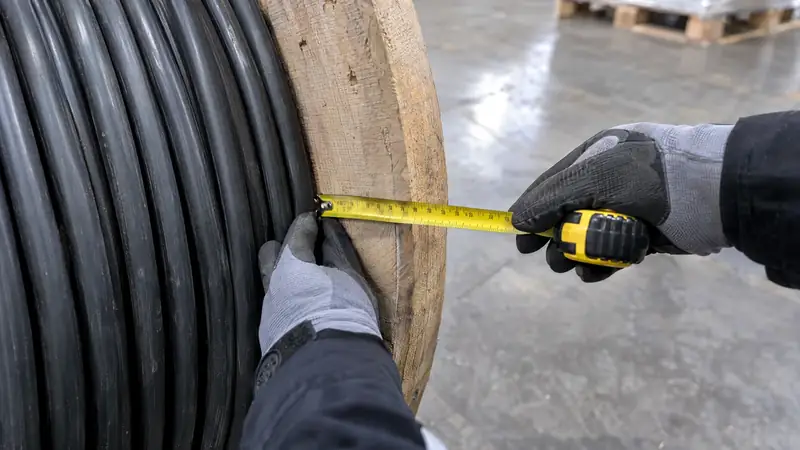
Wire selling guides help you identify surplus cable, document its usable length and prepare it for a buyer's review without cutting away its resale potential. Ohio Wire Buyers buys reusable surplus electrical wire and cable from businesses anywhere in Ohio as product for resale and reuse, not as scrap metal by the pound. Start with the guide that resolves the uncertainty in your lot, whether that is an unreadable tag, unknown footage or incomplete ownership paperwork.
Which wire selling guides should you use first?
Begin with identity, then quantity, then condition. A clean reel is difficult to evaluate if nobody knows its conductor material or cable type; a clear label is not enough if the remaining continuous length is unknown.
| What you know or need | Starting point | Useful result |
|---|---|---|
| Tag is present, product is unfamiliar | Reel-tag and jacket-print guides | Manufacturer, catalog number and marked construction |
| Reel has been partially used | Footage-measurement guide | Remaining continuous length and measurement method |
| Scale reading is available | Wire-weight and reel-weight guides | Separation of cable weight from packaging |
| Someone suggests stripping the wire | Reuse-versus-scrap and copper-value guides | A comparison that keeps usable product intact |
| Lot is ready for review | Photo and paperwork guides | Images tied to inventory and ownership records |
If you need to identify the general product family first, review the wire and cable we buy. Keep building wire, assembled power cable and specialty cable separated rather than calling everything copper wire.
What do the reel tag and jacket print tell you?
The reel-tag reading guide explains how to locate product information and distinguish factory footage from current inventory. Preserve the tag even when the reel is partial. A manufacturer's catalog number can help resolve details that a handwritten description leaves out.
Use the cable jacket-print guide when the tag is missing or when you need to check that the cable matches it. UL Solutions explains that identification and ratings may appear on the product, tag, reel or container, depending on the category. Photograph all available markings instead of relying on a single fragment.
The size-explanation and copper-versus-aluminum guides address related identification problems: size notation and conductor material. Transcribe what is actually marked, and flag uncertainty rather than guessing from the apparent diameter or the color of armor.
How can you document a partial reel's footage?
The remaining-footage guide compares sequential markings, counters, weight-based estimates and reel measurements. When accessible markings identify the endpoints of one continuous piece, their difference can help establish length. Check the units and marking system before treating a printed number as the quantity left.
Cerrowire's True Sequential Footage system starts at zero at the bottom of its specified original reels. Do not assume every manufacturer's markings work that way, especially on transferred cable. If the inner endpoint is inaccessible, say so rather than unwinding a heavy reel just to obtain another photograph.
List separate cut lengths separately. Their combined footage is useful inventory information, but it does not make them a continuous run.
Why do cable weight and reel weight need separate records?
The copper wire weight chart helps distinguish conductor weight from finished-wire weight. Southwire's THHN copper specifications provide separate copper-weight and approximate finished-weight columns. Insulation is part of the finished product's weight; it is not additional copper.
For a weight-based footage estimate, subtract the empty packaging weight from the loaded weight before using a matching finished-wire weight per foot. Unknown tare weight, mixed products and uncertain construction make the result less reliable. Label it an estimate and identify the specification used.
The reel-size and weight guide addresses the package itself: flange dimensions, traverse, empty weight and handling information. These details help plan movement, but flange diameter alone cannot tell a buyer how much cable remains.
Is reusable copper wire worth the same as scrap?
The surplus-value versus scrap guide explains why usable product and recoverable metal need different evaluations. Reusable wire is assessed by identity, continuous footage, condition, packaging, documentation and demand. Stripping or chopping it can remove features needed for resale.
The copper-value guide explains weight-based calculations without confusing a hypothetical price with an offer. A recycler's applicable rate and grade matter for non-reusable material; a finished cable's total weight is not automatically its recoverable copper weight.
Ask for review before altering an identifiable lot. Ohio Wire Buyers will say when material is not reusable, and a scrap metal recycler may then be the right buyer.
What can storage and color codes reveal?
Our wire-reel storage guide focuses on preserving cable and packaging through storage and cold-weather handling. Southwire recommends indoor storage for building wire, sealed insulated-cable ends and keeping wooden reels separated from the ground. Follow the product manufacturer's handling guidance rather than assuming every cable tolerates the same exposure.
The wire color-code guide separates conductor-identification requirements from phase-color conventions. OSHA requires grounded and equipment grounding conductors to be identifiable and distinguishable. Record actual colors, but do not infer voltage, conductor material or cable type from color alone.
Include split flanges, missing end seals, damaged jackets and evidence of moisture in your condition notes. A clear description is more useful than hiding those details behind a distant lot photo.
What should you send for an offer on a mixed lot?
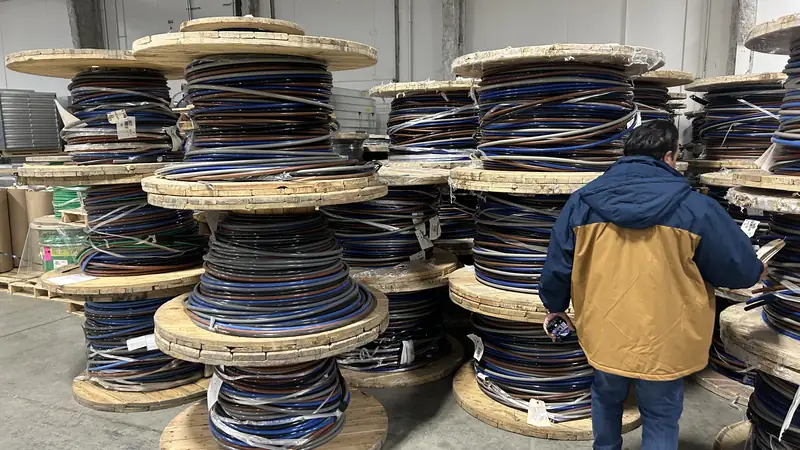
Follow the wire-photo guide and assign a simple inventory identifier to each reel, coil or bundle. Match that identifier to whole-lot photographs, tag close-ups, jacket print, accessible cut ends and footage information. Photograph damage without stripping good insulation to expose more conductor.
For mixed lots, identify which packages are unused, partial or previously installed. Note transfers between reels and keep original labels with the correct material. This prevents a photo of one reel from being mistaken for the description of another.
The seller-paperwork guide explains ownership documentation such as invoices, purchase orders, closeout paperwork or a company letter. Ohio Wire Buyers verifies the seller and proof of ownership and keeps a written purchase record. Project-closeout guidance helps organize what stays with the business and what is available for sale.
Include the pickup location and available loading access. We review your information and reply with questions or a written offer before pickup; payment method and timing are confirmed in writing before pickup, and the count is checked against the written terms.
Send your inventory through the surplus-wire offer form, or call 951-403-5738 to discuss what you have. Keep the cable intact and the uncertainty clearly labeled so the review starts with useful information.
Frequently asked questions
Should I strip unused insulated wire before selling it?
Keep reusable surplus wire intact while it is being evaluated. Stripping removes insulation and product markings that help identify the wire and support its reuse. Ohio Wire Buyers buys reusable wire as product rather than scrap metal by the pound; if the material is not reusable, a scrap metal recycler may be the right buyer.
Can I request an offer without knowing the exact footage?
Yes. Send the footage information you have and clearly identify it as measured, estimated or unknown. Include photos of the tag and any accessible sequential markings. Keep separate cut lengths listed individually rather than presenting their combined length as one continuous run. We review the information and reply with questions or a written offer before pickup.
Does the original reel tag prove that a partial reel is full?
No. A factory tag describes the packaged product when it was supplied, not necessarily what remains after material has been pulled. Keep the tag for product identification, but pair it with a current footage estimate or measurement. Note whether the wire is still on its original reel or has been transferred to another package.
Where can an Ohio business drop off surplus wire?
Ohio Wire Buyers has no Ohio street address, office, yard or drop-off. We arrange pickup at the seller's jobsite, warehouse, plant or yard anywhere in Ohio. Send your inventory information first; the written offer and payment method and timing are confirmed in writing before pickup is arranged.