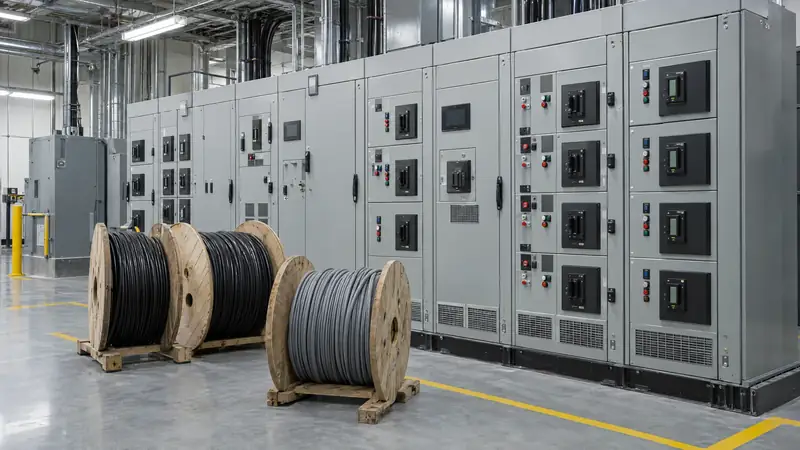
Ohio Wire Buyers buys reusable surplus electrical wire and cable from businesses in Toledo, Ohio, with pickup arranged at the seller's site. Businesses looking for wire buyers in Toledo, Ohio, can send reel photos and footage for a written offer before pickup; we buy usable product for resale and reuse, not scrap metal by the pound.
Toledo's industrial sites call for a product-level inventory
Toledo's manufacturing and freight facilities make cable identification more useful than a single total weight. The city's economic-development review for 2024 describes the Toledo Trade Center in North Toledo and reports that MOBIS began operating in its first building. It also discusses Toledo-area glass manufacturers Libbey and O-I. These are industrial context, not claims that those companies sell material to us.
In East Toledo, the Port Authority identifies Cleveland-Cliffs' direct reduction plant at Ironville Terminal and dates the start of commercial production to 2020. For businesses handling a production-line change, warehouse fit-out or maintenance closeout, the practical question is which cable remains usable and available for sale.
Separate operational spares from released surplus before requesting a plant-surplus cable review. A maintenance reel reserved for a specific machine should not enter the sale lot simply because it has been sitting on a rack.
What material should Toledo contractors and plants separate?
Group material by the job it can still serve, then confirm its actual construction from the tag and jacket. The following are useful sorting categories, not assertions about inventory at any named Toledo facility.
| Lot category | Details to preserve | Question to settle before an offer |
|---|---|---|
| Building wire from commercial work | Insulation designation, conductor material, size and color | Is each reel unused, partially used or removed cable? |
| Feeder cable from plant or warehouse work | Complete jacket legend, conductor material and remaining length | Are matching conductors available, or only an isolated remainder? |
| Multiconductor tray or control cable | Conductor count, size, shielding information and catalog number | Does the label identify the exact construction? |
| Distribution cable from utility work | Reel tag, construction details and ownership paperwork | Is the material released for sale rather than held for another job? |
| Coiled cable removed during a shutdown | Length of each piece, cut-end photos and removal history | Is it still reusable, with no concealed or visible damage? |
Keep THHN/THWN-2 building wire apart from jacketed cable assemblies. Mixing everything under “electrical copper” hides information needed to evaluate it as product.
Read tray and control cable markings before making a list
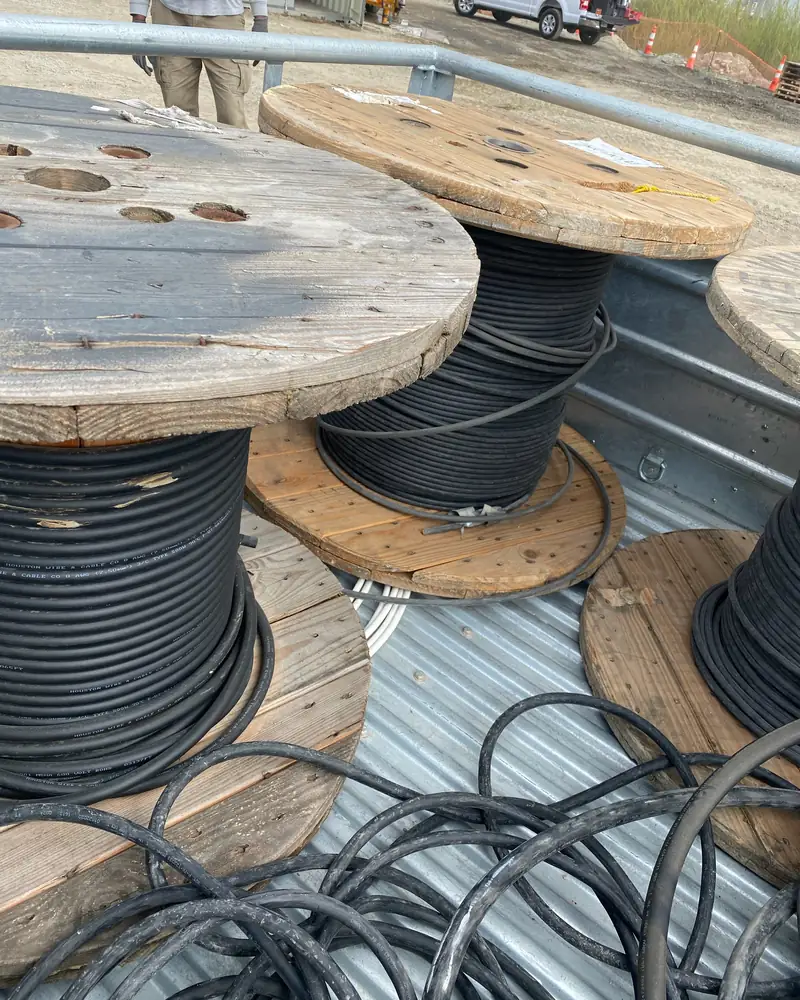
Black jackets can conceal very different constructions. Southwire's Type TC-ER control-cable specification shows a sample jacket legend containing manufacturer, AWG size, copper identification, conductor count, cable type and voltage. That product family is rated 600 volts and lists UL 1277 among its specifications; those details describe that family, not every black industrial cable.
For a surplus tray-cable lot, photograph enough consecutive print to capture the entire designation. Do not substitute an outer-diameter estimate for the printed conductor size. Include the catalog number when it is available so the construction can be checked against the manufacturer's information.
Keep control cable with different conductor counts on separate inventory lines. If a shield, drain wire or ground is visible at an existing cut end, photograph it without stripping back sound cable just to create a picture.
How can you sell partial reels without guessing the footage?
A partial reel can be reusable inventory, but its original label may show the factory length rather than what remains. Record the tag length separately from your remaining-footage estimate. If footage markings are visible, photograph them and explain how you obtained the estimate; do not present an unsupported number as measured footage.
Use our guide to measuring wire left on a reel when the remainder is unclear. A reel's apparent fullness alone does not establish a usable length. Mark uncertain quantities as estimates and tell us whether the cable is one continuous piece or several separate lengths.
Leave usable cable on its reel where practical. Keep cut lengths individually identified rather than combining them into one total that suggests an uninterrupted run. Photograph broken flanges or other packaging damage as well as the wire itself.
Water and electric work need clear ownership boundaries
Toledo's water-system improvement plan lists water-reclamation upgrades for 2025–2040 and new water towers for 2026–2029. These are published project windows, not guarantees of individual construction dates. Electrical contractors supporting treatment or pumping work should identify leftover power and control cable separately from materials retained for commissioning or maintenance.
Toledo Edison is the local FirstEnergy electric company. Its August 2022 announcement described grid-modernization work in Lucas County, including parts of Toledo, Holland and Maumee. That dated example establishes utility activity without suggesting the same work is ongoing today.
For medium-voltage surplus cable, preserve reel labels and document the condition of existing ends. Utility or public-project material needs a clear release from the owner; a contractor's possession alone is not proof that it is available to sell.
What should wire buyers in Toledo, Ohio, know about your lot?
Send photos of the whole lot, reel tags, jacket print and existing cut ends. For industrial cable, add a close view of the manufacturer and catalog number, plus any label showing conductor count or construction. Identify unused material separately from removed cable, and describe storage conditions or known damage.
Make the footage list match the photos by assigning each reel or coil a simple identifier. Include type, size, copper or aluminum, conductor count where applicable, remaining length and whether that length is measured or estimated. If a Toledo warehouse holds material from several projects, identify the owner of each group rather than treating it as one interchangeable stockpile.
Provide proof of ownership through an invoice, purchase order, closeout paperwork or company letter. We verify the seller and keep a written purchase record. The selling process explains the review; we respond with questions or a written offer before pickup, and confirm payment method and timing in writing before pickup.
Port-area pickup depends on access, not just the highway
The Port Authority describes Toledo's general cargo dock as having on-dock Class I rail access and connections to the I-75 and I-80/90 corridors. Those connections provide freight context, but the loading point for your cable still matters more than a nearby interchange.
Tell us the actual entrance, check-in procedure, loading surface and whether a dock or suitable handling equipment is available. Note whether reels are inside a production building, behind other stock or in an outdoor storage area. Do not assume a truck can use the same entrance as an employee vehicle.
For terminal or plant material, name the person authorized to release the lot and disclose any site restrictions before pickup is arranged. Keep the agreed inventory accessible, and identify anything excluded from the sale. At pickup, we check the count against the written terms.
Pickup across Toledo and neighboring Ohio communities
Our Northwest Ohio pickup coverage includes Toledo and businesses in Lucas County communities such as Maumee, Oregon and Sylvania, along with Springfield, Monclova and Sylvania townships. Ohio Wire Buyers has no Ohio street address, office, yard or drop-off; we arrange collection where the seller's material is located.
Businesses with stock farther from Toledo can also review pickup information for Perrysburg surplus wire, Bowling Green cable inventory and Findlay business wire lots. Identify each location separately when one company is selling from multiple sites.
Before cutting or stripping a Toledo surplus lot, request an offer for reusable wire and cable or call 951-403-5738. Send the identifying photos and footage you have. If the material is not reusable, we will say so; a scrap metal recycler may then be the right buyer.
Frequently asked questions
Is there a Toledo address where I can bring surplus wire?
No. Ohio Wire Buyers has no Ohio street address, office, yard or drop-off. We arrange pickup at the seller's jobsite, warehouse, plant or yard. Send photos and a footage list first so we can review the material and provide written terms before pickup is arranged.
Can I sell cable stored at several Ohio locations?
Yes, you can submit material from several Ohio sites for review. Separate the inventory by location and identify who controls each lot. Include access details and a site contact for each address. We arrange pickup anywhere in Ohio, with the locations and other terms confirmed before collection.
Should I strip unused copper wire before selling it?
No. Keep reusable wire intact, with its insulation, tags and original packaging where available. Ohio Wire Buyers evaluates usable electrical product rather than scrap copper by the pound. Stripping removes its identity and intended insulation system. If the wire cannot be reused, a scrap metal recycler may be the appropriate buyer.
Can cable on utility-marked reels be sold?
A utility marking does not establish that your business owns the cable or the reel. We verify the seller and proof of ownership before purchasing. Submit an invoice, purchase order, closeout paperwork or company letter, and explain any reel-return obligation. Do not include customer-owned inventory without documented authority to sell it.