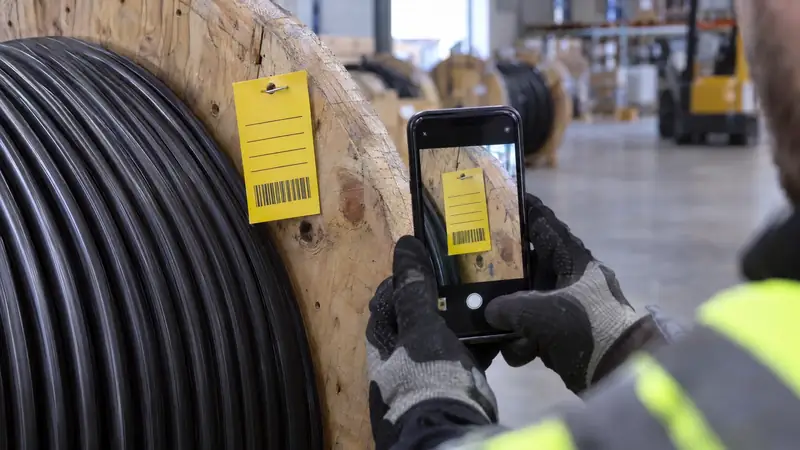
Paperwork for selling wire should identify the business owner, connect that owner to the reels or coils, and show who can authorize the sale. Ohio Wire Buyers verifies the seller and proof of ownership, keeps a written purchase record, and provides a written offer with payment method and timing confirmed before pickup.
What paperwork for selling wire should you gather?
Start with the purchasing file, then match it to the material still on hand. An invoice, purchase order, closeout document or company letter can support ownership review; a packing slip helps establish what was delivered. No document should be treated as stronger evidence than it actually provides.
| Document | Useful information | What to clarify |
|---|---|---|
| Supplier invoice | Purchasing business, product description and order reference | Whether this lot is the remaining material from that purchase |
| Purchase order | Buyer, supplier and ordered wire | A PO documents an order, not necessarily delivery or current ownership |
| Packing slip | Product delivered and receiving reference | Who received it and how it matches the purchasing record |
| Project closeout paperwork | Leftover inventory and disposition instructions | Whether ownership or permission to sell was actually transferred |
| Company letter | Business owner, authorized representative and lot description | Who signed it and their authority to approve the sale |
Keep related documents together rather than sending isolated screenshots with the identifying headers cropped away. The other wire selling guides cover physical identification and footage preparation; this page addresses who owns the material and how to record its transfer.
Who owns leftover wire after a job?
A reel sitting in your trailer is not, by itself, proof that your company can sell it. Check the purchase records and project agreement for owner-furnished material, customer-paid inventory, consigned stock or instructions requiring leftovers to be returned. Resolve conflicting instructions before requesting pickup.
For a contractor's surplus lot, connect each reel to the job or stock account that supplied it. If the customer retained ownership, ask the customer to document the authorized disposition instead of relying on a foreman's verbal approval. Our project closeout wire checklist helps organize the physical leftovers alongside those records.
For removed cable, retain the owner's release and any contract language assigning salvage rights. A demolition scope that authorizes removal may not explain who receives the recovered material. Send that distinction with any decommissioned cable for reuse, including its known service history and condition.
What makes a company ownership letter useful?
A useful letter names the business that owns the wire, describes how it acquired the material, and identifies the employee or representative authorized to arrange the sale. Include the signer's name, role, business contact information and date. Attach a lot list rather than describing the property only as miscellaneous copper.
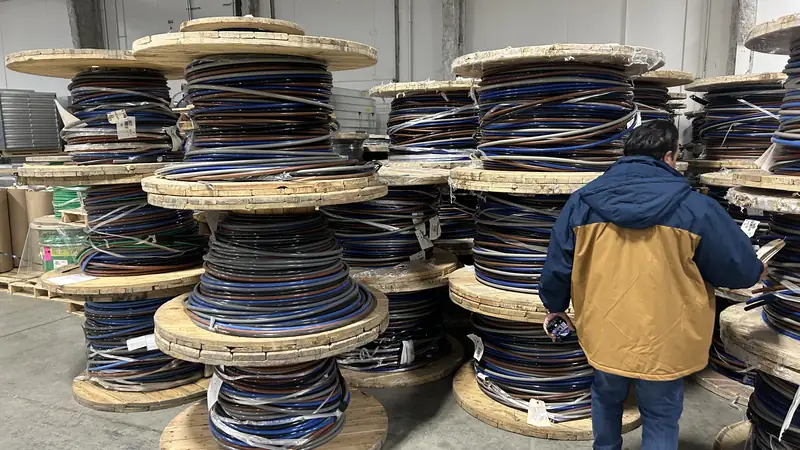
Use matching identifiers on the letter's attachment, reel photos and inventory list. For example, a reel identifier can refer to a particular partial reel without pretending its factory tag proves the remaining footage. Include manufacturer, wire type, conductor material, size and available length wherever known.
Keep the explanation factual. If the lot combines warehouse stock and job leftovers, identify both origins. Our guide to reading wire reel tags explains product identification; a readable tag supports the description but does not replace ownership records.
What should a wire bill of sale record?
A practical bill of sale identifies the buyer and seller, the authorized signers, the sale date and the specific material transferred. Attach the agreed lot list and refer to the written offer so a later reader can tell which reels were included. Avoid descriptions that combine reusable cable and scrap into an unexplained weight total.
Record full or partial reel status, measured or estimated footage, disclosed damage and any accessories included. Put the agreed purchase amount, payment method and payment timing in writing. If the offer depends on confirming the count or condition, describe how a discrepancy will be resolved rather than leaving that decision unstated.
At pickup, check the count against the written terms and document agreed changes. Keep the signed transfer record and payment record with the ownership file. Ohio Wire Buyers keeps a written record of each purchase; our offer and pickup process explains the sequence.
Does Ohio scrap metal law apply to reusable wire?
Ohio Revised Code Chapter 4737 contains scrap-metal dealer requirements. The definition in section 4737.04 describes a business purchasing or receiving scrap for sorting, grading and shipment for melting into new products. Ohio Wire Buyers buys reusable wire as product for resale and reuse, not as scrap by the pound.
That distinction is not a blanket legal exemption for every cable transaction. The same section identifies cable and wire used in cable or utility service as special purchase articles and restricts their receipt, purchase and sale. Ask counsel about uncertain utility-owned or specially marked material rather than assuming that reusable condition settles the question.
For transactions subject to scrap-dealer recordkeeping, required information includes seller identification and a photograph, transaction date and time, weight from a licensed commercial scale, and applicable vehicle and article details. Section 4737.041 adds ownership proof, an article photograph and payment restrictions for covered special purchase articles. These are statutory requirements, not a description of every Ohio Wire Buyers purchase.
Explain the source of utility surplus cable clearly. If the wire is not reusable, we say so; the surplus-versus-scrap guide helps distinguish the appropriate buyer. This is practical preparation guidance, not legal advice.
Do businesses need a W-9 to sell wire?
A W-9 provides a U.S. person's taxpayer identification number and tax certifications. It does not prove ownership or authorize an employee to dispose of inventory. Keep tax paperwork separate from the documents connecting your business to the wire.
The IRS instructions for Forms 1099-MISC and 1099-NEC list merchandise payments among reporting exceptions. A wire sale therefore should not automatically be treated as payment for contractor services. That exception does not mean the proceeds are tax-free.
Ask what accounting documentation is needed for the particular transaction; do not assume Ohio Wire Buyers requires a W-9 for every purchase. Have your accountant address reporting questions, especially if the agreement combines goods with services.
How should public owners release surplus cable?
Public property needs the owner's authorized disposal process, not just a storeroom employee's approval. Ohio Revised Code 125.13 directs state agencies to notify the director of administrative services about excess or surplus supplies and sets out disposition procedures and exceptions. Municipal property has separate provisions under section 721.15, including authorization and internet-auction procedures.
Do not apply a state-agency rule to every public institution. Ask the entity's purchasing or legal office which procedure governs the lot and who may approve its sale. Obtain the relevant release, award notice or other disposal record before arranging removal.
Match the approved lot to the reel identifiers and sale terms. If an auction or bid process is required, a private written offer is not a substitute for completing that process.
What should you send for an ownership-ready offer?
Send a business contact, the material's location, and an explanation of its source alongside the ownership documentation. Include whole-lot photos, reel tags, readable jacket print and cut-end photos, plus a footage list or clearly labeled estimate. Our wire photography guide shows how to make the physical evidence useful.
Identify missing records, customer-owned material and any approval still pending. Do not mix excluded reels into the offered lot. Keep the same identifiers through review and pickup so the loading crew can distinguish what is sold from what stays.
Ohio Wire Buyers arranges pickup at the seller's jobsite, warehouse, plant or yard anywhere in Ohio rather than asking sellers to deliver wire. Send your documented lot through the offer form, or call 951-403-5738 to discuss what you have before preparing the sale records.
Frequently asked questions
Can I sell surplus wire if the original invoice is missing?
A missing invoice does not automatically end the review. Ohio Wire Buyers can review a purchase order, closeout paperwork or company ownership letter. Explain where the wire came from and who can authorize its sale. A packing slip or inventory record may help connect the material to that explanation, but we still need to verify ownership.
Is a wire reel tag proof of ownership?
A reel tag helps identify the wire, but it does not establish who owns it now or who may sell it. Match the tag to purchasing records, inventory records or an authorized company letter. Keep the tag attached and photograph it clearly so the paperwork can be checked against the actual reel.
Can an employee sell a company's leftover wire personally?
Do not treat access to the material as permission to sell it. Identify the business owner and obtain authorization from someone who can approve disposal. Ohio Wire Buyers buys from businesses and verifies the seller and ownership. A company letter should identify the representative handling the transaction and the material covered by the authorization.
Should a wire bill of sale distinguish estimated footage?
Yes. Identify each reel or coil and state whether its footage is measured, estimated or unknown. Do not present a factory tag's original length as the remaining length of a partial reel. Record how differences found at pickup will be handled, and keep the final count with the written purchase terms.
Should I include a taxpayer number in my first wire-photo message?
Keep your initial offer request focused on the wire, business contact and ownership records. A taxpayer number does not show that you own the cable. If accounting paperwork is requested later, confirm the recipient and the agreed delivery method before transmitting it. Have your accountant address questions about tax classification and reporting.
Sources and further reading
- Ohio Revised Code 4737.04 — scrap dealer definitions and records, effective October 6, 2026
- Ohio Revised Code 4737.041 — special purchase articles
- IRS — Instructions for the Requester of Form W-9
- IRS — Instructions for Forms 1099-MISC and 1099-NEC
- Ohio Revised Code 125.13 — disposing of excess and surplus state supplies
- Ohio Revised Code 721.15 — disposition of municipal personal property