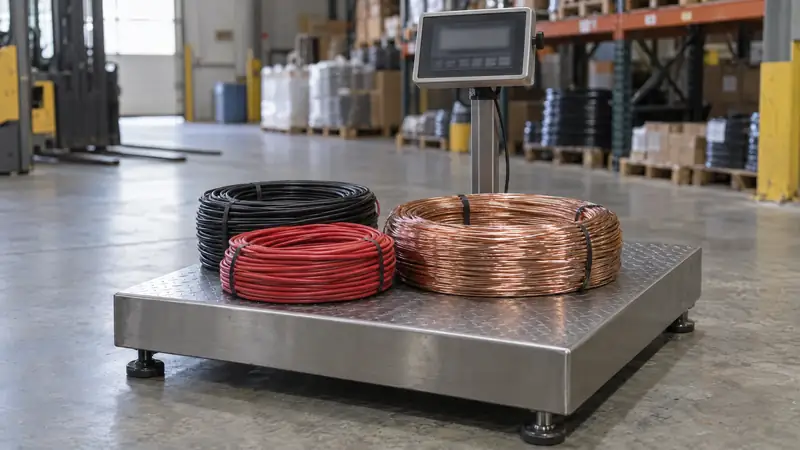
Surplus wire value vs scrap comes down to whether another buyer can use the wire as electrical product, not just recover its metal. Identifiable, undamaged reels and useful cut lengths can have resale value beyond a scrap offer, but that is not guaranteed for every lot. Ohio Wire Buyers buys reusable surplus electrical wire and cable from businesses anywhere in Ohio, with a written offer before pickup.
Why does surplus wire value vs scrap depend on reuse?
A scrap recycler evaluates material for metal recovery. A product buyer evaluates the conductor together with its insulation, cable construction, markings and usable length. Stripping good insulated wire removes part of the product the next electrical user needs.
For example, a labeled partial reel of THHN/THWN-2 building wire is not equivalent to a bin of chopped copper tails. The reel preserves a continuous length and identifiable product. The tails may contain the same metal, but they no longer offer the same installation options.
That difference does not establish a fixed premium over scrap. Demand, quantity and uncertainty still matter. Our wire selling guides explain how to identify and document a lot before choosing its destination.
What makes leftover wire valuable as product?
The offer starts with what the wire actually is. Conductor material alone cannot distinguish building wire from control cable, or establish whether the product suits a future application. Photograph the label and jacket print rather than relying on a handwritten description such as “large black copper.”
| Lot characteristic | What it tells a product buyer | What to preserve or disclose |
|---|---|---|
| Manufacturer and product designation | Which cable construction is being offered | Original tag, carton label and jacket legend |
| Conductor material and size | Whether the lot matches a potential use | Printed identification and existing cut-end photos |
| Continuous remaining length | Whether a usable run is available | Footage records; distinguish estimates from measurements |
| Insulation and jacket condition | Whether damage may prevent reuse | Close-ups of cuts, crushing, cracks or exposed conductor |
| Packaging and history | How confidently the product can be identified and handled | Reel condition, storage history and new or previously installed status |
An XHHW-2 feeder lot should retain its actual product description rather than being grouped with every other black single conductor. Likewise, several separate short pieces are not equivalent to one continuous run with the same total footage. For partial reels, use the remaining-footage guide and state how you obtained the estimate.
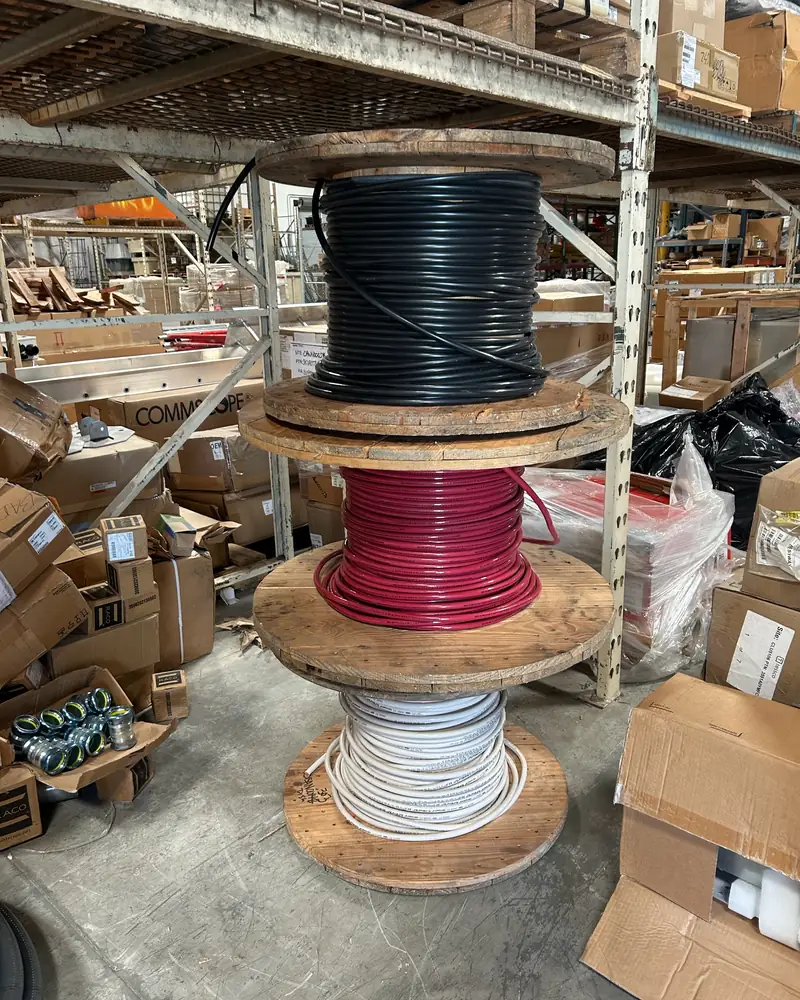
Why do reel tags matter beyond identifying the brand?
The UL Wire and Cable Application Guide distinguishes the complete certification mark on a coil, reel, flange or box from supplemental markings printed on the wire. Jacket letters alone should not be treated as proof that a particular unit is covered by UL certification.
Keep the original package label with the wire, including when a reel is partial. If a tag is missing, say so and send whatever original records remain. Do not transfer a tag from another reel or assume two visually similar cables have identical ratings.
The reel-tag reading guide helps separate product identity from quantity information. A factory length on an old tag identifies the original put-up; it does not establish how much remains after pulls.
How do you compare product and scrap offers fairly?
Compare the same lot and the money left after seller-paid work or transport. A reusable-product offer is not the original distributor invoice, and an insulated-wire scrap rate is not a clean bare-copper rate. Ask each buyer what material and quantity the quote covers.
The following example is entirely hypothetical. Every weight, rate, offer and expense is invented for arithmetic, not a current quote or a typical result. Prices change daily. Assume the same copper-wire lot weighs 100 pounds excluding its reel and would yield 75 pounds of accepted stripped copper.
| Hypothetical route for the same lot | Gross proceeds calculation | Assumed seller expense | Net proceeds |
|---|---|---|---|
| Sell intact as reusable product | Written lot offer: $300 | $20 preparation | $280 |
| Sell intact as insulated scrap | 100 lb × $1.50/lb = $150 | $0 | $150 |
| Strip and sell recovered copper | 75 lb × $2.50/lb = $187.50 | $60 stripping and handling | $127.50 |
Here, stripping raises gross scrap revenue but lowers net proceeds. Different actual offers or expenses can change the outcome. Get quotes before doing irreversible work, and use the copper-wire value guide for more on weight-based comparisons.
What does a scrap-wire quote actually cover?
Insulated cable weight includes insulation and may include jackets, shields, armor or fillers. Gross reel weight also includes packaging. Neither number automatically equals saleable copper weight, so a bare-metal rate applied to a loaded reel is not a reliable payout estimate.
ReMA's ISRI specifications describe insulated copper wire categories sold on a sample or recovery basis, subject to agreement between buyer and seller. That supports asking how the recycler grades the specific material rather than assuming every insulated cable receives the same rate.
Confirm whether the recycler's quote applies to accepted insulated-wire weight or recovered metal, how packaging is excluded, and what deductions apply. Do not subtract an assumed recovery percentage if the quoted insulated-wire rate already accounts for insulation. Compare copper and aluminum lots separately.
When is scrap the more realistic answer?
Scrap may be appropriate for wire with damaged insulation, severe crushing, contamination or lengths that have no practical reuse market. An unreadable label does not automatically make a reel scrap, but it creates an identification problem that should be disclosed rather than concealed.
Previously installed cable needs its history described. Explain why it was removed, any known damage and whether relevant inspection or test records exist. Acceptance for resale is not blanket approval for installation; the next application still needs appropriate technical evaluation. Our decommissioned-cable page covers used material that may remain reusable.
Ohio Wire Buyers says when wire is not reusable. A scrap metal recycler may then be the right buyer, and a mixed lot can be divided rather than treating all its contents alike.
Which preparation mistakes destroy resale options?
Do not strip, chop or remove identification from intact cable just to make it resemble scrap. Leave sound wire on its reel or in its original box. Disclose damage before deciding whether trimming or re-reeling would help; those changes can alter the offered footage and traceability.
Southwire's handling and storage guidance calls for preserving labels and sealing insulated cable ends against intrusion. It identifies handling damage, ultraviolet exposure and water intrusion as concerns. Follow the specific manufacturer's instructions rather than assuming a wet-location rating makes every storage arrangement acceptable.
Southwire states that its products have no defined shelf life when appropriately stored and undamaged; that is not a guarantee about an unknown surplus reel. Preserve storage records and follow the wire-reel storage guidance while arranging an evaluation.
What should you send for a reusable-wire offer?
Send whole-lot photos, original reel tags or carton labels, legible jacket print and existing cut ends. List each continuous length separately, with type, size, conductor material, color and remaining footage. Mark uncertain quantities as estimates and disclose missing labels, splices, damaged areas and prior installation.
Include your business name, pickup location, ownership documentation and any loading constraints. The offer-photo guide helps show the details that distinguish product value from metal value. Ohio Wire Buyers verifies the seller and ownership, reviews the material and replies with questions or a written offer.
Payment method and timing are confirmed in writing before pickup. We arrange pickup at your Ohio jobsite, warehouse, plant or yard and check the count against the written terms. Review how the sale works before committing the lot.
Before stripping usable inventory, request an offer for your surplus wire or call 951-403-5738. Keep the wire intact so you can compare an actual product offer with a properly defined scrap quote.
Frequently asked questions
Is bare copper automatically scrap?
No. Bare copper can still be a reusable electrical product when its size, construction, condition and remaining length are identifiable. A tagged reel should be evaluated differently from tangled, contaminated pieces. Ohio Wire Buyers buys reusable surplus wire as product, so photograph the reel and label before deciding to sell it by weight.
Does my original purchase price determine the offer?
Your invoice helps establish ownership and identify the product, but its original price does not set today's surplus offer. A buyer must consider the remaining quantity, condition, documentation and likely resale use. Keep the invoice with the lot records, and compare the written offer with your other realistic disposal or reuse options.
Can aluminum cable have reusable value even with a low scrap quote?
Yes. A reusable aluminum cable lot is evaluated as electrical product rather than solely by metal weight. Its construction, identifiable markings, usable length and condition matter. Do not confuse aluminum armor with an aluminum conductor; photograph the product label and existing cut ends so the material can be identified before an offer is made.
Should I scrap an entire mixed lot if some cable is damaged?
Not necessarily. Separate clearly damaged pieces from intact reels and coils, and describe the condition of each group. Mixing damaged cable with reusable inventory makes the offer harder to define. Ohio Wire Buyers reviews the reusable portion and says when wire is not reusable; a scrap metal recycler may be the right buyer for the remainder.