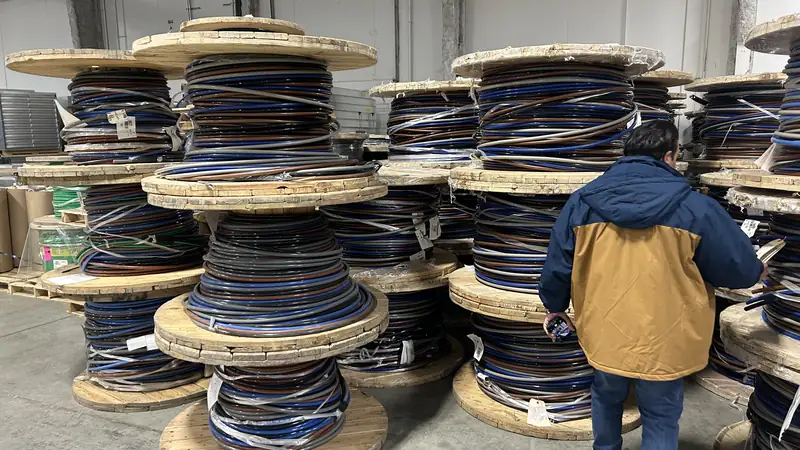
We buy cable that can be resold and reused, not cable priced as scrap metal by the pound. Ohio Wire Buyers buys reusable surplus electrical wire and cable from businesses anywhere in Ohio, including unused reels, partial reels, coils, cut lengths and used cable only when still reusable. Send photos and footage for review and a written offer before pickup.
What is the difference between cable and single-conductor wire?
A jacketed multiconductor cable combines insulated conductors inside an overall covering. The assembly may also contain grounding conductors, shields, drain wires or armor. Those components are part of its identity: two black cables with similar outside diameters can serve very different purposes.
Cable does not always mean multiple conductors. Medium-voltage power cable, DLO and photovoltaic products can be single-conductor constructions. Conversely, several separate wires wound together on a reel are not necessarily one factory cable assembly.
Describe what the tag and jacket actually say rather than calling everything “power wire.” Our wire and cable type overview helps place an unfamiliar product in the right family. Preserve existing cut ends for identification; do not strip or dismantle usable cable just to expose its construction.
We buy cable across power, control and specialty families
The descriptions below are identification starting points, not permission to substitute one cable for another. Manufacturer specifications and printed ratings determine the actual product. We review these families for resale and reuse, with condition and usable footage considered for each lot.
| Cable type | Typical Ohio sellers | What to photograph |
|---|---|---|
| Power and tray cable: feeder, motor and control assemblies; tray products carry type markings | Electrical contractors, plants and facilities | Complete jacket legend, conductor count, grounding conductors and reel tag |
| MC and armored cable: insulated conductors protected by a metallic covering | Commercial contractors, builders and facilities | Packaging label, armor condition and any outer jacket |
| Medium-voltage cable: power cable identified by its voltage class and insulation construction | Utilities, plants, data center and solar projects | Voltage class, insulation level, shield description and end seals |
| URD: underground distribution products; primary and secondary constructions must be distinguished | Utilities, co-ops and underground contractors | Product designation, conductor material and neutral configuration |
| Control and instrumentation cable: conductors, pairs or triads for control and signal circuits | Plants, facilities and electrical contractors | Part number, conductor or pair count, shielding and drain wires |
| VFD cable: motor-drive cable with specified insulation, grounding and shielding designs | Plants and electrical contractors | Manufacturer number, shield construction and grounding arrangement |
| Portable cord: flexible multiconductor cord identified by markings such as SOOW | Contractors, plants and facilities | Cord designation, conductor count and jacket condition |
| Welding and DLO cable: flexible conductor products whose construction and ratings differ | Plants, facilities and electrical contractors | Exact designation, strand condition and any attached lugs |
| PV wire: photovoltaic conductor identified by its PV marking | Solar projects and electrical contractors | PV legend, conductor material, marked rating and reel label |
| Mining and portable power cable: heavy-duty flexible power products such as Type W | Plants, facilities and contractors | Full type designation, existing end view and jacket wear |
| Data cable: category-marked communications cable, separate from power and control inventory | Data center projects, facilities and contractors | Category, shielding information and box or reel label |
| Fiber-optic cable: optical cable with construction suited to its intended environment | Data center projects, facilities and contractors | Manufacturer number, fiber count, fiber type and application marking |
Keep unopened overstock separate from installation leftovers and previously used lengths. Mixed inventory is worth presenting together, but identify each cable family separately so that a usable specialty reel does not disappear into a general “miscellaneous cable” description. Photograph unreadable or damaged labels too, and include matching purchase paperwork when available.
Can you sell partial reels, coils and cut lengths?
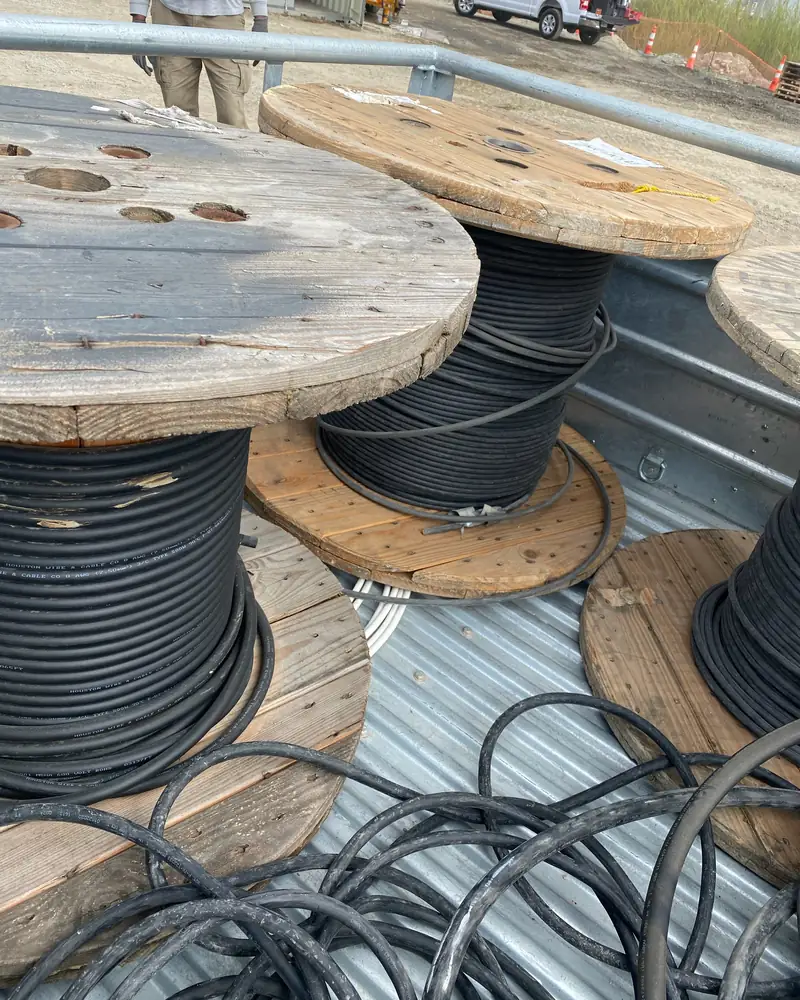
Yes—Ohio Wire Buyers reviews full reels, partial reels, boxed coils and cut lengths of reusable cable. Keep continuous lengths intact. A reel containing separate pieces is different from a reel containing one uninterrupted length, even when the total footage looks similar.
For partial reels, distinguish the original factory footage from the amount remaining. Send readable footage marks when present, explain how you estimated the balance, and identify any splices. For coils, label each separate piece rather than reporting one combined total that could suggest a longer usable run.
Do not cut cable down to make the lot easier to count. Keep factory labels with their corresponding reels, and flag re-reeled inventory. Southwire's handling guidance emphasizes protecting cable from reel-handling damage and keeping ends sealed against moisture; preserve existing seals rather than opening protected power cable for a photograph.
What makes surplus cable reusable instead of scrap?
An offer depends on the identifiable product, conductor material, size, construction, continuous footage, condition, packaging, documentation and demand. Copper content alone does not describe a shielded signal cable or an armored feeder. The useful assembly is what matters to a product buyer.
Tell us about crushed sections, deep jacket cuts, damaged armor, exposed insulation, heat damage, contamination or water entry. Photograph the defect and identify the affected length. Do not hide damage beneath a fresh wrap or assume an intact outer jacket proves that every internal component is sound.
Manufacturer numbers are especially helpful when markings overlap. A tray rating can appear on a cable with another specialized purpose, while a brand name alone does not establish conductor count or shielding. If the material is not reusable, we say so; a scrap metal recycler may then be the right buyer.
How is decommissioned cable with lugs reviewed?
Used cable is considered only if it remains reusable. Attached lugs are a detail to document, not a reason to cut every termination off. Send photographs of both ends, the disconnected length and jacket print, along with service history, removal information and any available test records.
Removal must be handled by qualified people after safe de-energization and the required energy-isolation procedures. OSHA's electrical work-practice requirements include verification of the de-energized condition by a qualified person using test equipment. A switched-off circuit is not, by itself, evidence that cable is safe to disconnect.
An offer review is not an electrical inspection or approval for reinstallation. Do not energize a removed length or attempt field testing to satisfy a photo request. Show us the existing documentation and disclose what is unknown about the cable's previous service.
What should you send for a cable offer?
Send a whole-lot view, individual reel tags, readable jacket print and photographs of existing accessible cut ends. Match every photograph to a line on your footage list. Include the manufacturer or part number, cable designation, conductor material, size, conductor or pair count, quantity and whether each length is unused or previously installed.
For shielded cable, include the tag's shield description. For fiber, provide the fiber count and manufacturer number instead of relying on jacket color. For lugged lengths, photograph both terminations; for sealed power cable, photograph the seals and use paperwork to describe the internal construction.
Add proof of ownership, such as an invoice, purchase order, closeout paperwork or company letter. We verify the seller and ownership and keep a written purchase record. Clear documentation lets the review address the actual lot rather than an uncertain pile of cable.
How does pickup work anywhere in Ohio?
Ohio Wire Buyers arranges pickup at the seller's Ohio jobsite, warehouse, plant or yard. We have no Ohio street address, office, yard or drop-off. Tell us where the material sits, whether loading equipment is available, and whether reels are accessible without moving operating equipment or entering restricted areas.
We review the information and reply with questions or a written offer before pickup. Payment method and timing are confirmed in writing before pickup, and the count is checked against the written terms when the lot is collected. Disclose access restrictions and loading concerns before arrangements are made.
To sell cable without destroying its reusable value, keep it identified and intact. Request an offer for your surplus cable with tags, jacket photos and a footage list, or call 951-403-5738 to discuss the lot.
Frequently asked questions
Do you buy aluminum cable as well as copper cable?
Yes. Ohio Wire Buyers buys reusable surplus electrical wire and cable with copper or aluminum conductors. Identify the conductor material from the reel tag or manufacturer paperwork rather than judging the outside jacket. On armored cable, the armor material and the conductor material are separate details; send the product number if either is unclear.
Can I sell cable when the original reel tag is missing?
Send clear photos of the jacket print, existing cut ends and the whole reel or coil, along with any invoice or product paperwork. A missing tag does not automatically rule out review, but we need enough information to identify the cable and assess its reusable length. Tell us which details are estimates instead of filling in an assumed specification.
Should I strip cable before asking for an offer?
No. We buy reusable cable as a product, not metal separated from its insulation. Stripping a usable length destroys the construction that a future buyer would need. Keep the jacket, shields and armor intact, retain packaging and labels, and disclose any existing damage. If the cable is not reusable, a scrap metal recycler may be the appropriate buyer.
Do attached lugs make used cable unacceptable?
Not automatically. Send photos of both terminations, the jacket print and the entire disconnected length. Include the cable's service and removal history and any available test records. Used cable is considered only if it remains reusable. Do not remove installed cable or alter its terminations for a sale unless qualified personnel have established safe, de-energized conditions.
Does Ohio Wire Buyers accept cable deliveries in Ohio?
No. Ohio Wire Buyers has no Ohio street address, office, yard or drop-off. We arrange pickup at the seller's Ohio jobsite, warehouse, plant or yard. Material is reviewed first, a written offer is provided before pickup, and the payment method and timing are confirmed in writing before pickup is arranged.
Sources and further reading
- Southwire Power Cable Manual: construction, handling and storage
- Southwire Temporary Power Catalog: portable cord, Type W and DLO
- Southwire copper photovoltaic power cable specification
- Belden Industrial Cabling Solutions catalog
- Corning Fiber Optic Cables: environments and construction types
- OSHA electrical safety-related work practices