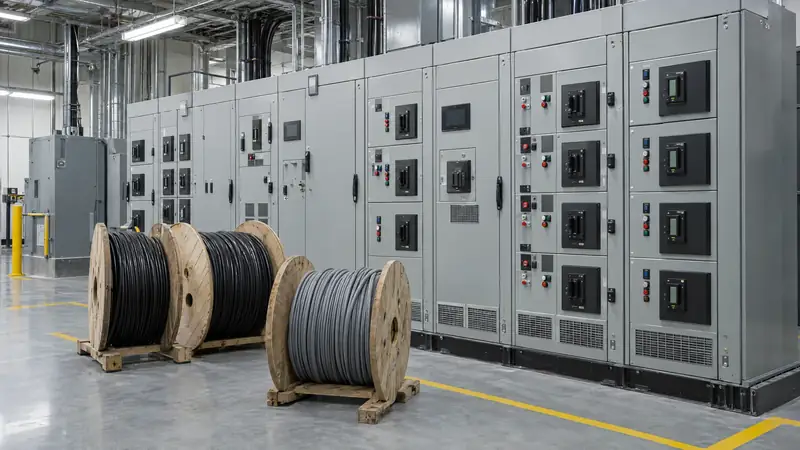
Ohio Wire Buyers buys reusable plant surplus wire and cable from manufacturing businesses anywhere in Ohio, including unused maintenance stock, retooling leftovers and reusable cable released during plant closures. We buy it as product for resale and reuse, not as scrap by the pound, and arrange pickup at the seller's plant, warehouse or yard after a written offer and written payment terms.
Which plant surplus wire should leave the MRO storeroom?
Start with an engineering decision, not a scrap-bin decision. Maintenance, repair and operations inventory—MRO stock—can include cable reserved for a critical machine alongside reels left from an abandoned project. Ask the person responsible for the equipment to identify which stock remains necessary before purchasing or investment recovery releases anything.
Build separate groups for available surplus, retained spares and material with unresolved ownership. A storeroom item marked obsolete may still fit equipment elsewhere in the business; conversely, an unopened reel may have no remaining purpose after a line redesign. Those are internal decisions, not something a buyer can infer from photographs.
Plants are among the businesses we buy surplus wire from. The useful starting point is a released inventory list that tells us what is actually available, rather than a photograph of an entire maintenance cage.
What industrial wire and cable can be reviewed for reuse?
Keep product families separate. A black jacket alone does not distinguish a motor cable from control cable, and the plant's internal stock description may omit the shield, conductor count or listing needed to identify it for resale.
| Material in the factory lot | Identification to capture | Detail worth preserving |
|---|---|---|
| Power and control tray cable | Manufacturer, TC or TC-ER marking, conductor size and count | Complete jacket legend and continuous remaining length |
| Variable-frequency drive cable | Exact part number, conductor size, shield and grounding construction | Existing cut-end view without stripping more jacket |
| Machine tool and panel wire | Spool label, MTW and any AWM markings, size and color | Original spool and matching carton label |
| Multiconductor control cable | Conductor count, identification system and shield details | Part number that distinguishes similar-looking constructions |
| THHN/THWN-2 building wire | Printed type, conductor material, size and color | Separate footage for each reel or coil |
Southwire's cited control cable specification describes a 600-volt TC-ER product with a PVC jacket and PVC/nylon-insulated conductors. That example is not a specification for every tray cable. Its jacket legend carries details that a shorthand storeroom entry such as “control wire” misses.
Belden's VFD range uses XLPE insulation, shields and grounding conductors for drive applications. Southwire's MTW listing distinguishes UL 1063 machine tool wire from additional AWM style markings. Use the actual cable jacket print and manufacturer documentation rather than assigning ratings from appearance.
How should retooling and line-move leftovers be separated?
A line move can produce unused installation stock and previously installed cable at the same time. Mark those groups separately, even when their part numbers match. Describe unused cable as unused only when that history is known; a neatly rewound reel does not establish it.
For project leftovers, reconcile the purchasing list with the material that remains after installation. Record any change in cable type or motor location that made a reel unnecessary. Keep the reel tag and project reference together so engineering can confirm the material is no longer committed.
For removed lengths, record where the cable served, whether it was spliced and any known exposure to heat, oil, chemicals or mechanical damage. Do not shorten cable merely to make uniform piles. A useful continuous run and its history are more informative than a pallet of unexplained pieces.
Who handles electrical isolation before cable is removed?
Leave disconnection and removal to qualified personnel under the plant's electrical safety procedures. Do not open equipment, disturb terminations or cut installed cable to obtain offer photographs. Turning a machine off is not proof that its conductors are safe to handle.
OSHA's electrical work-practice rule requires disconnection from electrical energy sources and applicable lockout and tagging procedures. It also requires a qualified person to test exposed circuit elements and verify the deenergized condition, including possible induced voltage or backfeed. A push button or selector switch cannot serve as the sole means of deenergizing equipment.
Our purchase review is not an electrical isolation procedure or authorization to begin dismantling. For decommissioned cable offered for reuse, send removal history and condition information once the material is safely accessible. Photographs do not replace the seller's safety responsibilities.
What should plant engineering send for an offer?
Use the plant's inventory export if it helps, but add the physical details missing from the accounting record. Assign a lot identifier to each reel, spool or coil and use that same identifier in the photographs. Record manufacturer, part number, type marking, size, conductor material, conductor count, footage and whether the material is unused or removed.
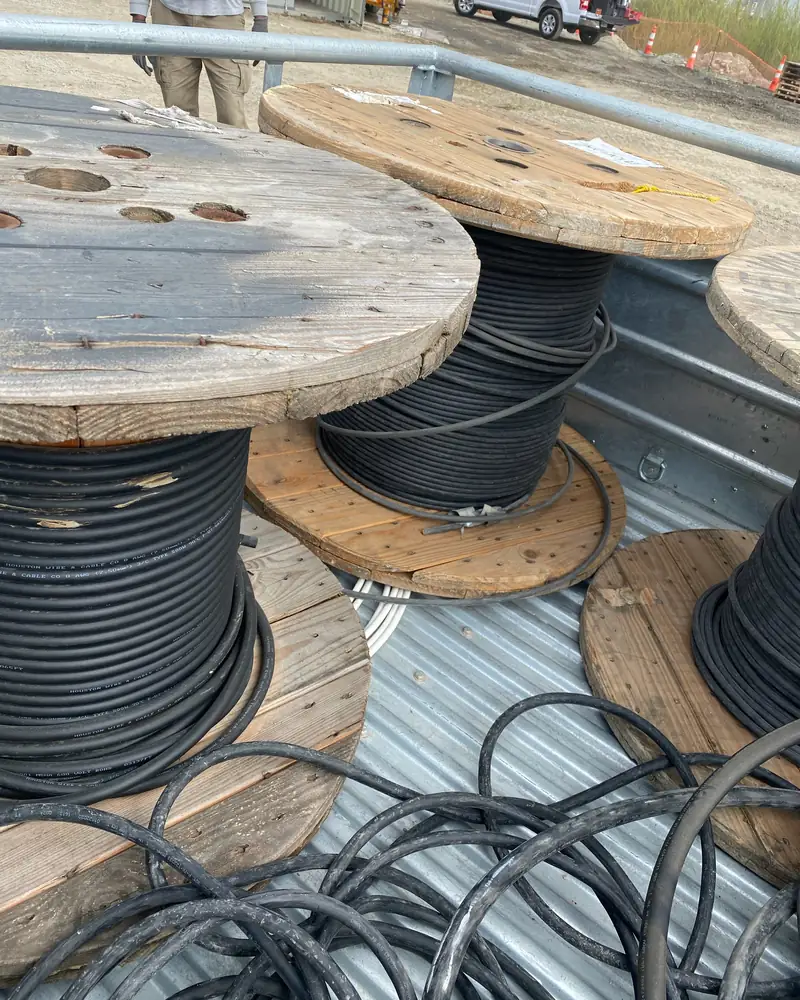
Photograph the whole released lot, each reel tag, readable jacket print and existing cut ends. Show shields and grounding conductors where already visible. Include damaged packaging, broken flanges, flattened sections or contamination rather than photographing only the clean side.
A maintenance system's quantity may reflect purchases minus recorded issues, not what remains on the reel. State whether footage was measured, taken from jacket marks or estimated, and use the remaining-reel footage guide when records are incomplete. Identify separate cut lengths individually instead of reporting them as one continuous total.
How do ownership and investment recovery fit together?
Choose a seller contact who can coordinate engineering release with the department authorized to dispose of inventory. That may be purchasing, plant management or investment recovery. If a contractor supplied the cable or a machine vendor owns consigned stock, resolve ownership before including it in the lot.
Ohio Wire Buyers verifies the seller and proof of ownership and keeps a written purchase record. An invoice, purchase order, closeout document or company letter can support that review. Our seller paperwork guide explains what to gather without discarding useful original records.
After reviewing the photos and footage list, we reply with questions or a written offer before pickup. Payment method and timing are confirmed in writing before pickup as well. The selling process should fit the plant's approval chain, with unresolved inventory held out of the agreed lot.
What access details matter during a closure or consolidation?
Give us the pickup location, gate instructions, receiving contact and any escort or orientation requirements. Describe whether the released material sits at a loading dock, inside a storeroom or in an outdoor laydown area. Identify available handling equipment and provide known reel weights and dimensions, clearly marking estimates.
For a closure, state when building access ends and which contact remains responsible after production stops. Do not assume the maintenance supervisor, auction contractor and landlord can each release the same material. Keep the agreed lot separate from retained stock and other disposal streams; the pickup count is checked against the written terms.
Ohio Wire Buyers arranges pickup anywhere in Ohio; sellers do not bring material to an Ohio company address. Send your released plant inventory through the surplus wire offer form, or call 951-403-5738 to discuss the cable, paperwork and plant access before moving it.
Frequently asked questions
Can a plant sell surplus cable without the original invoice?
An original invoice is one way to establish ownership, but it is not the only document Ohio Wire Buyers reviews. A purchase order, project closeout paperwork or a company letter may help establish that the business owns the material and has authorized its sale. Tell us what records are available; we verify the seller and proof of ownership before completing a purchase.
Can small machine tool wire spools go into a larger factory lot?
Yes, include reusable small spools in the inventory you send for review. Photograph each label and record the wire size, color, manufacturer and remaining footage or estimate. Keep different products separate, even when they came from the same panel shop. Inclusion in a larger lot does not guarantee an offer; identifiable material and useful remaining lengths still matter.
Does a factory have to close before selling excess wire?
No. An operating plant can sell wire released from maintenance inventory, a completed project or a canceled line installation. Have plant engineering confirm that the material is not a required spare or committed to another project. Then obtain the business's disposal approval and send the released inventory for review without including stock that production still needs.
Can you review factory cable that has been stored outdoors?
Yes, send photos and describe the storage history rather than assuming outdoor storage makes cable either acceptable or unusable. Show reel flanges, exposed ends, jacket damage and any visible water or contamination. Photos help with initial review, but they do not establish the condition of every layer on a reel. Material must still be reusable to qualify for purchase as cable.
Do you pay by copper weight for manufacturing surplus?
Ohio Wire Buyers purchases reusable wire and cable as product for resale and reuse, not as scrap metal by the pound. Identification, remaining length, conductor material, condition and documentation affect whether a lot can be offered on that basis. If the cable is not reusable, we say so; a scrap metal recycler may be the appropriate buyer instead.