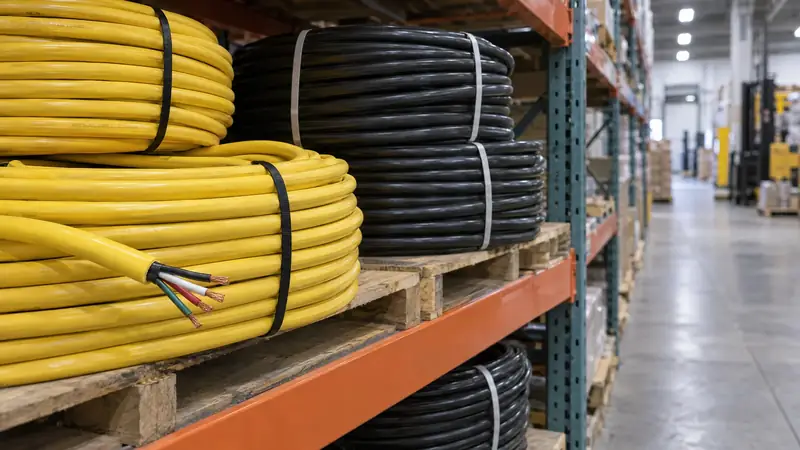
Ohio Wire Buyers buys reusable surplus mining and heavy portable power cable from businesses anywhere in Ohio, including Type W, G, G-GC and SHD-GC. To sell mining cable, send photos of its jacket markings, reel tags, ends and condition with a footage list or estimate; we review the material and reply with questions or a written offer before pickup.
Identify the product before you sell mining cable
A black flexible jacket does not identify the cable. Start with the printed or embossed type, conductor size, conductor count and voltage rating, then match those details to the manufacturer's specification. Mining cable is part of the broader range of reusable wire and cable we buy, but its construction requires a more specific lot description.
The following distinctions come from the Prysmian mining cable catalog. They are identification examples, not interchangeable installation specifications.
| Cable family | Verified rating examples | Construction detail to identify |
|---|---|---|
| Type W | 2,000 V | Single- or multiconductor constructions; confirm grounding arrangement and count |
| Type G | 2,000 V | Portable power cable with grounding conductors; do not assume a ground-check conductor |
| Type G-GC | 2,000 V | Power conductors, grounding conductors and a separate insulated ground-check conductor |
| Type SHD-GC | 5,000, 8,000, 15,000 and 25,000 V versions | Shielded power conductors plus grounding and ground-check conductors |
Prysmian lists round Type W and G-GC constructions from 6 AWG through 500 kcmil. Size availability depends on the product: its 25,000 V SHD-GC construction lists 1 AWG through 350 kcmil. Never infer the voltage class from cable diameter or assume every mining-cable family has the same size range.
Why does the ground-check conductor matter?
The ground-check conductor is a separate element used with a ground-monitoring system. It is not another power phase or a substitute for the grounding conductors. In Prysmian's round G-GC construction, the three insulated power conductors share the jacket with two grounding conductors and an insulated ground-check conductor.
That means a marking such as 3/C does not necessarily describe every metallic element inside the assembly. Photograph the existing exposed end and record the full type designation. Use our cable jacket-print guide if the legend is difficult to interpret.
For resale, a missing, broken or undocumented ground-check element is not a minor cosmetic issue. Do not describe G cable as G-GC, or offer single-conductor DLO cable as an equivalent simply because both products are flexible. The next application has to match the actual construction.
What does the MSHA marking actually establish?
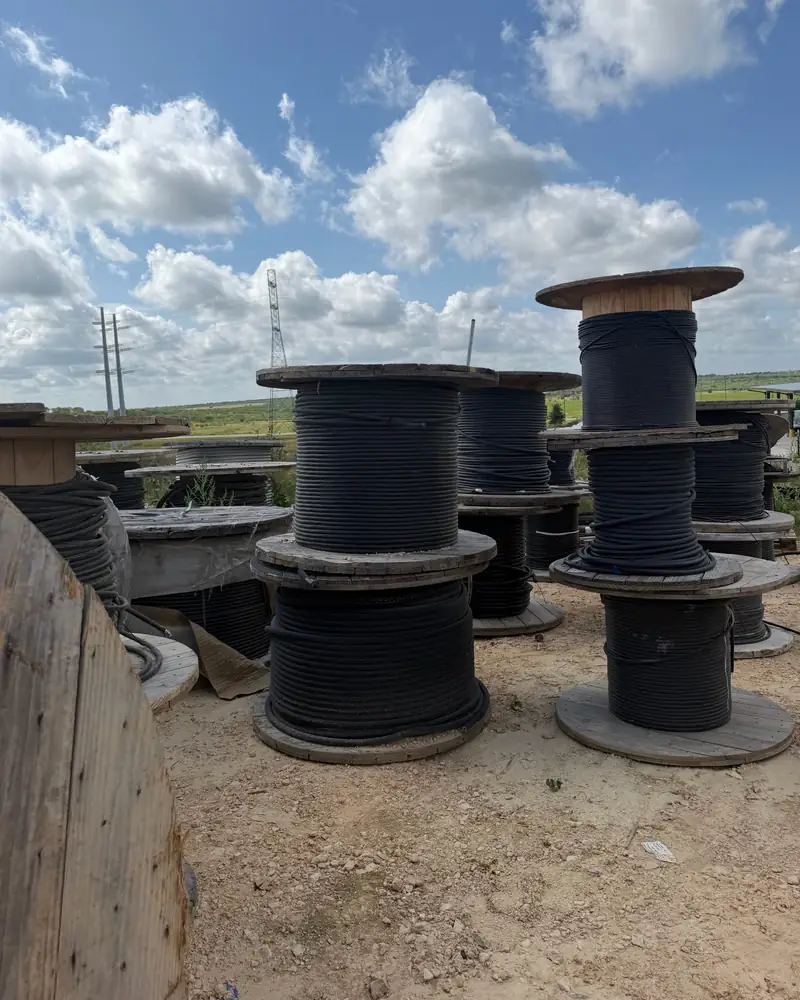
MSHA means the Mine Safety and Health Administration. Under 30 CFR Part 7, Subpart K, cable approval addresses flame-resistant requirements. Section 7.409 requires approved cable to carry a permanent, legible approval marking together with identifying cable information.
Photograph the complete approval number rather than writing only “MSHA cable.” Manufacturer literature contains different marking formats, including prefixes such as P-07-KA and P-7K. The prefix alone is not a conductor size, voltage rating or cable type, and an approval mark does not certify the present condition of a used length.
Keep the manufacturer name, type and voltage visible in the same photo sequence. A tag that says SHD-GC without the voltage class leaves an important question unanswered. Shielded trailing cable also needs to remain distinct from medium-voltage distribution cable, even when their marked voltage ratings match.
Which condition problems affect reuse?
Used cable must be inspected appropriately before reuse. Photograph abrasion, cuts, flattened areas, jacket splits, heat damage, exposed shielding and every splice. Explain whether the material was a spare, was installed but never energized, or operated as a trailing or reeling cable.
Chlorinated polyethylene, usually abbreviated CPE, is used for heavy-duty jackets in the manufacturer constructions cited here. Southwire's SPEC47322 SHD-GC cable combines EPR insulation, shielding and a reinforced two-layer CPE jacket. Those layers perform different jobs; an outer jacket cannot tell you whether the insulation, shield or fine-stranded conductor beneath it is intact.
Ask qualified personnel to document any available inspection or electrical-test results and identify which cable length they cover. Do not energize a questionable assembly to demonstrate that it works. Removal from equipment should be handled by qualified personnel after the equipment has been safely de-energized.
Damage can reduce the reusable length or make the material unsuitable altogether. Our distinction between surplus product value and scrap price matters here: copper content does not prove that a complete cable remains reusable.
Keep footage, packaging and history together
Continuous footage is more useful information than the size of a pile. List each reel or coil separately, with its estimated usable length, any splices and whether the ends are sealed or terminated. Keep original tags and avoid cutting cable into shorter pieces merely to make loading easier.
Where sequential jacket marks are available, photograph accessible marks and explain how you calculated the estimate. Our guide to measuring cable left on a reel covers ways to document remaining footage. Label an estimate as an estimate; do not present the original factory footage as the current balance.
Keep unused stock separate from previously operated cable. Photograph damaged reel flanges and describe storage conditions, connector assemblies and any known history of runover or excessive pulling. Preserve protected ends and identification instead of stripping insulation to show the copper.
What should you send for a Type W or SHD-GC offer?
Build the lot list around cable identity and condition, not just total reels. The wire-photo guide can help with readable photos, but heavy portable power cable needs the additional details below.
| Send this detail | Why it matters for this material |
|---|---|
| Full jacket legend and reel tag | Establishes manufacturer, type, size, conductor count and voltage |
| Existing cut ends or termination photos | Helps distinguish power, grounding, ground-check and shield elements |
| Footage for each continuous length | Separates a useful run from several disconnected pieces |
| Every splice and damaged area | Makes repair history and potential loss of usable length visible |
| Connector labels and strain reliefs | Identifies attached assemblies without assuming compatibility |
| Purchase and closeout records | Supports ownership and connects paperwork to the physical lot |
Do not cut an intact cable solely to obtain an end photo. Include the whole lot, reel condition and accessible loading area. We verify the seller and proof of ownership through an invoice, purchase order, closeout paperwork or company letter, and keep a written purchase record.
Mining, quarry and temporary-power surplus across Ohio
The Ohio Department of Natural Resources places Ohio's coal-bearing rocks in the eastern third of the state. Its Mines Locator covers coal and industrial-mineral mines. Sellers in eastern Ohio and southeast Ohio can request pickup where their surplus is stored, without transporting it to a drop-off yard.
The product category extends beyond coal equipment. Manufacturer literature identifies quarry shovels and draglines, tunneling applications and dredges among relevant uses. Describe the equipment and service history, but let the jacket markings establish what is for sale.
Smaller SOOW portable cord should be listed separately from heavy trailing cable. A mixed temporary-power lot can contain several constructions that look similar when coiled together.
Agree on the lot before pickup
Ohio Wire Buyers arranges pickup at the seller's Ohio jobsite, warehouse, plant or yard. Ohio Wire Buyers has no Ohio street address, office or yard. Payment method and timing are confirmed in writing before pickup, and the count is checked against the written terms. See how selling surplus wire works for the full sequence.
Send your cable identification, footage and condition photos through the offer form, or call 951-403-5738. Keep the material intact while we review whether it can be bought for resale and reuse.
Frequently asked questions
Can I sell unused mining cable left from an equipment order?
Yes. Ohio Wire Buyers buys reusable surplus electrical wire and cable from businesses, including unused mining cable. Keep the reel tag and purchase paperwork with the material. Send the exact cable type, conductor size, voltage rating and remaining footage, along with photos. We review the lot and provide questions or a written offer before arranging pickup.
Do connectors or lugs make portable power cable more valuable?
Not automatically. Connectors must suit a future application, and their condition can differ from the cable's condition. Photograph connector labels, mating faces, strain reliefs and attached lugs without dismantling energized equipment. Tell us whether the assemblies are complete and whether repairs were made. The usable cable length and documented condition still matter.
Is mining cable bought by copper weight?
Ohio Wire Buyers buys reusable cable as product for resale and reuse, not as scrap metal by the pound. Type, conductor size, voltage rating, uninterrupted footage, condition and documentation affect the review. If the cable is not reusable, we say so; a scrap metal recycler may then be the appropriate buyer.
Can you review a mixed lot of G-GC, DLO and portable cord?
Yes. Identify each cable separately rather than describing the whole lot as mining cable. Send jacket-print photos and a footage estimate for each reel or coil, and distinguish unused material from previously installed lengths. Keep ground-check cable separate from single-conductor DLO and smaller portable cord so the written lot description is clear.
Should I cut off a damaged section before asking for an offer?
Photograph and disclose the damage first rather than cutting the cable to improve its appearance. A cut changes the available continuous length and can remove useful identification. Do not hide a splice or repair beneath fresh wrapping. Used cable requires appropriate inspection, and a photograph alone cannot establish that a damaged length is safe to reuse.