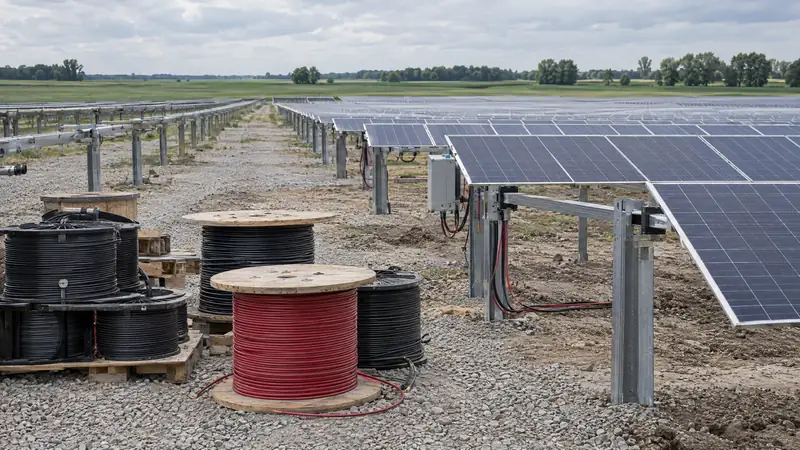
Ohio Wire Buyers buys reusable surplus solar PV wire from businesses anywhere in Ohio, including full reels, partial reels, coils and usable cut lengths. To sell PV wire, send photos of the reel tags, insulation print, cut ends and whole lot with a footage list or estimate; we review the material and provide a written offer before pickup. We buy cable as product for resale and reuse, not as scrap metal by the pound.
What can you sell as PV wire?
Separate loose single-conductor cable from finished leads and harnesses. Copper string wire, larger aluminum PV feeders and connectorized assemblies need different identification, even when they came from the same solar project. A pallet labeled only "solar cable" leaves important questions unanswered.
Unused factory reels preserve the clearest product identity. Partial reels and cut lengths can also be reusable when their markings, remaining length and condition support another installation. Used material needs additional review; removal from a solar array does not by itself establish suitability for reuse.
Include related cable in your inventory, but label it by its actual type. Our wire and cable categories help distinguish PV conductors from building wire, collection cable and grounding material rather than treating the entire closeout as one product.
Which markings matter when you sell PV wire?
Look for the manufacturer, conductor size, copper or aluminum identification, type designation and voltage rating. PV wire is associated with UL 4703; XLPE means cross-linked polyethylene insulation. Southwire's copper and aluminum PV specifications both list XLPE construction and a 2,000-volt rating, but their conductor constructions differ.
These examples show why size and material belong on separate inventory lines:
| Verified product example | Conductor and insulation | Detail to record for resale |
|---|---|---|
| Southwire 12 AWG PV | Stranded bare copper, XLPE, 2,000 V | Exact print and remaining continuous length |
| Southwire 10 AWG PV | Stranded bare copper, XLPE, 2,000 V | Color, product code and reel identity |
| Southwire 8 AWG PV | Stranded bare copper, XLPE, 2,000 V | Stranding and any additional ratings |
| Southwire aluminum PV line | Compact-stranded aluminum alloy, XLPE, 2,000 V; sizes 6 AWG through 1000 kcmil | Aluminum identification and exact size |
These are manufacturer examples, not a promise that every solar cable has those ratings. KrisTech lists 600-, 1,000- and 2,000-volt PV options. Record the cable rating itself rather than copying the project's system voltage into the cable inventory.
Red or black insulation alone proves neither product type nor sunlight rating. Photograph the print on each color; colored cable can have product-specific options that differ from black cable.
Is USE-2 the same thing as PV wire?
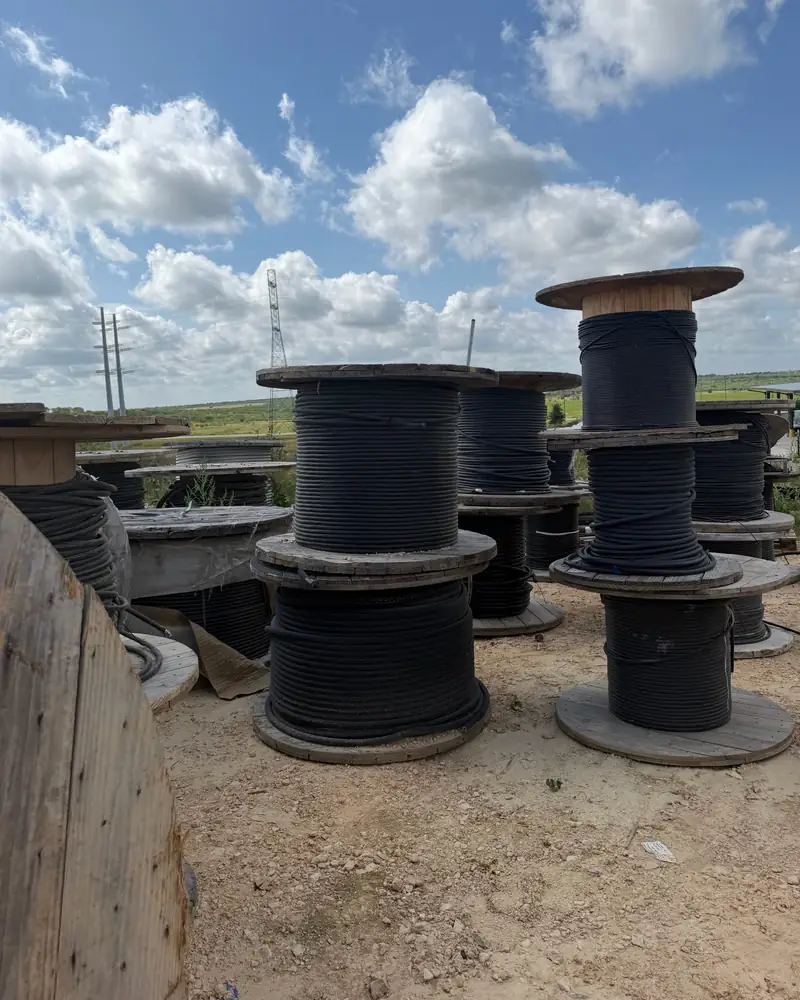
No. A USE-2 designation alone is not proof of a UL 4703 PV-wire listing. KrisTech's comparison explains that PV wire and USE-2 have different testing requirements and application limits, although some products carry multiple designations.
Read the complete legend instead of stopping at the first familiar letters. Cable marked PV alongside RHW-2 or USE-2 should be listed with every visible designation and its associated voltage information. Send a longer print sample if the wording wraps around the conductor or is difficult to read.
Keep USE-2 and RHW-2 surplus separate from clearly identified PV cable. A buyer must match the actual product to a future application; this page is not an installation approval or a substitute for the applicable electrical code and project specifications.
How should you list partial reels and cut lengths?
The factory tag describes what was shipped, not necessarily what remains. Mark each reel as unopened, opened but unused, partially used or re-reeled. Keep the original tag even when its footage no longer matches the balance.
KrisTech specifies standard PV spools of 500 or 2,500 feet. Those put-ups are useful identification clues, but do not assume an opened spool still contains its original quantity. Note whether the remaining footage comes from inventory records, a measuring device, printed footage marks or an estimate.
A reel containing separate pieces is not one continuous run. List each usable length and disclose splices or joined sections. Our guide to measuring wire left on a reel explains how to approach an uncertain balance without presenting an estimate as a verified measurement.
Preserve sound flanges and secure loose ends. Sellers preparing several full and partial wire reels should assign a distinct lot identifier to each so photographs stay matched to the footage list.
What changes when the surplus includes solar harnesses?
A finished harness needs more than a conductor gauge. Send the assembly part number, drawing or bill of materials if available, along with connector markings, branch arrangement, lead lengths and quantity. Photograph the entire assembly and close-ups of its ends without dismantling it first.
Distinguish unused project-specific assemblies from used leads removed during repairs. Explain whether connectors were previously mated and disclose cracked housings, cut insulation, pulled-out contacts or signs of overheating. We may need further information before an assembly can be considered reusable.
List medium-voltage collection cable separately from DC string conductors, preserving its own reel tags and end protection. Likewise, identify bare copper grounding conductor as grounding material rather than PV wire. Separate descriptions let each product receive the appropriate review.
Where does Ohio solar-project surplus fit?
Ohio Power Siting Board records document substantial solar developments. The Yellowbud case describes a 274-megawatt facility in Ross and Pickaway counties; the Fox Squirrel case describes a maximum generating capacity of 577 megawatts in Madison County. These figures describe the facilities in those records, not wire quantities or current construction status.
Projects of this kind provide context for contractors managing solar inventories. Design revisions, changed routing, over-ordering and closeout can leave reusable cable behind, but we do not claim that either named project has surplus available or is a customer.
For a broader closeout, our solar-project surplus page covers organizing multiple cable families. Pickup is arranged wherever your material sits in Ohio; the project name matters less to an offer than accurate product details and documented ownership.
What should you send for a PV-wire offer?
Start with a whole-lot photograph, then identify each reel or coil consistently. Our reel-tag reading guide helps locate useful fields, while the wire photography guide explains how to make small print readable.
| Send this information | PV-specific reason it matters |
|---|---|
| Full insulation legend and reel tag | Distinguishes PV-listed cable from other solar-job conductors |
| Gauge, conductor material, color and voltage | Keeps similar-looking string wire and feeders separate |
| Footage per continuous piece and measurement basis | Shows what remains usable without guessing from the original tag |
| Cut-end and condition photos | Helps review conductor condition, insulation damage and storage exposure |
| Harness part numbers and assembly photos | Identifies leads that cannot be described adequately by gauge alone |
| Invoice, purchase order, closeout paperwork or company letter | Supports seller and ownership verification |
Tell us about outdoor storage, submerged reels, missing tags or damaged packaging. Disclosing a problem early is better than disguising it. An offer depends on reusable product identity, condition, footage and demand; our surplus-versus-scrap guide explains why metal weight alone does not describe the opportunity.
How are pickup and written terms handled?
Ohio Wire Buyers reviews your submission and replies with questions or a written offer before pickup. Payment method and timing are confirmed in writing before pickup, and we check the count against the written terms. See how selling surplus wire works for the full sequence.
Include the pickup location, gate access, loading equipment and any reel-handling restrictions. We arrange pickup at Ohio jobsites, warehouses, plants and yards; we have no Ohio street address or drop-off. If the cable is not reusable, we say so, and a scrap metal recycler may be the right buyer.
Keep your solar inventory intact while it is reviewed. Request an offer for your PV-wire lot with photos and footage, or call 951-403-5738 to discuss what information to send.
Frequently asked questions
Can I sell PV wire without the original purchase invoice?
An invoice is useful, but it is not the only ownership document Ohio Wire Buyers can review. A purchase order, project closeout paperwork or company letter may help establish who owns the material. We verify the seller and proof of ownership and keep a written purchase record. Send the documentation you have with the lot photos.
Is red solar wire worth more than black solar wire?
Color alone does not determine an offer. Wire type, voltage rating, conductor size and material, usable footage, condition and demand all matter. List red and black cable separately so we can identify the quantities available. Photograph the insulation markings on each color rather than assuming both came from the same product line.
Will you consider solar cable removed from an operating array?
Used cable is considered only if it remains reusable. Tell us where it served, why it was removed and whether there was a fault, overheating or physical damage. Include condition photos and any available inspection records. Do not disconnect operating equipment to prepare a lot; removal belongs with qualified personnel after safe isolation.
Should I remove connectors before offering leftover solar leads?
Leave the leads intact for the initial review. Photograph the connector markings, cable print, complete lead and both ends, and provide assembly drawings or part numbers if available. Cutting off connectors can erase useful identification and reduce the remaining length. We can ask for additional details before deciding whether the material is reusable.
Can I bring solar wire to an Ohio Wire Buyers location?
No. Ohio Wire Buyers has no Ohio street address, office, yard or drop-off. We arrange pickup at the seller's Ohio jobsite, warehouse, plant or yard. Before pickup, we provide written offer terms and confirm payment method and timing in writing. Include the material's location and loading access with your submission.
Sources and further reading
- Southwire SPEC45411: Copper 2000V XLPE RHH/RHW-2 PV cable
- Southwire SPEC45410: Aluminum 2000V XLPE RHH/RHW-2 PV cable
- KrisTech Photovoltaic Wire: Specifications, identification and packaging
- KrisTech: Solar PV Wire vs USE-2 Wire
- Ohio Power Siting Board: Yellowbud Solar Farm case record
- Ohio Power Siting Board: Fox Squirrel Solar Farm case record