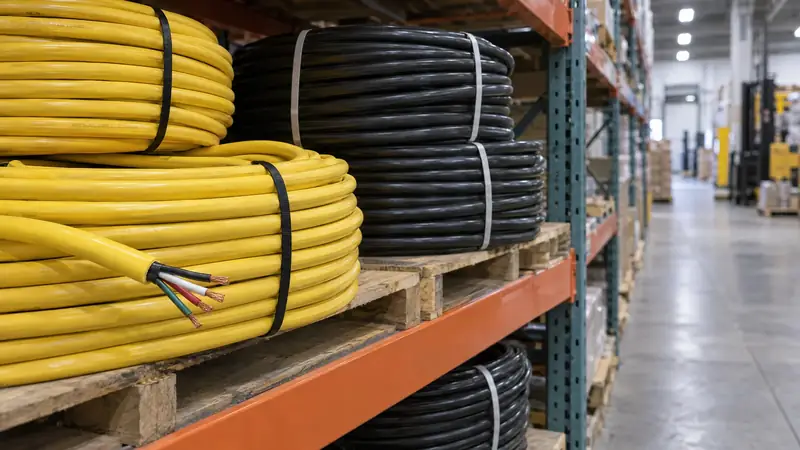
To sell SOOW cord in Ohio, send Ohio Wire Buyers photos of the jacket markings, reel tags, cut ends and whole lot, together with remaining footage and condition. We buy reusable surplus portable cord from businesses as product for resale and reuse—not scrap by the pound—and arrange pickup anywhere in Ohio after a written offer.
How can a business sell SOOW cord without cutting it down?
Keep the cord intact while you identify it. Unused full reels, partial reels, boxed coils and usable cut lengths can be submitted for review; used cable must still be reusable. Stripping the jacket or chopping continuous lengths removes the features a product buyer needs to evaluate.
Separate unused stock from cord that has powered equipment. An Ohio contractor's leftover temporary-power material, a plant's unused machinery cord and surplus from a stage or event-power project need different condition descriptions. If the lot includes other products, our wire and cable categories help you organize them without treating everything black and flexible as SOOW.
What do SOOW, SJOOW, SEOOW and SJEOOW mean?
The letters describe a cord family, not a brand. Ericson Manufacturing's portable cord letter guide explains S as extra-hard service and SJ as junior, hard service. E identifies a thermoplastic elastomer, or TPE, jacket; OO indicates oil-resistant insulation and jacket, while W identifies weather and water resistance.
| Cord marking | Voltage rating | Construction example from Southwire | Important sorting distinction |
|---|---|---|---|
| SOOW | 600 V | EPDM insulation with a flexible CPE jacket | Extra-hard-service rubber cord family |
| SJOOW | 300 V | EPDM insulation with a flexible CPE jacket | Junior-service type, not interchangeable by name with SOOW |
| SEOOW | 600 V | TPE insulation and jacket | Elastomer construction; retain the complete type marking |
| SJEOOW | 300 V | TPE insulation and jacket | Junior-service elastomer cord |
These construction examples come from Southwire's listed specifications; another product's actual jacket legend and data sheet control its identity. Oil resistance is not a blanket promise of resistance to every chemical. Photograph the complete marking using our cable jacket print guide, especially when adjacent coils have similar appearance.
Why do conductor size and count matter together?
An AWG size alone does not identify a multiconductor cord. Southwire's SOOW specification lists products from 18 AWG through 2 AWG and configurations with two through five conductors, although not every size has every count. Its SEOOW control-cord range also includes higher-count configurations.
For example, Southwire lists 12 AWG SOOW with three conductors colored black, white and green, while its four-conductor version adds red. Record both size and total conductor count, including the green conductor when it is part of that manufacturer's count. Do not assume a notation used for building cable means the same thing on portable cord.
The cited Southwire cord specifications reference UL 62 and NEC Article 400. This page is for identifying surplus, not selecting circuit ampacity or approving an installation. A larger jacket diameter does not establish a higher usable electrical rating; a qualified installer must check the specific cord, terminations and conditions of use.
What makes a partial reel or coil easier to resell?
Continuous footage matters more than a pile's total footage. List each separate cut length rather than combining disconnected pieces into one apparent run. Report splices, connectorized ends and re-reeled material so the buyer knows what the available length actually consists of.
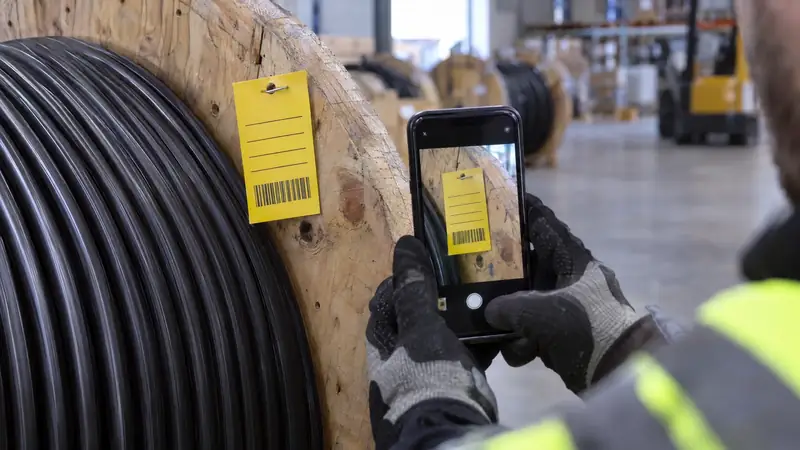
Southwire's SJOOW and SJEOOW specifications list standard reels of 250, 500 and 1,000 feet. Those are original packaging lengths, not proof of what remains after use. Keep the tag for product identification, but mark the lot list as measured footage or an estimate; our reel-tag reading guide explains what the original label can establish.
If visible footage marks or inventory records support the remaining length, send them. If neither is available, say that the footage is unknown instead of guessing from coil diameter. Our guide to measuring wire left on a reel can help you describe the basis of an estimate without unwinding material unnecessarily.
How should you describe previously used portable cord?
Identify the service history: moving machinery, temporary lighting, construction power or another application. Tell us about outdoor exposure, oil contact, abrasion, repairs and any known overheating. Photos should show worn sections as well as the cleanest portion; do not hide tape wraps underneath the coil.
For workplace cord sets, OSHA's portable-equipment rule calls for inspection of jacket damage and signs of internal damage such as crushing. It requires removal from service when a defect could expose an employee to injury until necessary repairs and tests make the equipment safe. Sale photos are not an electrical safety test or a substitute for qualified inspection.
Keep suspect material separate and disclose defects before arranging a transaction. Do not energize questionable cord to demonstrate that it works. If damage makes the cable unsuitable for reuse, our surplus-versus-scrap guide explains why a recycler may be the more appropriate buyer.
What should you send for a portable-cord offer?
Give each reel or coil an identifier and use it in the footage list and photo names. Portable cord needs evidence of both construction and wear, so include closeups of the print and ends along with wider pictures. Leave equipment disconnection to qualified personnel; photograph existing accessible ends rather than cutting cable solely for identification.
| Send this detail | What it helps establish |
|---|---|
| Full jacket legend and reel tag | Manufacturer, cord type, AWG size, conductor count and marked ratings |
| Existing cut-end closeup | Visible conductor arrangement and condition at the end |
| Each continuous length and measurement basis | Whether the lot is one run, several pieces or estimated footage |
| Whole-lot and wear-area photos | Packaging, quantity, abrasion, crushing, tape wraps or exposed insulation |
| Service history and ownership records | Unused versus used condition and documented authority to sell |
| Ohio pickup location and access details | Reel handling, loading arrangements and site access |
Include an invoice, purchase order, closeout paperwork or company letter for ownership review. Our wire photography checklist helps make small jacket text readable. A clear submission reduces uncertainty; it does not guarantee acceptance or a particular offer.
Is every flexible black cable portable cord?
No. Record the actual marking before choosing a category. Cable marked Type W or G-GC belongs in our mining and portable power cable review, rather than being relabeled SOOW because it was used for temporary power.
Likewise, keep welding cable and surplus leads separate from multiconductor cord. Material marked TC or TC-ER should be identified as tray cable. This sorting prevents a buyer from applying the wrong specification to a mixed plant or contractor lot.
How are the offer and Ohio pickup handled?
Ohio Wire Buyers reviews your submission and replies with questions or a written offer before pickup. Payment method and timing are confirmed in writing before pickup, and the count is checked against the written terms when the material is collected. We verify the seller and proof of ownership and keep a written purchase record; the selling process explains those steps.
Pickup is arranged at your Ohio jobsite, warehouse, plant or yard. Ohio Wire Buyers has no Ohio street address, office or yard and does not accept seller deliveries. Preserve the labels and continuous lengths while the lot is under review.
Send your cord markings, condition photos and footage through the portable-cord offer form, or call 951-403-5738 to discuss the surplus before cutting or stripping it.
Frequently asked questions
Does a yellow jacket mean the cable is SOOW?
No. Jacket color alone does not establish the cord type, voltage rating, conductor size or count. Read the printed legend and match it to the reel tag or manufacturer's documentation. Send Ohio Wire Buyers a close photo of the complete marking, not just the color. If the print is worn, include whatever purchase records identify the cable and clearly flag the uncertainty.
Can I sell SJOOW surplus in the same lot as SOOW?
Yes, reusable surplus cord of different types can be submitted together for review. Keep SJOOW and SOOW on separate inventory lines because their voltage ratings differ. List each size, conductor count and continuous length, and label the matching photos. A mixed lot is easier to evaluate when the buyer can identify each item rather than receiving only a combined footage total.
Should I remove plugs before requesting an offer for portable cord?
Photograph the cord and attached ends first rather than cutting them off just to prepare a submission. Show connector markings, damage and any repair history, and explain whether the cable is unused stock or previously operated equipment cord. We review the reusable cable; do not assume attached hardware adds value. Any disconnection from equipment must be handled safely by qualified personnel.
Do I need the original factory reel to sell leftover cord?
The original reel is helpful but is not required for every reusable lot. Boxed coils, partial reels and usable cut lengths can be reviewed when their identity, condition and footage are clear. Preserve the original tag if you have it, even when the cable has been moved to another reel. Identify re-reeled material and do not present the original factory footage as the remaining amount.
Does Ohio Wire Buyers buy household extension cords as scrap?
Ohio Wire Buyers buys reusable surplus electrical wire and cable from businesses as product for resale and reuse, not household scrap by the pound. A business with identifiable surplus portable cord can send photos and a footage list for review. If the material is damaged beyond reuse, we say so; a scrap metal recycler may be the appropriate buyer instead.
Sources and further reading
- Ericson Manufacturing: Meanings of portable cord letters
- Southwire: ROYAL SOOW cord, specification 70000
- Southwire: ROYAL SJOOW cord, specification 70126
- Southwire: SEOPRENE SEOOW cord, specification 70070
- Southwire: SEOPRENE SJEOOW cord, specification 70065
- OSHA: 1910.334, use and inspection of portable electric equipment