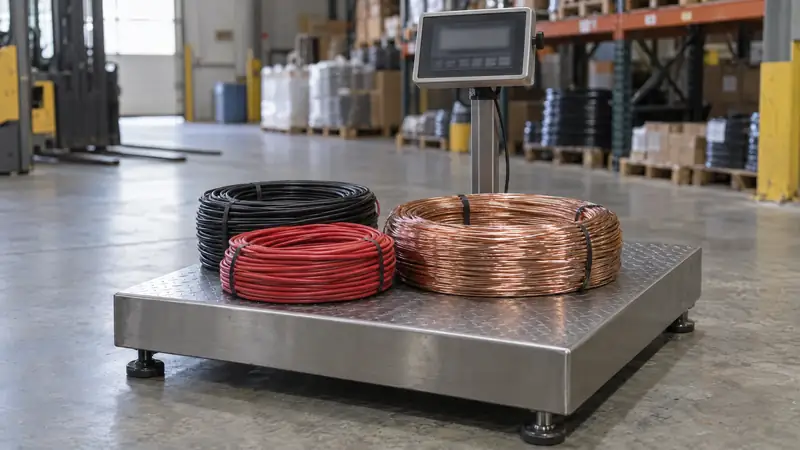
How much is copper wire worth depends first on whether it can be reused: scrap is valued by accepted weight and grade, while usable surplus is evaluated as electrical product. Ohio Wire Buyers buys reusable surplus electrical wire and cable from businesses anywhere in Ohio, not scrap metal by the pound. Preserve the reel, insulation and identification before comparing those two sale options.
How much is copper wire worth by the pound?
For a straightforward scrap purchase, multiply the accepted net weight by the recycler's quoted price per pound for that exact grade. Net weight excludes the reel, pallet and packaging. An insulated-wire rate applies to insulated material; a bare-copper rate does not automatically apply to the same gross weight.
The examples below assume a hypothetical $4.00 per pound paid on accepted copper weight. This is not a current price, an Ohio market quote or an Ohio Wire Buyers offer. Prices change daily.
| Question | Calculation using the hypothetical rate | Result |
|---|---|---|
| How much is 20 lbs of copper worth? | 20 lb × $4.00/lb | $80 |
| How much is 100 lb of copper worth? | 100 lb × $4.00/lb | $400 |
| How many pounds of copper to make $100? | $100 ÷ $4.00/lb | 25 lb |
Replace the example rate with the buyer's actual quote. Confirm whether that quote uses incoming insulated-wire weight or recovered copper weight before calculating a total.
Why can a reusable reel be worth more than its metal?
A usable reel contains more than copper. Its insulation, continuous length, identified construction and packaging let another business purchase wire for an electrical application instead of buying metal for processing. Ohio Wire Buyers evaluates those product characteristics along with resale demand.
For example, identified THHN/THWN-2 building wire with useful remaining footage is a different offering from a bin of unrelated offcuts. A longer continuous run and several short pieces are not interchangeable just because their combined weight matches. New, unused wire is easier to describe, but used cable is considered only when it remains reusable.
There is no reliable rule that surplus must bring a particular multiple of scrap value. Type, size, condition and demand can change the result. Compare a real product offer with a real recycler quote using the surplus value versus scrap price guide, rather than applying a promised percentage premium.
What do bare bright, No. 1 and No. 2 mean?
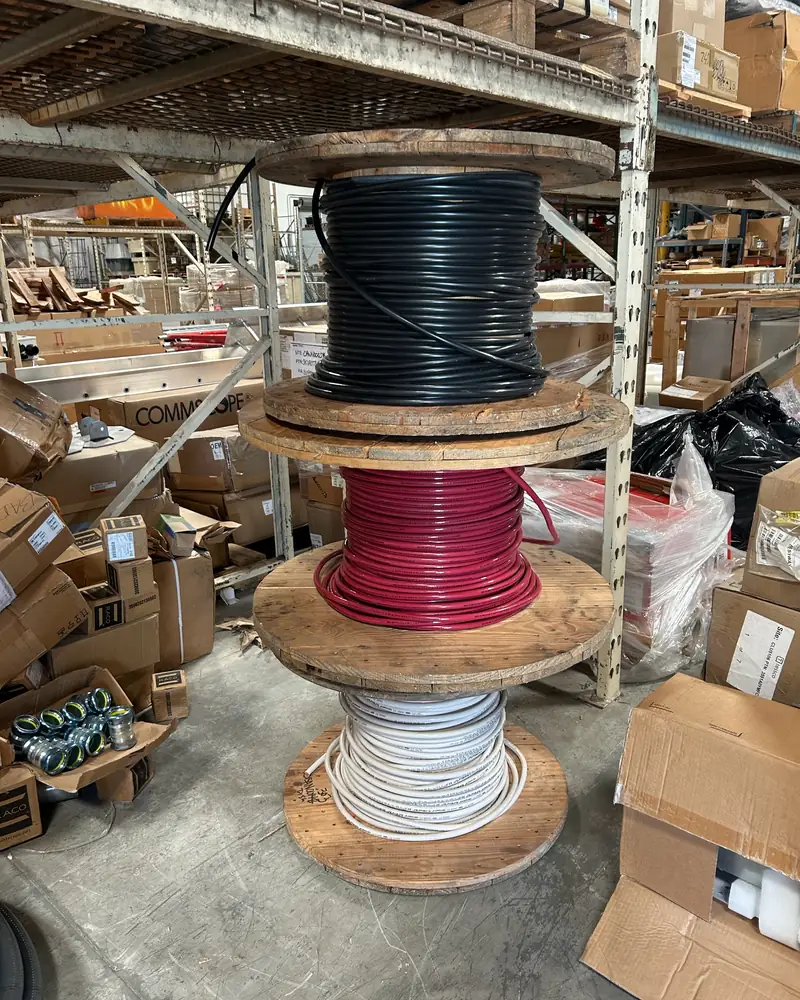
Scrap grades describe material for recycling, not whether cable is suitable for another installation. The ReMA/ISRI copper specifications directory distinguishes these categories; the receiving buyer must confirm the grade it will accept.
| Category | Identifying requirements | What to confirm |
|---|---|---|
| Bare bright, Barley | Bare, uncoated, unalloyed copper wire | Accepted gauge and treatment of green copper |
| No. 1 wire, Berry | Clean, untinned, uncoated, unalloyed wire and cable; excludes brittle burnt wire | Whether the lot meets the buyer's cleanliness requirements |
| No. 2 wire, Birch | Miscellaneous unalloyed copper wire with limits on contaminants; not an insulated-wire category | Contamination and acceptance terms |
| Insulated wire, Druid | Insulated copper wire sold on a sample or recovery basis | Sampling method, recovery basis and settlement terms |
Do not assume every stripped conductor qualifies as bare bright. Equally, do not send identifiable bare copper grounding wire straight to scrap solely because it has no jacket. Useful bare conductor can still be surplus product.
How much copper is inside insulated THHN?
Copper content is a mass fraction: copper weight divided by total wire weight. It changes with conductor size and construction. Insulation and nylon contribute weight without contributing copper, so a single recovery percentage cannot describe all THHN.
The table uses approximate weights from Southwire's SIMpull THHN/THWN-2 specification. Each weight is pounds per 1,000 feet of the listed stranded conductor, excluding its reel. Percentages are calculated from the manufacturer's published weights and rounded.
| Conductor size | Approximate copper weight | Approximate finished-wire weight | Calculated copper fraction |
|---|---|---|---|
| 8 AWG | 50 lb | 63 lb | 79.4% |
| 6 AWG | 81 lb | 95 lb | 85.3% |
| 4/0 AWG | 653 lb | 719 lb | 90.8% |
| 500 kcmil | 1,543 lb | 1,662 lb | 92.8% |
These are theoretical material fractions, not guaranteed recycler recovery or payout percentages. They should not be transferred to jacketed multiconductor cable with fillers, shields or armor. A recycler's actual recovery assessment requires its own agreed method.
Use the copper wire weight-per-foot chart when relating footage to weight. When working from a scale reading, subtract reel and packaging weight first; otherwise you will overstate both wire quantity and copper content.
Where do COMEX and LME prices fit?
CME Group describes its copper futures as a benchmark across the copper value chain. COMEX copper futures and London Metal Exchange copper prices are market references, not offers to purchase a contractor's leftover cable. The LME identifies its Official Price as a global copper benchmark used in physical contracts and hedging.
A scrap transaction also involves grade, recovery and processing terms. A reusable-wire transaction involves product identity and resale demand. Neither should be treated as a direct exchange-price payout. Check the quote's date and conditions instead of assuming a market headline establishes your lot's sale value.
How do you compare two offers fairly?
Compare the same material, not just the most attractive unit price. A per-pound recycler quote and a lump-sum reusable-product offer can only be compared after you establish what each buyer accepts and how the final quantity is determined.
Ask whether either quote excludes damaged lengths, includes packaging weight, or depends on inspection or measured footage. For partial reels, disclose whether footage is documented or estimated. Our guide to measuring wire left on a reel explains ways to establish that quantity without treating the original tag footage as the remaining balance.
Keep payment terms beside the price comparison. Ohio Wire Buyers confirms payment method and timing in writing before pickup; do not substitute assumptions about immediate payment for the actual written terms.
What should stay intact before valuation?
Keep continuous lengths together and leave readable reel tags attached. Group coils by jacket marking and conductor size instead of mixing unidentified material into one bin. Photograph existing damage and disclose storage or removal history rather than describing every lot as unused.
Do not strip insulation or chop useful cable into shorter pieces before a reuse review. Store the material so jackets and reels are protected while offers are considered. The wire selling guides cover identification, storage and paperwork if your inventory needs preparation before listing.
What should you send for a copper-wire offer?
Send a whole-lot photo plus close-ups of reel tags, jacket print and existing cut ends. List manufacturer, wire type, conductor size, color and remaining footage for each reel or coil. Mark estimates as estimates, and distinguish separate cut lengths from one continuous length.
Include whether the cable is new/unused or previously installed, any jacket damage, and the Ohio pickup location. Provide an invoice, purchase order, closeout paperwork or company letter supporting ownership. Ohio Wire Buyers verifies the seller and ownership and keeps a written purchase record.
We review the information and reply with questions or a written offer before pickup. We arrange pickup at your jobsite, warehouse, plant or yard and check the count against the written terms; the selling process explains the sequence. If the wire is not reusable, we say so, and a scrap metal recycler may be the right buyer.
Before converting usable copper wire into a metal-only sale, request a written surplus-wire offer or call 951-403-5738. Send identification and footage, not just a scale total, so the lot can be evaluated as electrical product.
Frequently asked questions
What is today's copper wire price?
There is no single price that applies to every copper wire lot. Scrap prices change daily and depend on the accepted grade and weight basis. This guide deliberately uses hypothetical prices rather than a live quote. Ohio Wire Buyers evaluates reusable surplus electrical wire and cable as product, so photos, footage and condition are needed for a written offer.
Should I strip copper wire before selling it?
Do not strip wire that may still be reusable before asking for a product evaluation. Removing insulation destroys its identity as insulated electrical wire and leaves only a metal sale option. For material that cannot be reused, compare a recycler's insulated-wire quote with the expected stripped value after accounting for labor, equipment and discarded insulation.
Can bare copper grounding wire have surplus value?
Yes. Bare copper is a manufactured electrical product as well as a recyclable metal. An identifiable reel or continuous coil with useful footage may be suitable for resale and reuse. Ohio Wire Buyers reviews reusable bare copper from businesses; random short pieces or material that cannot be identified or reused may fit a scrap metal recycler instead.
Does a partial reel have to be weighed to get an offer?
Start with photos of the reel tag, jacket print, cut ends and the complete reel, plus your remaining footage estimate. Say whether that estimate comes from inventory records, footage marks or weighing. If you provide a scale weight, distinguish wire weight from the reel and packaging. We may ask for more information before issuing written terms.
Is an offer guaranteed to stay valid until pickup?
Do not assume an offer has an unlimited validity period or covers material omitted from the lot description. Review the written terms and ask about any conditions before accepting. Ohio Wire Buyers provides a written offer before pickup, confirms payment method and timing in writing, and checks the count against the written terms when pickup occurs.