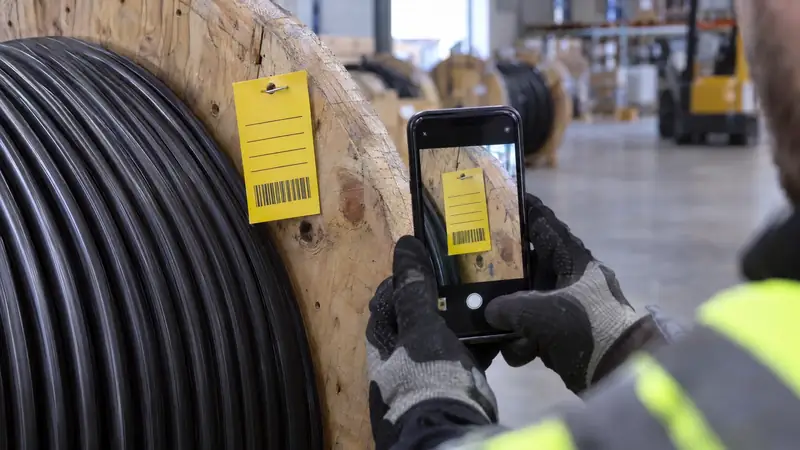
To learn how to photograph wire for an offer, start with the whole lot, then capture each reel's label, jacket print, accessible cut ends and footage markings without cutting or stripping usable material. Ohio Wire Buyers reviews those photos with a footage list or estimate to evaluate reusable surplus electrical wire and cable from businesses anywhere in Ohio.
How to photograph wire: the shot list
Photographs should answer separate questions: what is included, what product is it, how much remains, and what condition is it in? An attractive warehouse overview cannot replace readable labels. Work through this checklist for each distinct product, keeping photographs tied to individual reels or packages.
| Photograph | What to include | What it helps establish |
|---|---|---|
| Whole lot | All offered reels, coils and boxes | Scope of the inventory |
| Individual reel | Winding, flanges and your identifier | Which package belongs to each record |
| Reel tag | Entire label and readable fine print | Product identity and original package details |
| Jacket legend | Complete readable print sequence | Manufacturer, type and marked ratings |
| Existing cut end | Conductor face and surrounding insulation | Visible construction and end condition |
| Footage marks | Accessible markings near each end, with units | Evidence for a remaining-length estimate |
| Damage and packaging | Defect close-up plus a wider view | Location of damage and protection present |
There is no fixed photo count for every lot. Take enough pictures to cover the applicable rows without relying on duplicates. The wire selling guides explain the identification and measurement details behind this checklist.
Which phone settings make labels readable?
Use the regular photo mode, clean the lens and tap the tag or lettering to focus. Hold the phone steady and review the result before moving on. If close lettering looks blurred, back away until the camera focuses, then frame the label again rather than enlarging a blurry picture with digital zoom.
Bright, indirect daylight is a useful starting point. Indoors, bring a light to the label without creating a reflection, and avoid casting your own shadow across it. Change the camera angle when glossy wrap or a wet jacket causes glare; try flash off before adding more light.
Avoid portrait blur, decorative filters and edits that change colors or hide defects. Send the original photograph when possible, not a screenshot of it. Check that the smallest relevant lettering remains readable in the file you plan to send.
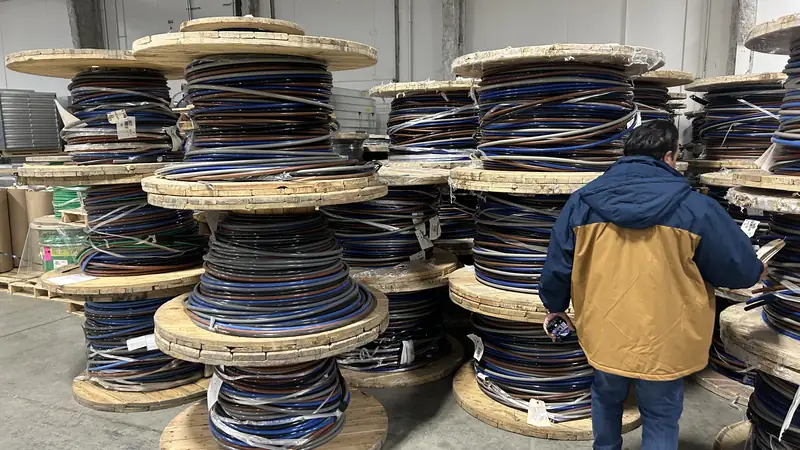
Start with the lot, then identify each reel
Take the overview from a safe aisle or clear standing position. Include everything being offered, but explain if nearby stock is not part of the sale. Do not climb stacked reels or shift an unstable load to improve the composition.
Assign a simple identifier such as R-A to a reel and C-A to a coil. Put that identifier on a separate card visible in the overall photograph, without covering the manufacturer's label. Use the same identifier in your footage list and filenames.
Show the winding and accessible flanges for each reel. Photograph loose coils individually so overlapping material does not look like a continuous length. With full and partial wire reels, state whether the package is factory-full, partly used or re-reeled; appearance alone may not answer that question.
What must the reel tag and jacket print show?
Photograph the whole tag with its edges included, then add a closer view if fine print is unreadable. Capture manufacturer and catalog information, conductor size, material, cable type, original quantity, and identifying codes where present. Preserve handwritten notes, but distinguish them from factory information in your inventory list.
Keep packaging certification labels in view. The UL wire and cable marking guide explains that surface-printed UL symbols are supplemental markings, not a substitute for the complete package certification mark. Our reel tag reading guide explains how to separate product details from reel information.
For jacket print, photograph a complete legend rather than isolated letters. Use overlapping views if the line wraps around the cable. Include all type designations and material markings; do not report THHN/THWN-2 building wire from color alone. The cable jacket print guide helps decode the wording without guessing hidden details.
Photograph existing ends without damaging cable
For an already exposed cut end, face the camera toward the conductor cross-section and include the surrounding insulation or jacket. Add a side view if a lug, shield or termination is present. A silver-colored conductor should not automatically be called aluminum: coated copper exists, so check labels and markings as well.
Do not make a fresh cut or strip insulation simply to obtain a photograph. Southwire's handling guidance calls for sealed insulated-cable ends to prevent intrusion. Photograph end caps as found, especially on medium-voltage cable, and tell us when the cross-section is inaccessible.
If cable remains connected or its status is uncertain, stop rather than handle it for a picture. OSHA's electrical work practices require appropriate de-energization procedures and qualified-person verification where applicable. Follow your employer's procedures; an offer photo is not a reason to bypass electrical safety.
How do footage photographs support the quantity?
Photograph accessible sequential markings near the outer end and the inner end, including the units. Label which end each photograph shows. Southwire documents footage markers on certain SIMpull building-wire products, but do not assume every cable has them or that the sequence begins at zero.
Marks can support a length estimate when they belong to the same continuous piece. A reused reel, separate cut lengths or a splice can make a simple subtraction misleading. The original tag quantity also does not establish how much remains after material has been pulled.
If the inner end is buried, write that it is inaccessible. Do not unwind a heavy reel merely for the initial submission. Use the guide to measuring remaining wire, and identify each quantity as measured, estimated or unknown.
Show damage, packaging and storage condition honestly
Take a close-up of cuts, crushed areas, missing caps, corrosion, or broken flanges, then a wider photograph locating the issue on that reel. Include a ruler beside an accessible defect if it can be placed safely. Do not hide damage under wrap or photograph only the clean side.
Show shrink wrap, boxes, protective boards and pallet condition as they stand. Southwire recommends retaining protective packaging and keeping product labels secured. For outdoor inventory, document standing water or damaged covering if present; our wire reel storage guide covers preservation before pickup.
Describe known water exposure, previous installation, splices and repairs in writing. Photographs cannot establish internal condition or electrical performance. If material is not reusable, Ohio Wire Buyers says so; a scrap metal recycler may be the appropriate buyer.
What should accompany the photos for an offer?
Name files by identifier and subject, such as R-A_whole, R-A_tag, R-A_jacket and R-A_outer-mark. For boxed coils, include the box label and whether the package has been opened. For mixed cut lengths, list the separate pieces rather than calling their combined footage a continuous run.
Send the matching inventory list, your business contact, the Ohio pickup location and available loading access. Include proof of ownership such as an invoice, purchase order, closeout paperwork or company letter; the seller paperwork guide explains the records to gather.
Under our written offer and pickup process, we review and reply with questions or a written offer before pickup. Payment method and timing are confirmed in writing before pickup, and the count is checked against the written terms.
Ready to send your photographs? Request an offer for your surplus wire, or call Ohio Wire Buyers at 951-403-5738 to discuss what information to gather.
Frequently asked questions
Can I send wire photos if I cannot identify the cable?
Yes. Send readable jacket print, every available package label, an overall view and accessible existing ends. Write unknown beside details you cannot confirm rather than guessing. Ohio Wire Buyers reviews the information and may ask for additional photographs or paperwork before deciding whether the cable is reusable and making a written offer.
Should I unwrap an unopened reel to take pictures?
Start with photographs of the intact packaging and all visible labels. Do not remove protective wrap, cut cable or open sealed ends just to produce a photo. Explain which details are hidden. Ohio Wire Buyers can review the available information and ask questions without having you damage packaging for the initial submission.
Are videos better than photographs for a wire offer?
Still photographs are a better starting point for readable labels and jacket legends because each detail can be examined separately. A video can supplement the overview, but do not use a moving camera sweep as the only record of reel tags. Keep the inventory list and individual photo identifiers consistent.
Do photographs prove used cable is safe to reinstall?
No. Photographs help identify the product and document visible condition, but they do not establish electrical performance or suitability for a particular installation. Disclose previous use, damage and any available test records. Ohio Wire Buyers buys used cable only when it is still reusable, not merely because its jacket looks clean.