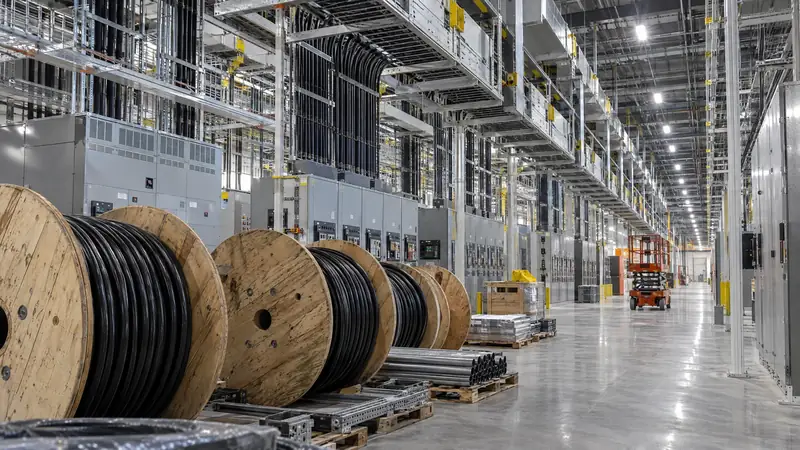
Ohio Wire Buyers buys reusable data center surplus cable from businesses anywhere in Ohio, including unused power cable reels, partial feeders, DLO and communications cable. We buy cable as product for resale and reuse, not as scrap metal by the pound, and arrange pickup at the seller's jobsite, warehouse, plant or yard after a written offer.
What counts as data center surplus cable?
A reel left after a feeder pull may be surplus; an identical reel reserved for a later phase may not be. Before offering material, separate released project leftovers from owner-required spares, commissioning reserves and inventory assigned to unfinished work. A cancelled circuit or revised routing can leave useful cable, but the project's material owner must approve its disposition.
Mark the lot list as unused, pulled but never energized, or previously in service. Those descriptions are not interchangeable. Keep continuous lengths intact and identify any joints, installed terminations or damaged portions rather than presenting the whole lot as new.
We work with electrical contractors, builders, facility teams and decommissioning firms among the businesses that sell us surplus wire. The first decision is whether the cable is available to sell; the next is whether it remains reusable.
Why does Central Ohio matter for project closeout?
The City of New Albany's data center resource identifies Amazon, Google and Meta among the community's data center operators. That is local industry context, not a claim that those companies sell to Ohio Wire Buyers or endorse us.
For a contractor closing out work in this market, the useful inventory is the material actually released from the project. Keep separate buildings, phases and subcontractor lots identifiable until ownership and quantities are reconciled. Combining unrelated reels too early can make purchase records difficult to match.
Our Central Ohio cable pickup coverage applies wherever the released material is stored. Pickup is available statewide; the seller does not need to transport reels to a supposed local branch or drop-off yard.
Which cable families should you separate?
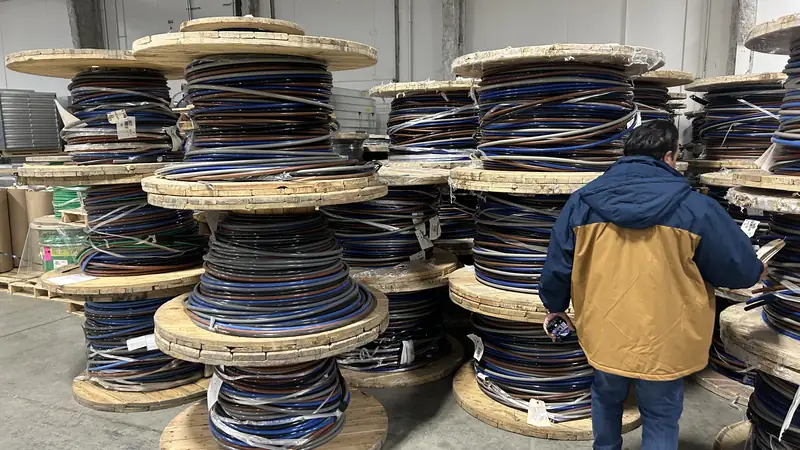
Southwire's data center application guide distinguishes medium-voltage distribution, low-voltage feeders, cabinet feeders and uninterruptible power supply connections. Organize surplus by its actual product identity, not simply by the room where it was stored.
| Material in the lot | Identification to preserve | Detail that helps resale review |
|---|---|---|
| Medium-voltage power cable | Reel tag, MV designation, voltage class, shield description | Continuous footage, end-seal condition and available test records |
| THHN/THWN-2 or XHHW-2 feeders | Conductor material, size, color and full printed type | Remaining footage for each individual conductor |
| Flexible DLO cable | Manufacturer, size and all printed ratings | Unused reel versus removed lugged length |
| Bare copper grounding conductor | Tag, size and solid or stranded construction | Continuous lengths versus pieces cut from a grounding installation |
| Cat6A copper data cable | Manufacturer part number, category, shielding and jacket listing | Original packaging and remaining length |
| Fiber optic cable | Manufacturer part number, fiber type, count and cable construction | Reel condition, continuous length and termination details |
See the details for surplus medium-voltage cable and XHHW-2 feeder reels when preparing those portions of the lot. A shared jacket color does not establish that reels contain the same product.
Why are the full ratings and conductor sizes important?
DLO is a useful example. Southwire's SPEC 44020 describes flexible tinned-copper construction with EPDM insulation, a CPE jacket and 2,000-volt RHH/RHW-2 ratings. Its product table includes 373.7 kcmil. Record that exact size rather than rounding it to a nearby feeder size.
That specification identifies one manufacturer's product, not every cable called a battery lead. Send the complete print legend for DLO cable surplus, including the manufacturer and listed types. Do not substitute a familiar trade name for markings you cannot read.
For parallel feeder material, list each conductor's remaining length separately. Matching colors and sizes do not prove matching footage. A shorter conductor can affect whether the group suits another pull, even when the total copper content is substantial.
How should Cat6A and fiber be identified?
Belden's Category 6A product listings distinguish UTP from F/UTP constructions and CMP from CMR ratings. Copy those markings exactly. Two boxes labeled Cat6A may still represent different products; do not group them solely by jacket color or category.
For boxed data cable and partial reels, retain the original label and distinguish factory packaging from a box filled with loose offcuts. An original full-length label is not a statement of remaining footage after cable has been pulled.
For surplus fiber optic cable, photograph the reel label and any connector or breakout assembly without exposing sensitive rack information. Corning's handling note directs users to the specific cable specification for minimum bend diameter. Preserve existing packaging and avoid tightening coils just to make a neater pallet.
What should a data center seller send for an offer?
Build the submission around traceable material, not a single photograph of a crowded laydown area. Assign each reel, box or bundle a lot identifier and use that identifier in the footage list and photograph names.
Send the following:
- Material photos: the whole lot, each reel tag, readable jacket print and accessible cut ends. Follow site photography rules; do not include security screens, personnel badges or restricted equipment layouts.
- Cable details: exact size, conductor material, manufacturer, printed ratings, conductor or fiber count, and whether each length is continuous.
- Length information: remaining footage or an estimate clearly labeled as such. The guide to measuring partial reels explains how to document uncertainty without treating the original reel quantity as the balance.
- Condition history: unused, previously pulled or previously energized; indoor or outdoor storage; visible abrasion, crushed sections, missing seals or attached lugs. Include available test reports with matching identifiers.
- Release and access information: selling company, ownership paperwork, pickup location, authorized site contact, loading equipment and restrictions on photography or vehicle entry.
Check the seller ownership paperwork guide before submitting owner-furnished material. An invoice for the project is useful only when it supports the selling company's ownership or authority to sell the offered lot.
How do you preserve reuse potential before collection?
Do not strip insulation, chop feeders into convenient scrap lengths or remove useful identification tags. Southwire's handling guidance calls for sealed cable ends and firm support under reel flanges so the cable does not carry the reel's weight. Photograph damaged seals and arrange appropriate protection before further exposure.
Corning likewise recommends upright, chocked reels, protective wrapping and covered storage where possible. Its guidance also warns that overly tight bends can leave hidden structural damage. A tidy coil is not proof of sound cable.
Used cable requires an honest condition review. Have qualified personnel handle isolation and removal; do not disconnect equipment merely to obtain offer photographs. If material is not reusable, we say so, and a scrap metal recycler may be the right buyer.
How does pickup work at a controlled-access site?
Confirm which gate the pickup vehicle may use, whether an escort is needed, and who can authorize release. Tell us about check-in procedures, permitted loading windows, dock access and equipment availability before arrangements are finalized. Apply the project closeout checklist while the responsible project personnel are still available.
Ohio Wire Buyers reviews your submission and replies with questions or a written offer before pickup. Payment method and timing are confirmed in writing before pickup, and the count is checked against the written terms when collected. The selling and pickup process explains those steps without assuming unrestricted site access.
To put released data center leftovers up for review, request an offer for your cable lot with photos, footage and ownership records, or call 951-403-5738. Keep the reels identified and intact while the written terms and site release arrangements are settled.
Frequently asked questions
Can an electrical subcontractor sell cable purchased for a data center owner?
Only material the seller owns or is authorized to sell should be submitted. A subcontractor's possession of a reel does not establish ownership. Ohio Wire Buyers verifies the seller and proof of ownership, which can include an invoice, purchase order, closeout paperwork or company letter. Resolve owner-furnished material and contract restrictions before requesting pickup.
Do you buy DLO cable with compression lugs still attached?
We can review lugged lengths if the cable is still reusable. Send the jacket print, usable length, cut-end or termination photos, and installation history. Do not assume a lug makes the assembly suitable for another application. Existing connectors, conductor condition and the cable's actual markings need to be identified before an offer can be evaluated.
Does a commissioning test report guarantee that removed cable can be resold?
No. A report documents a particular test on identified material at a particular time. Cable can be damaged during later removal, handling or storage. Include available reports with the matching reel or circuit identification, but also provide current condition photos and disclose damage. Used cable is considered only when it remains reusable.
Can I submit partial Cat6A boxes along with power cable reels?
Yes, send them as separately identified items in the same lot submission. Photograph the manufacturer label, part number, cable category, jacket listing and any remaining-length information. State whether each box is unopened, partly used or contains repacked cable. We review the material as reusable product, not as mixed insulated scrap by weight.
Where do I deliver surplus cable in Ohio?
Ohio Wire Buyers has no Ohio street address, office or yard, and does not accept deliveries in Ohio. We arrange pickup at the seller's jobsite, warehouse, plant or yard anywhere in Ohio. For controlled-access facilities, send the site contact and loading restrictions during the offer review so pickup arrangements can account for the site's requirements.
Sources and further reading
- City of New Albany — New Albany Data Centers
- Southwire — Resilient Data Center Cable Solutions
- Southwire SPEC 44020 — DLO RHH/RHW-2/RW90 cable
- Belden — Category 6A Cable product listings
- Corning AEN165 — Cable Placing Checklist and Handling
- Southwire — Power Cable Installation Guide, handling and storage guidelines