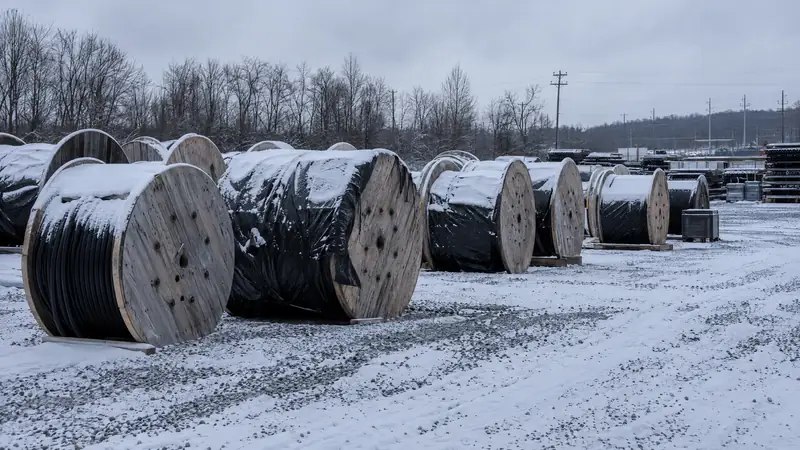
Ohio Wire Buyers buys reusable utility surplus cable from investor-owned utilities, municipal electric systems and electric co-ops anywhere in Ohio. We review unused full reels, partial reels and cut lengths as electrical product for resale and reuse—not scrap metal by the pound—and arrange pickup at the seller's yard, warehouse or jobsite after written terms are agreed.
Which Ohio utility sellers can send an inventory?
Utility stores managers, purchasing departments and authorized asset-disposal staff can submit cable that their organization owns and has identified for release. Separate available surplus from emergency reserves, material assigned to construction and reels held for a contractor or supplier. A reel sitting unused is not necessarily available to sell.
Ohio's Electric Cooperatives identifies 25 electric cooperatives serving Ohio. Municipal systems are another distinct seller group: American Municipal Power's member directory includes Ohio communities such as Bowling Green, Hamilton and Westerville. These references describe Ohio's utility sector, not customers or affiliations of Ohio Wire Buyers.
Our business seller overview covers other organizations that may hold utility-related cable. If a line contractor is submitting the lot, clarify whether the contractor purchased it or whether unused material belongs to the utility under the project agreement.
How should utility surplus cable be identified?
Start with the manufacturer's description, not just the utility's warehouse stock number. “URD” can describe different underground distribution products, so a buyer needs the voltage rating, conductor material and construction. Photograph the tag and jacket print together to help establish that both describe the same reel.
| Stock family | Manufacturer example or identifying detail | Information to include |
|---|---|---|
| Primary concentric-neutral cable | Southwire SPEC 81114 describes 15 kV copper cable with TRXLPE insulation, a 133% insulation level and a one-third concentric neutral | Conductor size, insulation level, neutral construction, jacket and reel identity |
| Secondary underground triplex | Southwire's aluminum triplex is rated for secondary distribution at 600 V or less, with two phase conductors and one neutral | Phase and neutral sizes, insulation markings and remaining footage |
| Bare overhead ACSR | Southwire describes aluminum strands surrounding a steel core; its ACSR specification references ASTM B232 | Manufacturer, size, codeword, stranding and core specification |
| Substation control cable | Multiconductor cable needs a description separate from the power-cable inventory | Conductor count, size, shielding, jacket print and footage |
The examples are specific products, not universal ratings for everything in a utility yard. Our pages on primary and secondary URD, medium-voltage cable and overhead conductor explain the distinctions. List substation control cable separately rather than combining it with primary cable under a single weight total.
Does a standards change make stored cable unusable?
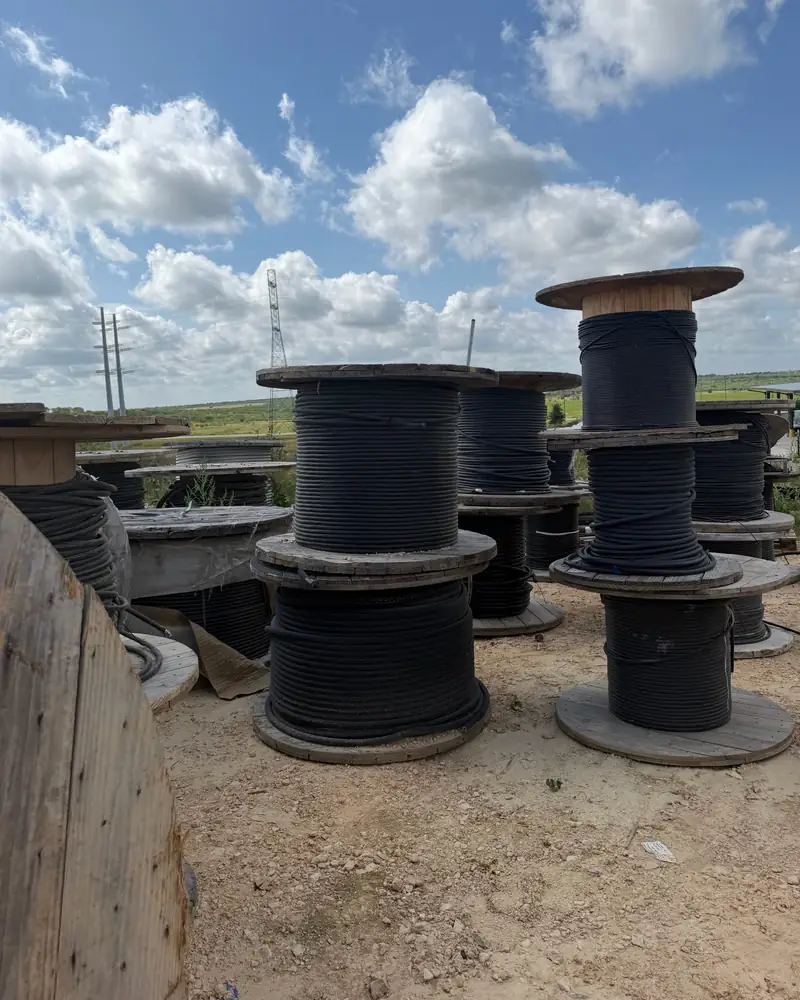
A utility's decision to stop specifying a product is different from evidence that the product is damaged. A construction-standard revision, change in preferred conductor material or discontinued stock item may leave unused cable that could suit another application. Compatibility still needs review; a former stock designation is not a promise of resale demand.
Explain why the cable was removed from active inventory. “No longer specified for new construction” tells a different story than “removed after a fault” or “returned with damaged ends.” Include the original specification and purchase records when available, and disclose any known quality concern or restriction.
Do not relabel old cable to match the replacement specification. Retain its original identity and describe missing information plainly. A reusable-product offer depends on what the cable actually is, its condition and whether a buyer can use that construction—not simply its metal content.
Who must authorize a municipal cable sale?
Municipally owned material may require a formal surplus-disposal process. Ohio Revised Code Section 721.15 addresses disposition of municipal personal property and provides procedures involving authorization, advertised bidding and internet auctions under specified conditions. It does not mean every reel can be sold through a private negotiated transaction.
Have your purchasing official or legal adviser confirm the rules that apply to the municipality and the proposed lot. Tell us if material must be offered through an auction, bid solicitation or another approved procedure. A price discussion cannot substitute for the required authorization.
Co-op and investor-owned utility sellers should likewise identify their own release authority and disposal requirements. Gather the relevant approval with the wire seller ownership paperwork, and make sure the named seller can transfer the cable. Keep supplier-owned or returnable reels out of the sale unless their status has been resolved.
What should a utility stores department send for an offer?
Use a reel-by-reel inventory rather than a broad description such as “assorted utility wire.” The most useful submission connects each line item to readable photographs and an ownership record. Our reel-tag reading guide can help separate a manufacturer's reel number from an internal stock code.
- Photograph the whole lot, each reel tag, accessible jacket print and safely accessible cut ends or existing end caps.
- Record the manufacturer, stock description, conductor material and size, voltage rating, insulation and neutral or shield construction.
- State the footage per reel and whether it comes from an unopened factory tag, inventory record, footage marks or an estimate.
- Identify unused, partially pulled, re-reeled and previously installed cable separately, with known damage or storage concerns.
- Include ownership documentation, release status and the pickup contact for the actual storage location.
Do not present a factory tag's original footage as the remaining quantity on a partial reel. If the balance is uncertain, label it unknown or estimated and send accessible footage marks. Our guide to measuring wire left on a reel explains how to document the basis without guessing.
How do partial reels and storm-stock leftovers differ?
Partial reels left after restoration or construction can be reviewed if their identity and usable length remain clear. Confirm that operations has released any storm-stock excess before including it. Separate unused leftovers from cable recovered during repair so their histories are not confused.
Previously installed cable needs a candid account of its service and removal. State whether it was involved in a fault, flood, fire or mechanical damage, and provide existing inspection or test records when available. Photos can show visible condition; they cannot establish medium-voltage insulation integrity.
Only qualified personnel should handle removal of cable from service after proper isolation and safety procedures. We buy used cable only when still reusable. If the material cannot be reused, we say so; the distinction between surplus product value and scrap value helps explain when a recycler is the appropriate buyer.
How should reels be kept ready for pickup?
Keep identification attached, preserve protective end caps and avoid cutting cable merely to simplify loading. Photograph broken flanges, loose winding and damaged packaging before moving the reel. Consult the manufacturer's handling guidance rather than improvising repairs or lifting arrangements.
For outdoor inventory, describe storage conditions and any exposed ends. Our Ohio winter reel-storage guide addresses preparation before material stays outside. Keeping the cable traceable and protected matters more than making the inventory look freshly packaged.
Send access details: loading equipment, dock availability, gate restrictions and known gross reel weights. Identify any equipment limits or damaged reels that require a different handling plan. Ohio Wire Buyers arranges pickup at the seller's location; we have no Ohio street address, yard or drop-off.
Put each released reel into the written terms
After reviewing the inventory, we reply with questions or a written offer before pickup. The offer should identify the accepted lot and quantity basis so reserved reels or rejected material are not accidentally loaded. Payment method and timing are confirmed in writing before pickup, and the pickup count is checked against the written terms.
The selling process explains the overall sequence. To start a utility cable review, send the released inventory for an offer or call 951-403-5738. Include reel tags, footage and your disposal requirements so the discussion begins with the actual cable and the terms your organization can approve.
Frequently asked questions
Do you buy copper as well as aluminum utility cable?
Yes. Ohio Wire Buyers reviews reusable surplus electrical wire and cable with copper or aluminum conductors. Send the conductor material, size, cable construction, footage and condition for each reel. Conductor material alone does not establish an offer: the cable must be identifiable and reusable, with ownership documentation available.
Must we remove end caps to photograph medium-voltage cable?
Do not remove an intact protective cap just to take an offer photo. Photograph the cap, reel tag and accessible jacket print first, and explain whether either end was previously exposed. Send cut-end photos when already safely accessible without disturbing the cable's protection. We can ask for additional identification information after reviewing the initial photos.
Can we request an offer before internal disposal approval?
You can send an inventory for review while explaining that release approval is still pending. A written offer does not replace your organization's disposal authorization or any required public-sale procedure. Identify the person responsible for approval and the applicable sale conditions before committing material or arranging pickup.
Does a utility name on the reel tag prove ownership?
A utility name or stock number helps trace the reel, but it does not establish that the person offering it has authority to sell. Ohio Wire Buyers verifies the seller and proof of ownership, such as an invoice, purchase order, closeout paperwork or company letter, and keeps a written record of each purchase.
Sources and further reading
- Ohio's Electric Cooperatives — Ohio's Cooperatives
- American Municipal Power — Member communities
- Ohio Revised Code Section 721.15 — Municipal surplus property
- Southwire SPEC 81114 — 15kV copper TRXLPE concentric-neutral cable
- Southwire — Aluminum 600V underground distribution triplex
- Southwire — ACSR overhead conductor construction and specifications