Ohio Wire Buyers buys reusable surplus machine tool and panel wire from businesses anywhere in Ohio. If you want to sell MTW wire, send spool labels, insulation-print photos and a footage list for review and a written offer before pickup.
What do MTW, TEW and AWM markings tell a buyer?
MTW means machine tool wire. Manufacturers supply it for internal wiring of equipment, control cabinets and appliances, often with stranded copper and polyvinyl chloride, or PVC, insulation. A spool may carry MTW, Canadian TEW and several appliance wiring material designations together, but those markings describe different qualifications.
The ratings below come from Southwire's specifications for its flexible hookup wire and fixture-wire families. They identify the product; they are not permission to use every marked temperature in every installation.
| Marking | Verified rating in the cited Southwire family | What to preserve for resale |
|---|---|---|
| MTW, UL 1063 | 600 V; 90°C dry and 60°C wet or oil exposure | MTW marking and complete manufacturer legend |
| CSA TEW | 105°C dry on the flexible hookup-wire family | TEW marking, voltage and part number |
| AWM Style 1015 | Included in the 600 V, 105°C dry hookup-wire offering | Actual style numbers and printed temperature |
| TFN/TFFN | 600 V; 90°C dry as fixture wire | Fixture-wire designation and solid or stranded construction |
Do not advertise the whole lot simply as “105°C MTW.” The higher AWM or TEW rating does not replace the MTW limits. Our wire and cable identification overview helps separate this material from other surplus wire families.
Which sizes and conductor constructions should you list?
Southwire's flexible hookup-wire specification includes sizes from 22 AWG through 2 AWG and beyond. Within that family, the AWM styles change with size: Style 1015 appears in the 22–10 AWG group, while the larger conductors carry other styles. Do not assume a heavier MTW conductor is also UL 1015 hookup wire.
Stranding matters too. The same specification lists 26 strands for its 16 AWG construction and 65 for its 12 AWG construction. Those are examples, not universal counts for every brand or version. Send the stock code rather than describing everything as fine-strand wire.
Both bare and tinned copper products exist; Priority Wire's MTW/TEW sheet describes tinned copper. Record the conductor finish if documented. Keep flexible welding cable separate, because a flexible copper conductor alone does not establish the same insulation type or ratings.
Is TFFN or TFN fixture wire the same inventory?
Fixture wire can share a shelf with panel wire without being identical product. Southwire's TFN/TFFN family uses PVC insulation with a nylon sheath. Its TFN construction is solid copper; TFFN is bunch-stranded copper. The published sizes include 18 and 16 AWG.
Southwire also marks qualifying stranded constructions as MTW and AWM. That overlap is useful, but it must be confirmed on the actual label and print. List a dual-rated spool under its complete identity rather than erasing the fixture-wire designation.
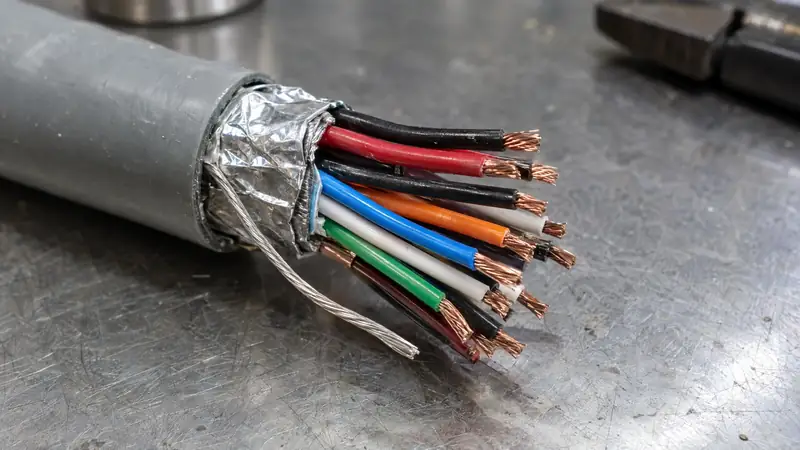
Do not classify nylon-covered wire by appearance alone. Photograph markings to distinguish fixture wire from THHN/THWN-2 building wire. Likewise, individual panel conductors are not a substitute inventory description for jacketed multiconductor control cable, where conductor count and shielding also matter.
Can small spools and partial reels be sold?
Unused small spools are worth submitting, including sealed stock left after an equipment order changes. AutomationDirect documents MTW offerings on 500-, 1,000- and 2,500-foot spools or reels, with availability depending on gauge and color. These are documented packaging examples, not a minimum lot size or a promise that every spool has those lengths.
The factory label states the original package footage. Once wire has been drawn off, that figure is not the amount remaining. Mark an opened spool as partial and distinguish measured footage from an estimate. See the guide to measuring wire remaining on a reel if records are incomplete.
Keep factory spools intact instead of unwinding them into loose coils. If wire was transferred to another spool, say so and retain its original label or purchasing record. A clean replacement spool does not make previously handled wire factory-sealed.
Organize the lot by color, stock code and continuous length
Color is a product detail, not proof of its former circuit function. Manufacturer catalogs include solid colors and striped versions. Record the base color and stripe separately: blue with a white stripe should not be merged into plain blue inventory.
Group matching stock codes together, but give each partial spool its own footage entry. A large total assembled from short disconnected pieces is different from the same footage on continuous spools. For cut lengths, state the individual lengths and whether ferrules, terminals or wire markers remain attached.
For a plant clearing its maintenance shelves, separate reserved repair stock from material actually released for sale. The manufacturing plant surplus guide covers broader inventory clearouts. A panel-wire list should still identify each construction rather than describing the lot only as miscellaneous copper.
What condition issues can prevent reuse?
Show cracked, nicked, flattened or heat-discolored insulation rather than hiding the affected turns under sound wire. Tell us about chemical exposure, wet cartons, damaged spool flanges or missing labels. A material's published oil resistance does not establish that a particular exposed spool remains serviceable.
Loose terminal offcuts and identifiable continuous wire should be kept separate. Do not strip insulation or cut usable lengths merely to make the load compact. Those actions remove the product identity and usable form that a resale buyer needs to evaluate.
Used wire is considered only if it remains reusable. If reuse is not practical, Ohio Wire Buyers will say so; a scrap recycler may be the appropriate buyer. The distinction between surplus product value and scrap price explains why conductor weight alone does not determine an offer.
What should a panel shop send for an MTW offer?
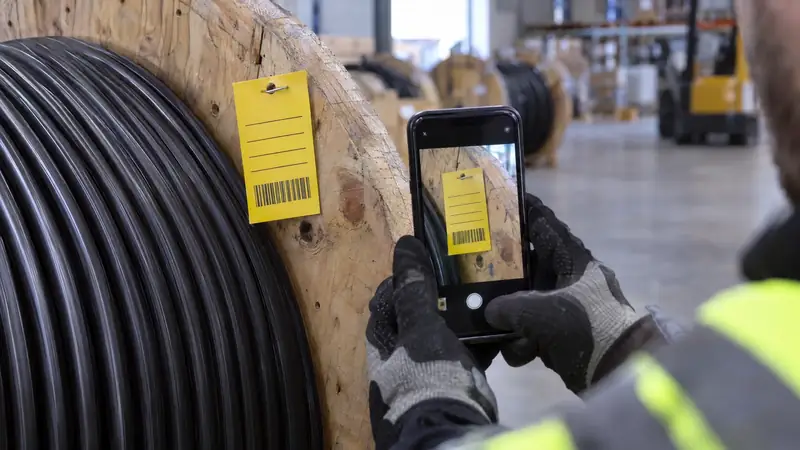
Start with a photo of the entire lot, then close-ups of spool labels and readable insulation legends. Include cut-end photos showing the conductor without unnecessarily damaging the wire. The wire photography guide can help with faint print and curved labels.
Send a list covering manufacturer, stock code, gauge, conductor finish, color or stripe, full or partial status, and footage. Note whether each length is continuous and whether factory packaging is intact. Flag any wire whose identity is uncertain instead of assigning it a rating from a neighboring spool.
Include proof that your business owns the material, such as an invoice, purchase order, closeout paperwork or company letter. We verify the seller and ownership and keep a written purchase record. Photos show the product; paperwork establishes the seller's right to sell it.
How do you sell MTW wire from an Ohio shop?
After review, Ohio Wire Buyers replies with questions or a written offer before pickup. Payment method and timing are confirmed in writing before pickup. We arrange collection at your Ohio jobsite, warehouse, plant or yard and check the count against the written terms; the selling process explains that sequence.
Keep accepted spools grouped and identify the pickup location and loading access. To submit machine tool wire surplus, request an offer with your labels and footage list, or call 951-403-5738.
Frequently asked questions
Can I sell unopened MTW spools left from a canceled panel order?
Yes. Ohio Wire Buyers reviews unused small spools as reusable product, including surplus from canceled equipment or panel orders. Keep the factory packaging and labels intact. Send the manufacturer, part number, gauge, color, spool count and labeled footage, along with photos. An unopened package helps establish condition, but an offer still depends on identifying and reviewing the actual lot.
Is TEW-marked wire automatically the same as UL-listed MTW?
No. TEW and MTW are separate designations, although manufacturers offer wire carrying both. Copy the complete insulation legend rather than shortening it to TEW or hookup wire. Include any AWM styles and the manufacturer part number. We use those details to distinguish dual-rated product from wire marked only for a particular equipment-wiring application.
Can I include wire with ferrules or terminal lugs attached?
You can submit it for review, but identify it as prepared or previously installed wire rather than factory-new spool stock. Give each continuous length and photograph the ends, terminals and insulation. Used wire is considered only if it remains reusable. Do not dismantle energized equipment to prepare a sale; have removal handled by qualified people.
Does silver-colored panel wire mean the conductor is aluminum?
Not necessarily. Machine tool wire is available with tinned copper conductors, which can look silver at a cut end. Bare copper versions are also sold. Photograph the conductor and send the manufacturer's label or specification identifying the material. Do not guess based on color alone, especially when several brands or part numbers are mixed together.
Do you buy a cabinet full of assorted panel wire by copper weight?
Ohio Wire Buyers buys reusable electrical wire as product for resale and reuse, not as scrap metal by the pound. List the cabinet contents by type, gauge, color and usable length. Keep labeled spools separate from loose offcuts. If the material cannot be reused, we will say so, and a scrap metal recycler may be the appropriate buyer.