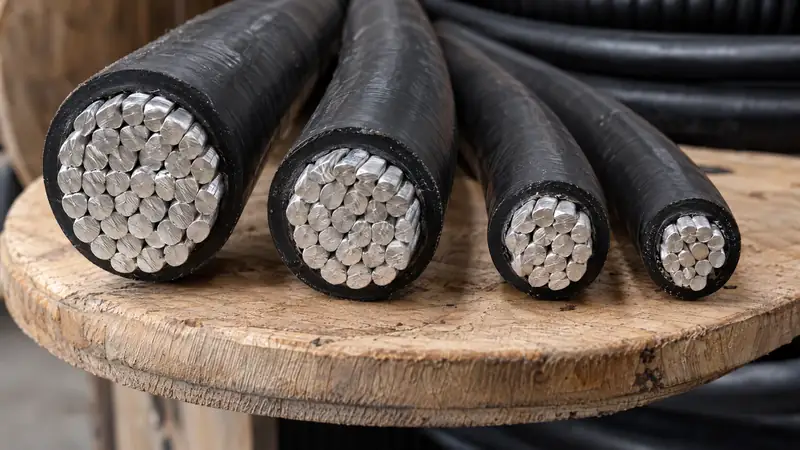
Copper has higher conductivity than aluminum, so aluminum generally needs a larger conductor size to serve the same feeder load; aluminum is lighter and often costs less as material. Ohio Wire Buyers evaluates copper vs aluminum wire as reusable surplus electrical product, with offers based on product identity, footage and condition—not scrap metal weight alone.
Copper vs aluminum wire: what changes in practice?
The comparison starts with the conductor, not the jacket color. Copper and aluminum can both be supplied as XHHW-2 building wire, so an insulation designation alone does not identify the metal. Keep the factory tag with each reel and confirm the conductor marking before entering it in a surplus list.
| Consideration | Copper conductor | Modern aluminum building conductor |
|---|---|---|
| Conductivity at the same size | Higher; lower electrical resistance | Lower; generally requires upsizing |
| Cable weight | Heavier for comparable feeder duty | Lighter, even after many sizing substitutions |
| Material cost | Often higher | Often lower; compare complete installation costs |
| Termination selection | Must accept copper and the actual stranding | Must accept aluminum and the actual stranding |
| Surplus evaluation | Type, size, footage, condition and documentation | Same factors, plus clear alloy identification |
For example, Southwire lists DC resistance at 25°C for its 4/0 AWG XHHW-2 products as 0.051 ohm per 1,000 feet for copper and 0.084 for aluminum. Those are product-specific resistance figures, not an ampacity conversion formula. Voltage drop and installation conditions still need separate consideration.
How much must aluminum feeders be upsized?
The following comparisons use the 75°C column of NEC Table 310.16, 2023 edition, as reproduced by HELUKABEL. They apply to the table's baseline of not more than three current-carrying conductors in raceway, cable or earth, at 30°C ambient.
| Copper size | Copper table ampacity | Aluminum comparison size | Aluminum table ampacity |
|---|---|---|---|
| 3 AWG | 100 A | 1 AWG | 100 A |
| 1/0 AWG | 150 A | 3/0 AWG | 155 A |
| 4/0 AWG | 230 A | 300 kcmil | 230 A |
| 350 kcmil | 310 A | 500 kcmil | 310 A |
These are table comparisons, not instructions to substitute conductors. Terminations and conditions of use govern the actual rating, including ambient temperature and conductor-count adjustments. Load calculations, voltage drop, equipment limits and other applicable rules can change the selection.
Do not substitute aluminum of the same marked size just because it fits the lug. Likewise, a 90°C insulation marking does not automatically permit a 90°C terminal rating. Our AWG and kcmil explanation helps keep size notation separate from current rating.
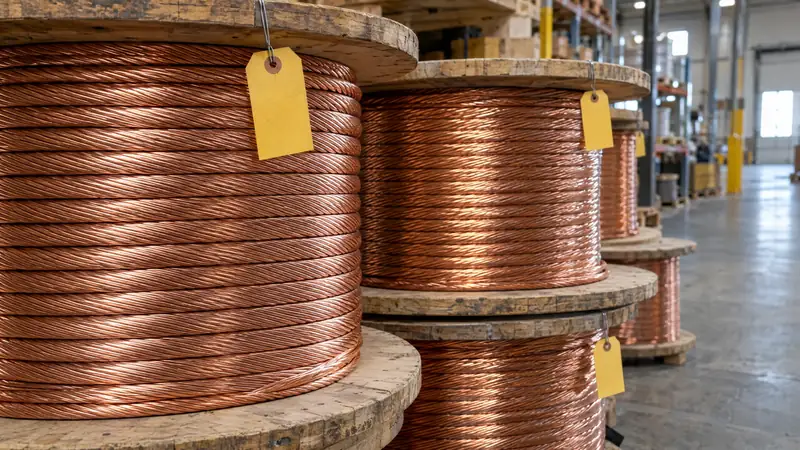
How much lighter is an aluminum reel?
Southwire's XHHW-2 specifications provide a useful comparison. The weights below are approximate finished cable weights per 1,000 feet, including insulation, from copper SPEC10006 and aluminum SPEC10015. They exclude the reel and packing.
| Southwire XHHW-2 product | Approximate cable weight per 1,000 feet | Comparison point |
|---|---|---|
| 4/0 AWG copper | 707 lb | Copper feeder reference |
| 4/0 AWG aluminum | 247 lb | Same marked size, not equal ampacity |
| 300 kcmil aluminum | 351 lb | Matches the copper reference's 75°C table ampacity |
The larger aluminum comparison still weighs less, but needs space appropriate to its dimensions. Compare actual outside diameters, raceway fill and terminal ranges rather than assuming weight savings solve every installation issue.
For pickup planning, report gross reel weight if known. When using the remaining-footage measurement guide, select the exact product's weight data and account for reel tare. Copper weight data cannot estimate aluminum footage correctly.
Is modern AA-8000 the same as older aluminum house wiring?
No. The CPSC's aluminum wiring publication describes residential branch-circuit cable installed from 1965 through the mid-1970s and hazards developing at connections. Its repair recommendations specifically exclude larger aluminum circuits used for service entrances, dryers and ranges. That distinction matters when discussing aluminum wire safety.
Modern AA-8000 building alloys were developed to improve properties such as elongation, thermal stability and resistance to compressive creep. Southwire's current aluminum XHHW-2 specification identifies AA-8176, an alloy within that series. This is a different product history from the older branch wiring addressed by CPSC.
For surplus AA-8000 aluminum building wire, photograph the alloy marking when available. Do not describe unidentified removed aluminum cable as modern alloy merely because its strands look clean. Existing residential wiring concerns belong with a qualified electrician, not a resale assessment based on photos.
What do AL/CU lugs and antioxidant actually tell you?
A termination must be identified for the conductor material, size and stranding being installed. An AL/CU marking indicates material compatibility within the connector's listed use; it does not authorize every wire combination or every installation method. Check the complete manufacturer's instructions rather than relying on the appearance of a lug.
Antioxidant compound is not a substitute for compatible hardware or correct torque. Follow the connector's preparation and compound requirements; ILSCO's Form 165, for example, specifies surface cleaning, antioxidant application and tightening to the listed torque for its covered split-bolt connectors. Those instructions should not be generalized to every terminal.
For removed feeder lengths, photograph attached lugs and any discoloration, damaged strands or distorted insulation. Let qualified personnel handle disconnection and inspection after safe de-energization. A shiny lug does not establish that the conductor beneath it remains suitable for reuse.
Which metal has better surplus resale value?
There is no dependable metal-only answer. A documented aluminum feeder reel may be easier to evaluate for reuse than unidentified copper cut into short pieces. Our copper wire buying page and aluminum wire buying page explain the reusable product focus for each material.
Aluminum's often lower purchase cost does not make surplus aluminum worthless. Copper's higher metal value does not guarantee an offer for damaged insulation or uncertain lengths. We review the actual electrical product, its usable footage, condition and documentation rather than quoting a fixed conversion between the metals.
Before stripping insulation or cutting reels down, read the surplus value versus scrap price guide. If wire is not reusable, we say so; a scrap metal recycler may be the right buyer. No resale offer or price is guaranteed by conductor material alone.
What should you send for an offer on copper or aluminum?
Give each reel or coil an identifier that matches your photos and footage list. For mixed feeder lots, send:
- Whole-lot photos showing reel condition and how material is stored.
- Reel tags and readable jacket legends identifying manufacturer, conductor metal, size and insulation type.
- Aluminum alloy markings, if present, and existing exposed ends showing the conductor construction.
- Remaining footage or an explicitly labeled estimate, with continuous lengths listed separately.
- Damage photos and the removal history for any used cable, including attached lugs.
Avoid cutting good cable just to expose its conductor. Use a readable tag or existing end and consult the reel-tag reading guide when markings are unclear. Include proof of ownership, such as an invoice, purchase order, closeout paperwork or company letter; we verify the seller and keep a written purchase record.
Keep mixed feeder lots identifiable through pickup
Keep copper and aluminum groups separate, retain tags and label estimates honestly. For surplus XHHW-2 feeders, record the metal alongside the insulation designation so nobody mistakes similar-looking black reels for matching products.
Ohio Wire Buyers reviews the details and replies with questions or a written offer before pickup. Payment method and timing are confirmed in writing beforehand, and we arrange pickup anywhere in Ohio, checking the count against the written terms. Find related identification help in our wire selling guides.
Ready to have your copper or aluminum surplus reviewed? Request a written offer with the reel photos and footage list, or call 951-403-5738.
Frequently asked questions
Can I sell copper and aluminum wire in the same lot?
Yes. Ohio Wire Buyers reviews mixed lots of reusable surplus wire from businesses. List copper and aluminum separately by type, size and footage, and identify which photo belongs to each reel or coil. A combined lot does not make the metals interchangeable; we still need enough information to evaluate each item as an electrical product.
Do partial aluminum feeder reels have resale potential?
They can, if the remaining wire is reusable and identifiable. Send the reel tag, readable jacket print, condition photos and a footage estimate. Useful continuous lengths matter more than simply having a heavy reel. We review the actual material and ask questions where necessary rather than guaranteeing that every partial reel will receive an offer.
Can I use a copper wire quote to estimate an aluminum reel's value?
Not reliably. The conductor metal, insulation type, size, usable length and condition define different products. An offer for a copper feeder cannot be converted into an aluminum offer by applying a metal-weight ratio. Send the aluminum product details for its own review, and distinguish the original factory footage from the amount actually remaining.
Does an offer confirm that used cable is safe to reinstall?
No. An offer is a purchase proposal, not an installation approval or electrical test report. Used cable is considered only if it remains reusable, and photos cannot establish every aspect of its condition. A qualified electrician must determine suitability for the proposed installation, including conductor sizing, terminations, ratings and applicable requirements.
Where can an Ohio business drop off surplus wire?
Ohio Wire Buyers has no Ohio street address, office, yard or drop-off. We arrange pickup at the seller's jobsite, warehouse, plant or yard anywhere in Ohio. Send the material details first; we review them and provide questions or a written offer, with payment method and timing confirmed in writing before pickup.
Sources and further reading
- Southwire SIMpull XHHW-2/RW90 Copper, SPEC10006
- Southwire SIMpull XHHW-2/RW90 Aluminum, SPEC10015
- HELUKABEL Allowable Ampacity Tables, NFPA 70: NEC 2023
- CPSC Repairing Aluminum Wiring, Publication 516
- Southwire Aluminum Building Wire: Changing the Industry Through Innovation
- ILSCO Split Bolt Connector Installation Instructions, Form 165