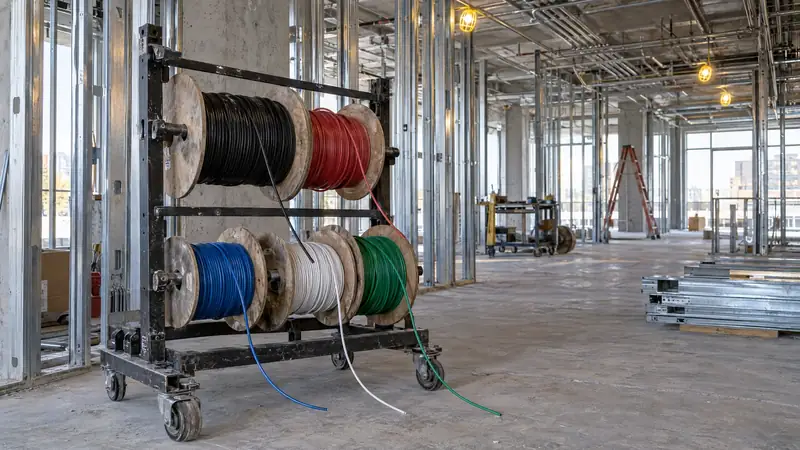
Ohio Wire Buyers buys general contractor surplus wire that is still reusable, including unused reels, partial coils and cut lengths left after Ohio homebuilding and apartment projects. Confirm who owns the material with the project owner and electrical subcontractor, then send photos and footage for a written offer before pickup. We buy wire and cable as product for resale and reuse, not as scrap metal by the pound.
Who owns the wire left at project closeout?
Start with ownership, not the cleanup schedule. A reel in the GC's storage container may have been purchased by the electrical subcontractor, supplied directly by the owner or included in a payment application. Its location alone does not establish authority to sell it.
AIA's published explanation of its construction contract provisions describes how payment for stored materials can involve establishing the owner's title or protecting the owner's interest. That is a reason to review the actual project documents, not a rule that every construction contract works alike. If ownership is disputed, have the parties resolve it before arranging a sale.
For owner-furnished cable, ask the owner's authorized representative to identify what is released from the project. For subcontractor-purchased material, coordinate with the electrical sub rather than assuming the site cleanup obligation transfers ownership. Record the seller's company name and match supporting invoices, purchase orders, closeout paperwork or a company letter to the lot.
Ohio Wire Buyers verifies the seller and proof of ownership and keeps a written purchase record. Our seller paperwork guide explains the documents to gather; our seller overview covers the business groups we buy from.
Which general contractor surplus wire should you set aside?
Separate recognizable cable assemblies from loose cleanup debris. Keep the package label with the material, and ask the electrician to confirm any uncertain identification. These distinctions help a buyer evaluate the lot without relying on jacket color or a superintendent's shorthand.
| Material in the closeout pile | What to record | Identification detail that matters |
|---|---|---|
| NM-B coils or boxed cable | Jacket type, size, insulated conductor count, remaining length | Southwire's NM-B specification lists copper conductors and a PVC outer jacket; examples include 14/2, 12/2 and 12/3 with ground |
| MC coils or reels | Product label, conductor metal, size/count, grounding construction | Aluminum armor does not mean aluminum conductors; Southwire's cited Armorlite product has copper conductors inside aluminum interlocked armor |
| SER reels or feeder cut lengths | Complete size combination, conductor metal, jacket print, individual lengths | Southwire's aluminum SER product uses a gray PVC jacket and includes an insulated neutral and bare grounding conductor |
For residential leftovers, see our NM-B cable selling page. The MC cable guide and SER and SEU page help distinguish apartment feeder material from branch-circuit cable. Describe what the label actually says; these examples do not identify every manufacturer's product.
How should homebuilders and apartment developers separate leftovers?
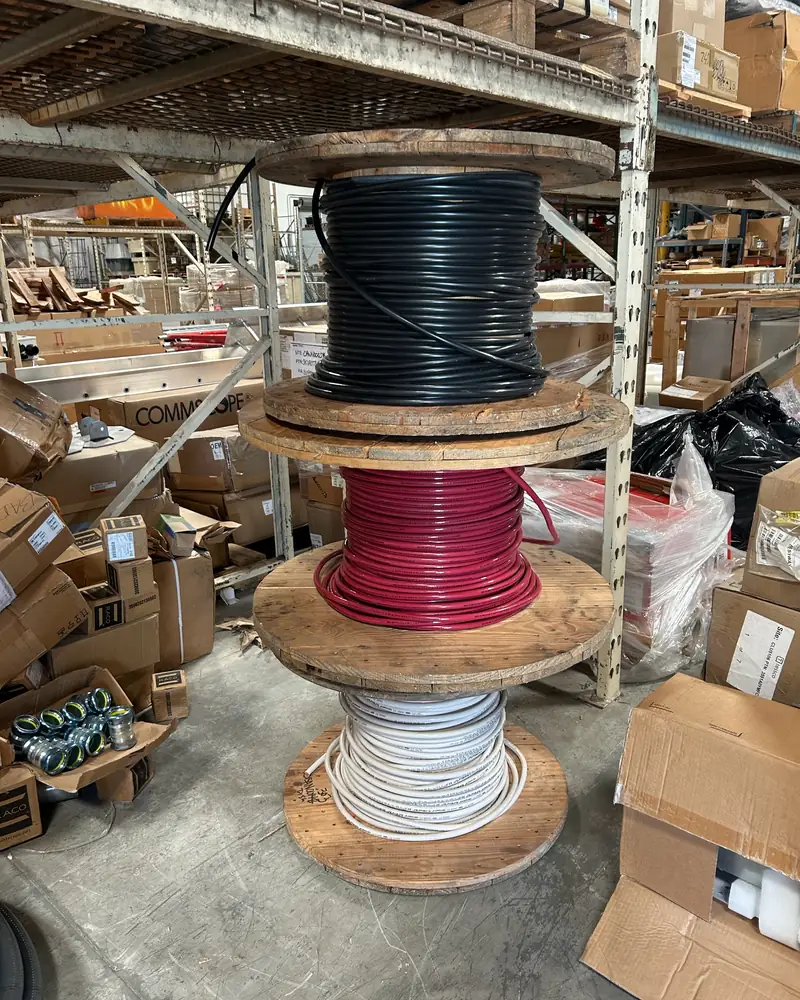
On a model-home or subdivision closeout, separate unopened packages from opened coils and loose lengths. Label each group by project or lot so ownership records remain traceable. Keep installed wiring out of the surplus inventory, and reserve material the electrician identifies for incomplete work or agreed owner spares.
For apartment builds, ask the electrical sub to distinguish unit wiring leftovers from corridor, common-area and feeder material. Keep different SER constructions on separate inventory lines even if the jackets look alike. Do the same with MC products that have different conductor counts or grounding arrangements.
A mixed lot can be submitted together without being described as one undifferentiated pile. If the sub is the actual seller, our electrical contractor surplus page is the more relevant starting point. The GC can still coordinate access and closeout records.
Should you return, retain or sell construction surplus?
Check the original supplier's return terms before opening intact packages or combining them with loose cable. Return eligibility, deadlines and any deductions depend on that supplier and the purchase agreement; do not assume a full reel automatically qualifies. Keep the invoice available for that conversation.
Retain material only when there is a defined need and someone responsible for tracking it. Ask whether the next job needs the same cable construction, whether the owner requires spares and whether the electrical sub has unfinished work. A warehouse shelf is not an inventory plan.
Selling is an option for authorized, reusable material that is no longer needed. If damage or short, unidentifiable pieces make reuse impractical, a scrap metal recycler may be the right buyer. Our leftover wire guide compares the practical choices without promising a resale value.
Keep the cable intact until it has been reviewed
Do not cut long runs into tote-sized pieces just to simplify cleanup. Preserve continuous lengths, reel tags and package labels. Photograph existing cuts, crushed areas or damaged armor rather than hiding them inside a coil.
Southwire specifies its NM-B for dry locations and states that the individual conductors are not separately listed for installation outside the complete cable assembly. Stripping that cable therefore removes the identity of the reusable assembly; it does not turn the contents into equivalent loose building wire. Keep coils protected while they await review, and disclose exposure to water or other damage.
For a partial reel, distinguish the original package footage from the amount remaining. Use reliable footage records or mark the amount as an estimate. Our partial-reel measuring guide explains approaches; do not invent a precise quantity from a casual glance.
What should a GC send for an offer?
Send a whole-lot photo first, followed by readable package labels, reel tags, jacket print and existing cut ends. Match each group to an inventory line containing cable type, size, conductor metal, quantity and footage. State whether the lengths are continuous or separate pieces.
Add the project name or your internal closeout reference, the company authorized to sell and the supporting ownership record. For owner-furnished material, explain who approved its release. For a combined homebuilder lot, keep the source projects identifiable even after everything has been moved into one storage cage.
Include the pickup location and the superintendent or warehouse contact who can identify the material. Tell us about scheduled container removal or building turnover, without assuming pickup can meet that deadline. Ohio Wire Buyers reviews the information and replies with questions or a written offer before pickup; how selling works explains the sequence.
Arrange pickup without disrupting building turnover
Ohio Wire Buyers arranges pickup anywhere in Ohio at the seller's jobsite, warehouse, plant or yard. There is no Ohio street address, and sellers do not bring material to us. Tell us whether the reels are inside a locked building, behind temporary fencing or stored with material that must remain onsite.
Confirm access restrictions, available loading equipment and who controls the storage area. Do not promise forklift availability without checking with the superintendent. Keep accepted material clearly marked so a cleanup crew does not discard it or move it to another job before collection.
Payment method and timing are confirmed in writing before pickup, and the count is checked against the written terms. Use the project closeout checklist to keep sale material separate from retained spares and unresolved items.
Once ownership and remaining project needs are clear, request an offer for the surplus lot or call 951-403-5738. Send the photos and footage before dismantling the storage area so the material can be evaluated while its labels, lengths and records remain together.
Frequently asked questions
Can a general contractor sell wire purchased by the electrical subcontractor?
Not simply because the wire remains at the jobsite. Ask the electrical subcontractor and project owner to confirm who owns it and who is authorized to sell it. Purchase records, payment documents and contract terms may matter. Ohio Wire Buyers verifies the seller and proof of ownership before purchasing; unresolved ownership should be settled before the lot is offered.
Do you buy opened packages of leftover Romex cable?
Ohio Wire Buyers buys reusable surplus electrical wire and cable, including partial coils and cut lengths. An opened package is not automatically disqualified, but its label no longer proves how much remains. Send the NM-B jacket print, a footage estimate and photos showing condition. Keep the cable assembly intact rather than stripping it into separate conductors.
Can leftovers from several homebuilding jobs be offered together?
You can submit a combined inventory, but identify the material from each project separately and confirm ownership for every group. Match photos to the inventory lines and show where the material is stored. If the lot remains at several locations, disclose that before a written offer so the pickup arrangement can be discussed accurately.
Should I remove installed cable from a model home to sell it?
Do not disturb installed wiring merely to create a surplus lot. This page concerns material left over after the work or properly removed cable that is still reusable. Any removal belongs with qualified electrical personnel following applicable safety requirements. Describe removed cable honestly, including its prior use and visible condition, rather than listing it as unused inventory.
Does a written offer set the collection date?
No. Ohio Wire Buyers reviews the lot and provides a written offer before pickup, with payment method and timing also confirmed in writing beforehand. Pickup arrangements depend on the material and site details agreed with the seller. Tell us about building turnover dates, restricted access and loading equipment early; do not assume a particular collection deadline.