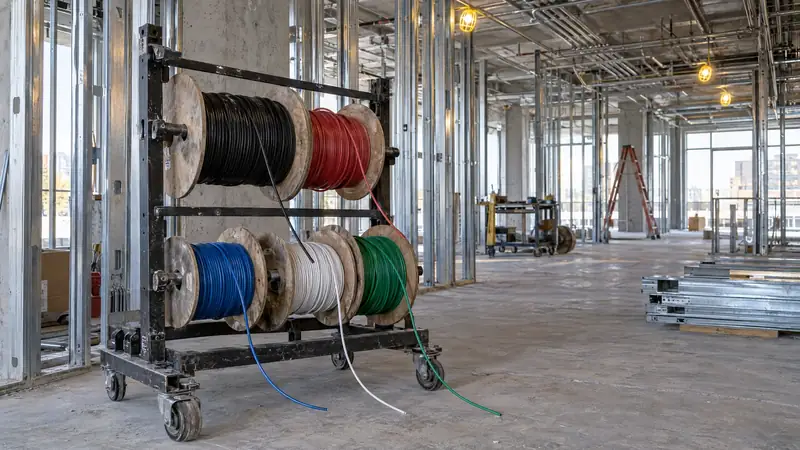
Ohio Wire Buyers buys electrical contractor surplus wire that can be resold and reused, including unused full reels, partial reels, boxed coils and useful cut lengths. We arrange pickup anywhere in Ohio at your jobsite, shop, warehouse or yard, with a written offer and payment terms confirmed before pickup. Over-ordered feeders, change-order leftovers and excess shop stock should be identified before anyone cuts them into scrap.
When does job wire become surplus rather than reserve stock?
Start with the project manager, not the scrap bin. A reel left after a pull may still be needed for punch-list work, an approved change or the owner's agreed spare-material package. Separate those commitments from stock your company is authorized to sell.
After closeout, compare the remaining material with actual upcoming work. Keep wire with a defined use; review odd colors, canceled feeder orders and leftover cable assemblies that no longer fit the schedule. Selling eligible stock can turn unused inventory into money and clear storage space, but the offer depends on the lot, not its original invoice total.
The same sorting applies when you consolidate yards or close a shop. Identify reserved and customer-owned material before photographing the sale lot. Our overview of businesses that sell surplus wire explains the distinction between contractor inventory and other sellers' material.
Which contractor leftovers are worth identifying?
Preserve product identity even when everything came from the same job. Copper building wire, aluminum feeders and armored cable should not be described simply as “electrical leftovers.” A purchaser needs to know what could be installed again, in what continuous length and under what product designation.
For example, Southwire's SIMpull THHN/THWN-2 copper specifications identify PVC insulation with a nylon sheath and a 600-volt rating. That supports identification of that particular product; it does not establish the ratings of an unmarked reel or approve a future installation. Photograph the actual jacket legend rather than assigning specifications from appearance.
Keep THHN/THWN-2 building wire separate from XHHW-2 feeder wire. For surplus MC cable, retain the packaging label and describe the conductor configuration and armor condition. Include boxed cable and loose coils in the inventory instead of overlooking them because they are not on large reels.
How should you bundle electrical contractor surplus wire?
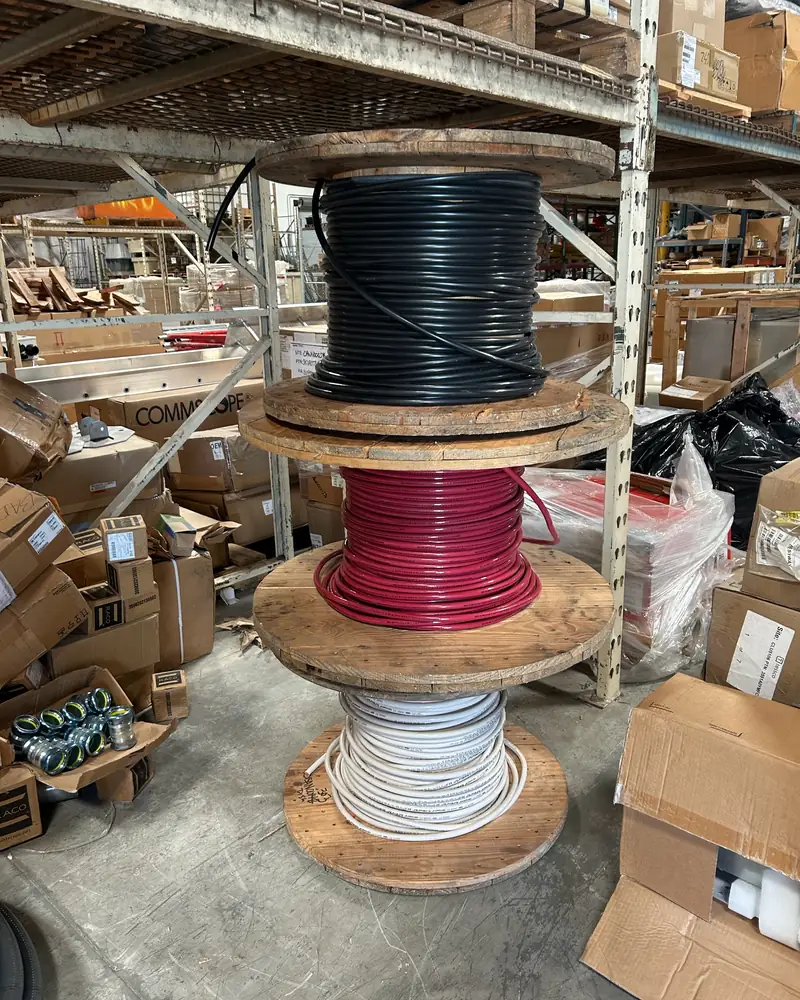
Combine leftovers from multiple jobs into a single submission, not an indistinguishable pile. Group matching products for the overview, then keep each reel or separate cut length on its own inventory line. Assign a simple lot identifier that appears in both the photographs and the list.
Retain the originating job reference internally. This lets your office trace a reel back to its purchase order and confirm whether it belongs to the company. If similar reels came from different projects, do not discard that distinction merely because their tags show the same size and color.
Do not combine discontinuous pieces into one advertised length. Several short coils are not equivalent to one continuous run, even when the total footage matches. Likewise, distinguish unused leftovers from cable that was installed and later removed; used cable is considered only if still reusable.
A shared project-closeout wire checklist helps foremen and warehouse staff collect consistent information before material from several sites reaches the shop.
What should your crew send for an offer?
Send an overview of the sale lot, followed by identification and condition photos for each item. Include a footage list or clearly labeled estimate. A warehouse manager's count and a foreman's pull record can be useful together, especially when factory tags no longer describe what remains.
| Contractor lot detail | What to record or photograph | Why it matters |
|---|---|---|
| Whole lot | Reels, boxed coils and loose lengths included in the sale | Establishes the scope without relying on a close-up alone |
| Product identity | Reel tag and legible jacket print | Shows manufacturer, type, size and printed ratings |
| Remaining footage | Current count, footage marks or estimate with its basis | Separates remaining stock from the original ordered amount |
| Individual lengths | Each continuous piece listed separately | Shows whether the lot offers usable runs or disconnected remnants |
| Condition | Cut ends, jacket damage, armor and reel flanges | Reveals issues that affect reuse or handling |
| Company authority | Invoice, purchase order, closeout paperwork or company letter | Supports seller and ownership verification |
| Pickup access | Material location, dock access and available loading equipment | Helps plan collection at the actual storage point |
Use the guide to reading reel tags if the crew is unsure which label details to capture. Flag missing information rather than filling the gaps with assumptions.
Can you sell partial reels with uncertain footage?
Submit them with an honest estimate. A factory tag may show the amount originally supplied, not the quantity remaining after the crew's pulls. Note whether your figure comes from a pull log, visible sequential markings or an approximate assessment.
Where footage markings are present and accessible, photograph them and state whether both ends can be checked safely. Do not unwind a heavy reel just to improve a submission photo. Our remaining-wire measurement guide explains ways to document footage and the limits of estimates.
For a parallel-wire reel, report what remains of each conductor if known. Do not assume all colors still have matching lengths after separate cuts. Tell us about splices, missing tags and any length reserved for another job before the written offer is prepared.
Should you return, keep, sell or scrap the leftovers?
Ask the original distributor about returns while the invoice and packaging are available. Its agreement may make a return preferable, but opened stock and cut orders need individual review. Graybar.com's published terms require unused, undamaged, saleable goods in original packaging and allow deductions for handling, cancellation or restocking; those website terms are not a universal supply-house policy.
Keeping stock makes sense when it has a documented upcoming use. Selling is an option for reusable wire you own but no longer need. A “contractor wire buyback” should not be confused with an automatic refund, a manufacturer program or recovery of the original purchase price.
Scrap recycling is a different route for material that cannot be reused. The surplus-versus-scrap comparison explains why a product offer and a metal-weight quote evaluate different things. We say so when wire is not reusable.
How do you protect the lot while clearing the jobsite?
Leave usable lengths intact and keep labels attached. Southwire's handling and storage guidance recommends indoor storage for building wire, secured cable ends and sealed ends to prevent moisture intrusion. A wet-location marking does not mean a leftover reel can be stored carelessly.
Inspect damaged flanges before arranging movement, and keep handling equipment away from the cable itself. Preserve package protection where possible. Photograph existing defects; hiding a torn jacket under fresh wrap does not solve the condition problem.
Before moving leftovers into outdoor storage, review wire-reel storage precautions and the manufacturer's instructions for the actual product. Tell us whether stock was stored indoors, outdoors or exposed to water so the review starts with an accurate history.
Who authorizes the sale and prepares for pickup?
Choose one company contact to reconcile the inventory, approve the sale and coordinate access. This works for union and merit-shop contractors alike. Check ownership separately from physical possession, particularly when an owner or general contractor supplied the cable.
Ohio Wire Buyers verifies the seller and proof of ownership and keeps a written purchase record. Review the seller-paperwork guide before including disputed or undocumented stock. Resolve what your company can sell before requesting pickup.
We review the submission and reply with questions or a written offer before pickup. Payment method and timing are confirmed in writing beforehand; at pickup, the count is checked against the written terms. The selling process explains that sequence. We arrange collection at the seller's location and have no Ohio street address, yard or drop-off.
Ready to clear documented leftovers from your next closeout? Send your contractor wire lot for an offer, with photos and footage, or call Ohio Wire Buyers at 951-403-5738 to discuss what you have.
Frequently asked questions
Can union and merit-shop electrical contractors sell surplus wire?
Ohio Wire Buyers buys reusable surplus electrical wire and cable from businesses, including union and merit-shop electrical contractors. The review concerns the material, its condition, remaining footage and documented ownership. Send company contact information with the lot details. We verify the seller and proof of ownership before completing a purchase; no union or trade association affiliation is implied.
Does a contractor wire buyback require the original distributor?
Selling surplus to Ohio Wire Buyers is a separate purchase of reusable material you own, not a manufacturer or distributor return program. You can first ask the original supply house whether a return is available under your account terms. If you choose to sell, we review photos and footage and provide questions or a written offer before pickup.
Can I include wire from a canceled electrical project?
Yes, reusable material from a canceled project can be submitted for review. Keep the purchase paperwork and identify which company owns the wire. A canceled installation does not by itself establish ownership or authorize a sale. If the material was purchased for an owner or general contractor, resolve that question and document your authority before including it in the lot.
Should I strip insulation before asking for an offer?
No. Ohio Wire Buyers evaluates reusable wire as electrical product, not scrap metal by the pound. Leave insulation, jackets, armor and usable lengths intact, and keep the reel tags with the material. Cutting or stripping can remove the features needed for reuse. If the wire is not reusable, we say so, and a scrap metal recycler may be the right buyer.