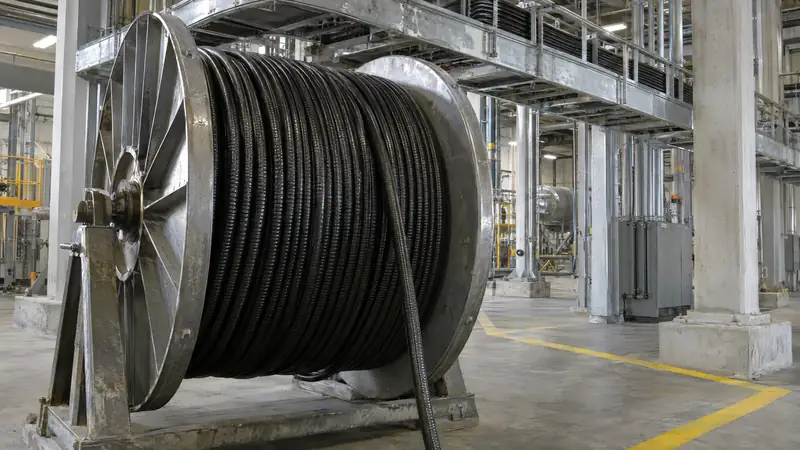
Ohio Wire Buyers buys reusable oil and gas surplus cable from businesses anywhere in Ohio, including refinery, chemical-plant and midstream project leftovers. We review full reels, partial reels, coils and usable cut lengths as electrical products for resale and reuse, not scrap metal by the pound. Send cable identification, footage, condition photos and ownership records for a written offer before pickup.
Who can sell oil and gas surplus cable in Ohio?
A plant owner, electrical contractor or project closeout team can submit unused construction stock or maintenance inventory that the owning business has released for sale. Removed cable is considered only when it remains reusable. Do not mix material held as an operating spare with material actually approved for disposal.
Start with the storeroom or project inventory record, not a copper-weight total. A reel identified by manufacturer, construction and usable footage gives us something concrete to review. Refinery and chemical operations are among the businesses we buy surplus wire from, but every purchase still requires seller and ownership verification.
Where does Ohio refinery and Utica work fit?
Cenovus identifies its Lima Refinery and its Toledo Refinery as part of its refining operations. Its Toledo facility is in Oregon, Ohio, adjacent to Toledo; a Toledo mailing reference should not be treated as proof that material sits within Toledo city limits. For a lot in this area, provide the actual pickup location when requesting northwest Ohio cable pickup.
Utica midstream work also has a documented Ohio presence. In April 2025, Marathon Petroleum described the Seneca Processing Facility in Summerfield, Ohio, as part of MPLX's Utica gathering and processing operations. For sellers with stock in eastern Ohio, our eastern Ohio service-area information explains statewide pickup coverage; the exact address determines the collection plan.
These operations provide regional context, not a claim that either company is our customer. Chemical-plant sellers elsewhere in Ohio can submit the same detailed inventory without belonging to a named project.
How do you distinguish MC-HL from other armored cable?
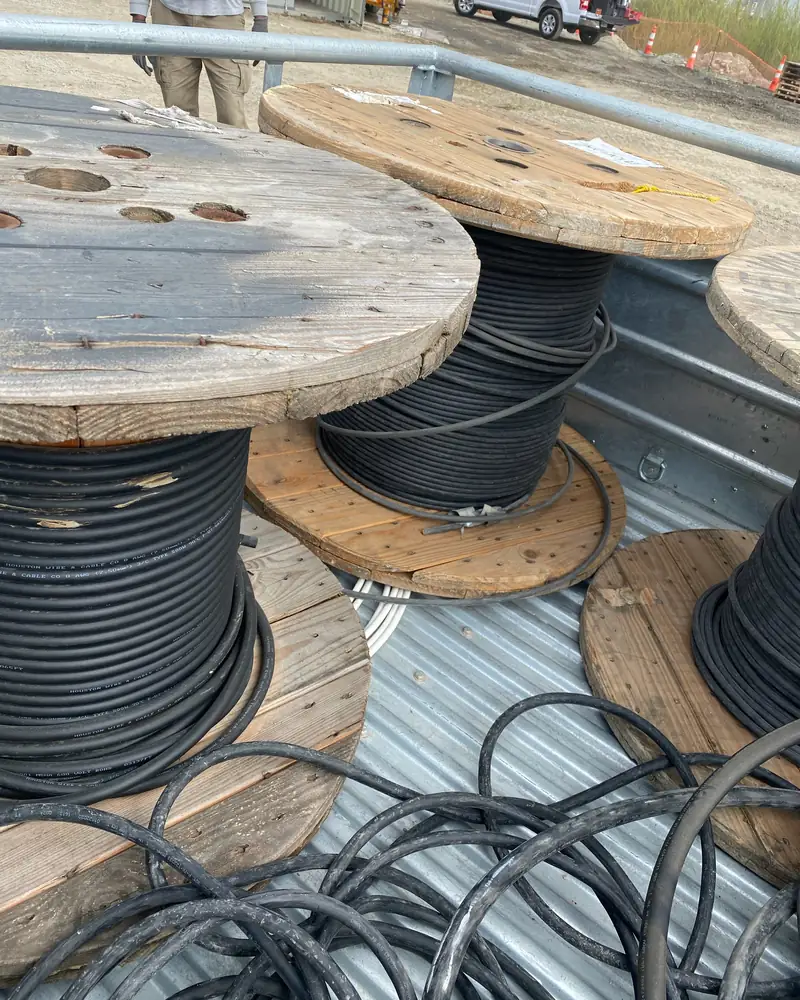
Black outer jackets can hide very different constructions. Identify the printed cable type and the manufacturer part number before calling everything armored tray cable. A tray installation describes where cable was placed; it does not, by itself, establish the cable's listing.
Southwire's SPEC 45351 describes an MC-HL power construction with copper conductors, XLPE insulation, continuous corrugated welded armor and a PVC outer jacket. The specification references UL 2225 for cables and cable fittings used in hazardous locations. Those details apply to that product, not every jacketed armored cable.
| Cable identity to preserve | Information to record | Photo that helps resolve uncertainty |
|---|---|---|
| MC-HL power cable | Printed type, conductor size and count, voltage marking, manufacturer part number | Full jacket legend plus an existing exposed armor end |
| Armored tray or control cable | Actual listed type, armor construction, conductor count and jacket material | Reel tag and existing cut end showing the cable assembly |
| Instrumentation cable | Pair or triad count, gauge, individual and overall shielding | Tag, jacket print and visible signal groups at an existing end |
| VFD cable | Manufacturer series, power conductors, grounds and shield construction | Product legend and existing end showing grounds and shield |
Our MC-HL and jacketed armored cable page covers that family separately from TC and TC-ER tray cable. Do not remove sound jacket or armor solely to get a photograph; use existing exposed ends and supporting records.
What hazardous-location paperwork should stay with the lot?
Keep the manufacturer's data sheet, original purchase specification and any available product or test documentation tied to the correct reel. If records refer to a hazardous area, preserve the actual class and division or zone designation rather than reducing it to “refinery approved.” Do not assume every room or process area has the same classification.
OSHA's hazardous-location requirements address area documentation and the suitability of equipment and wiring methods for the location. Classification depends on the hazards present; electrical installations require more than a familiar cable brand. The receiving facility's responsible professionals must evaluate the intended application, wiring method and associated fittings.
Our review determines whether we can offer to buy the material for reuse. It is not an engineering approval, a new product certification or permission to reinstall cable in a classified area. Original paperwork helps establish identity but cannot erase physical damage or an uncertain exposure history.
Why keep instrumentation and VFD reels separate?
For surplus instrumentation cable, conductor groups and shields matter as much as the overall jacket. Belden's 3053A specification, for example, identifies triads with individual and overall foil shields and drain wires. “Shielded control cable” alone leaves important construction details unresolved.
Preserve the part number and note whether the inventory record describes pairs or triads. Photograph the existing end without pulling apart sound cable. If a purchase specification calls for individual shielding, an overall-shield-only product should not be presented as the same item.
For variable-frequency-drive cable, capture the grounding and shield arrangement as well as conductor size. Belden describes its VFD designs in terms of XLPE insulation, shielding and grounding features. A motor connection does not establish that an unidentified cable is a VFD product; use its markings and data sheet.
Can removed process-plant cable still be reusable?
Potentially, but unused project leftovers and cable recovered from service need separate descriptions. Record the removal history, any known chemical contact, heat exposure or flooding, and visible jacket or armor damage. Describe the usable continuous lengths rather than combining disconnected pieces into a misleading footage total.
Have qualified personnel complete removal under the facility's electrical safety procedures before presenting cable for sale. Keep known damaged or contaminated material apart from clean unused reels. Our decommissioned cable buying guidance explains the distinction between recovered cable and reusable inventory.
Do not strip jackets or chop long lengths before review. If the material is not reusable, we say so; a scrap metal recycler may be the appropriate buyer. The surplus value versus scrap guide explains why product identification should come before a scrap decision.
What should a refinery or chemical plant send for an offer?
Send an overall lot photo, readable reel tags, jacket-print photos and existing cut-end photos. Assign a simple inventory reference to each reel or coil so its footage and condition cannot be confused with another item. Mark estimates as estimates, and distinguish remaining footage from the original factory put-up.
Include the manufacturer part number, cable type, conductor material, size, conductor or signal-group count, and whether the material is unused or removed. Attach relevant specification records and disclose known exposure concerns. Identify whether the lot is plant-owned stock, contractor-owned leftovers or material transferred through closeout paperwork.
Provide an invoice, purchase order, closeout record or company letter showing ownership. Our seller paperwork guide is useful when procurement, maintenance and the contractor must agree on who can authorize the sale. We keep a written record of each purchase.
How do you prepare pickup at a controlled plant site?
Tell us about visitor check-in, escort requirements, loading access and the person authorized to release the reels. Explain whether the inventory can be staged outside a restricted process area and what loading equipment is available. Agree on the material location before moving reels through an operating facility.
We review your submission and reply with questions or a written offer before pickup. Payment method and timing are confirmed in writing before pickup, and the count is checked against the written terms when collected. The selling process covers those steps; pickup is arranged at your jobsite, warehouse, plant or yard.
To sell reusable refinery, chemical-plant or midstream cable, request an offer with your inventory photos or call 951-403-5738. Keep the identification and ownership records with the lot so we can review the actual product, not just its metal content.
Frequently asked questions
Do you buy cable left over after a refinery turnaround?
Yes, Ohio Wire Buyers reviews reusable surplus cable from businesses after turnarounds and other plant projects. Keep unused reels separate from removed cable, and identify which stock the owner has released for sale. Send the reel tags, jacket print, footage and ownership records so we can review the lot before arranging pickup.
Can I sell industrial cable with a missing reel tag?
A missing tag does not automatically rule out a sale, but it makes identification harder. Send clear jacket-print photos, the manufacturer part number if available, a footage estimate and any purchase records. Explain whether the cable was installed or only stored. We may need more information before deciding whether it is reusable.
Should I clean chemical residue off cable before requesting an offer?
Do not conceal residue or use an improvised cleaning method to make cable look unused. Tell us what exposure is known and provide the site's material-release or decontamination records if available. Let the facility's responsible personnel determine safe handling. A cable that cannot be safely handled and reused is not suitable for our product-buying process.
Can power cable and shielded signal cable be sold together?
Yes, you can submit them as one surplus lot, but list each construction separately. Power cable, instrumentation cable and drive cable have different identification requirements. Keep the footage, condition and photos tied to each reel or coil. An overall lot photo is useful, but it does not replace readable individual product markings.
How are payment terms set for a plant cable purchase?
We review the material information and reply with questions or a written offer before pickup. Payment method and timing are confirmed in writing before pickup as well. Identify the business that owns the cable and the person authorized to release it, especially when contractors and the plant owner share the same laydown area.
Sources and further reading
- Cenovus upgrading and refining operations: Lima and Toledo refineries
- Marathon Petroleum: MPLX Utica Seneca facility in Summerfield, Ohio, April 2025
- Southwire SPEC 45351: ARMOR-X MC-HL power cable construction and applications
- Belden 3053A instrumentation cable: triads, individual and overall shields
- Belden VFD cable: insulation, shielding and grounding features
- OSHA 1910.307: hazardous-location documentation and electrical installations